


Vintage Screw Press
These vintage screw press pieces are robust mechanical devices designed for pressing books, linen, and food, offering both historical utility and handsome workshop or library display.

Vintage Screw Press
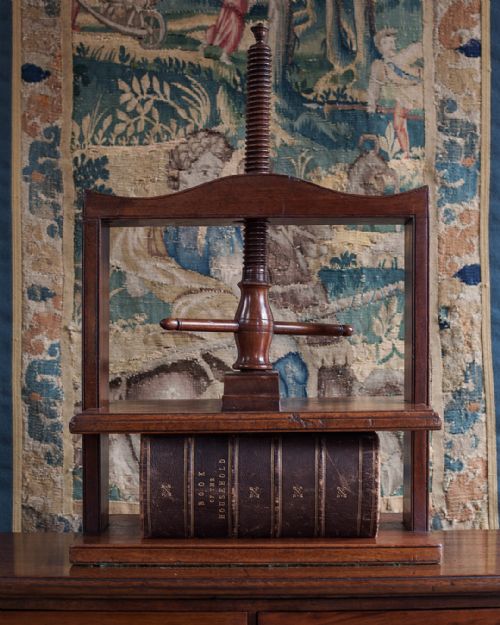
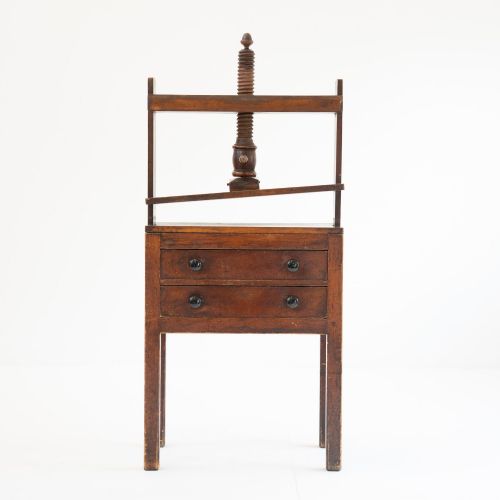
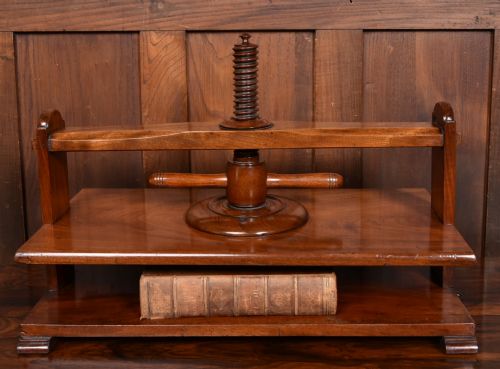
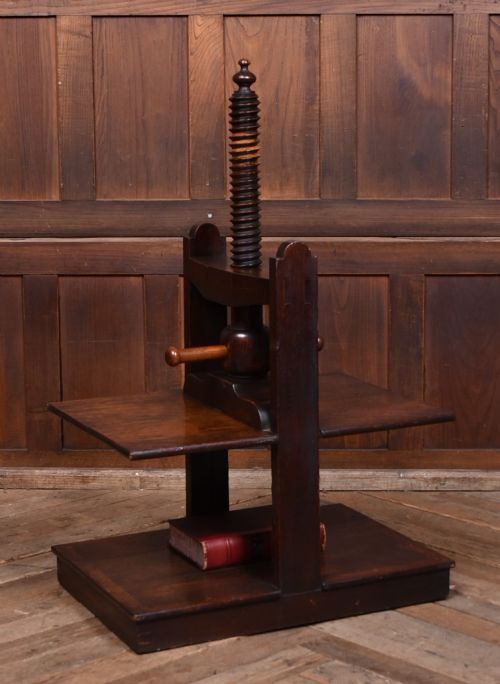
When you search for a vintage screw press, you find a variety of heavy utilitarian items designed to apply steady downward pressure through a threaded metal or wooden screw. The selection on this page consists predominantly of table-top book presses, alongside larger linen presses, dairy cheese presses, and treen lemon squeezers.
The objects span several distinct eras, drawing from Georgian and Victorian periods as well as the mid-nineteenth century around 1850. You will frequently encounter compact wooden book presses intended for desktop use, alongside robust country house linen presses and French country cheese presses.
Most examples rely on a combination of dense timbers and heavy metal or wooden threaded screws to generate mechanical force. They were built for practical labour in homes, dairies, and binderies, which accounts for their utilitarian construction and honest, unpretentious charm.
How they were made
These items were constructed using hardwearing timbers such as oak, mahogany, elm, pine, and boxwood, chosen for their ability to withstand constant mechanical stress. Artisans joined heavy wooden panels with sturdy joinery, pairing dense woods with durable iron or turned wood screws.
The working parts rely on precision threading cut into wood or forged in iron to drive the pressing plate evenly downwards. Surface finishes were kept practical, often featuring simple polished wood or waxed surfaces that highlight the natural grain of the oak and mahogany.
What varies in quality
Quality in these devices rests upon the precision of the screw mechanism and the density of the timber used in the main frame. Pieces with smooth, true-running screws and tightly fitted joints represent the higher end of the range, offering superior mechanical operation.
The choice of materials also dictates the standing of a piece, with fine mahogany table-top book presses showing a greater degree of cabinet-maker finish compared to utilitarian pine or elm examples. The integrity of the wood and the original metal components define the overall character.
Johnston’s of London
The Vintage Screw Press Glossary
- Book press
- A heavy mechanical device with a threaded screw used to flatten paper, bind books, or press leaves. They typically sit upon a table and feature a large wooden or iron handle.
- Linen press
- A tall piece of furniture designed to store and flatten household linens using internal sliding trays or a heavy screw mechanism. These often combine mahogany and pine in their construction.
- Treen
- Small handmade wooden domestic objects such as lemon squeezers and small implements. Boxwood and turned wood are frequently utilised for these tactile items.
- Cheese press
- A specialised agricultural or dairy press used to expel whey from curd during cheese making. French country examples often exhibit simple, robust framing.
- Screw thread
- The helical ridge cut into the central shaft or housing of the press. This component converts rotational force into linear downward pressure.
Vintage Screw Press: Frequently Asked Questions
What is a vintage screw press used for?
These presses were originally utilised for practical domestic and trade tasks such as flattening paper in bookbinding, pressing freshly laundered linen, or expressing liquid in dairies and kitchens. Today, they function well as decorative display pieces or functional desktop weights.
Their heavy construction means they handle physical pressure easily, though most owners now appreciate them for their mechanical form and rich wooden patination.
How do I date a wooden book press?
Dating relies on observing the timber species, construction methods, and the style of the turning on the wooden components. Georgian and Victorian examples often feature distinct proportions and specific combinations of mahogany, oak, and iron.
Examining the wear patterns around the screw thread and the type of fixings used will also help indicate the period of manufacture.
Where were these presses made?
The items found here originate from British country houses, workshops, and French provincial dairies. Cabinet makers and local joiners produced them using regionally available timbers like oak, elm, and pine.
Some larger pieces bear the marks of specific makers or London workshops, reflecting the commercial production of utilitarian furniture in the nineteenth century.