
Georgian Wooden Press
When you search for a georgian wooden press, you find substantial storage furniture built for linen and clothes in the eighteenth and nineteenth centuries.
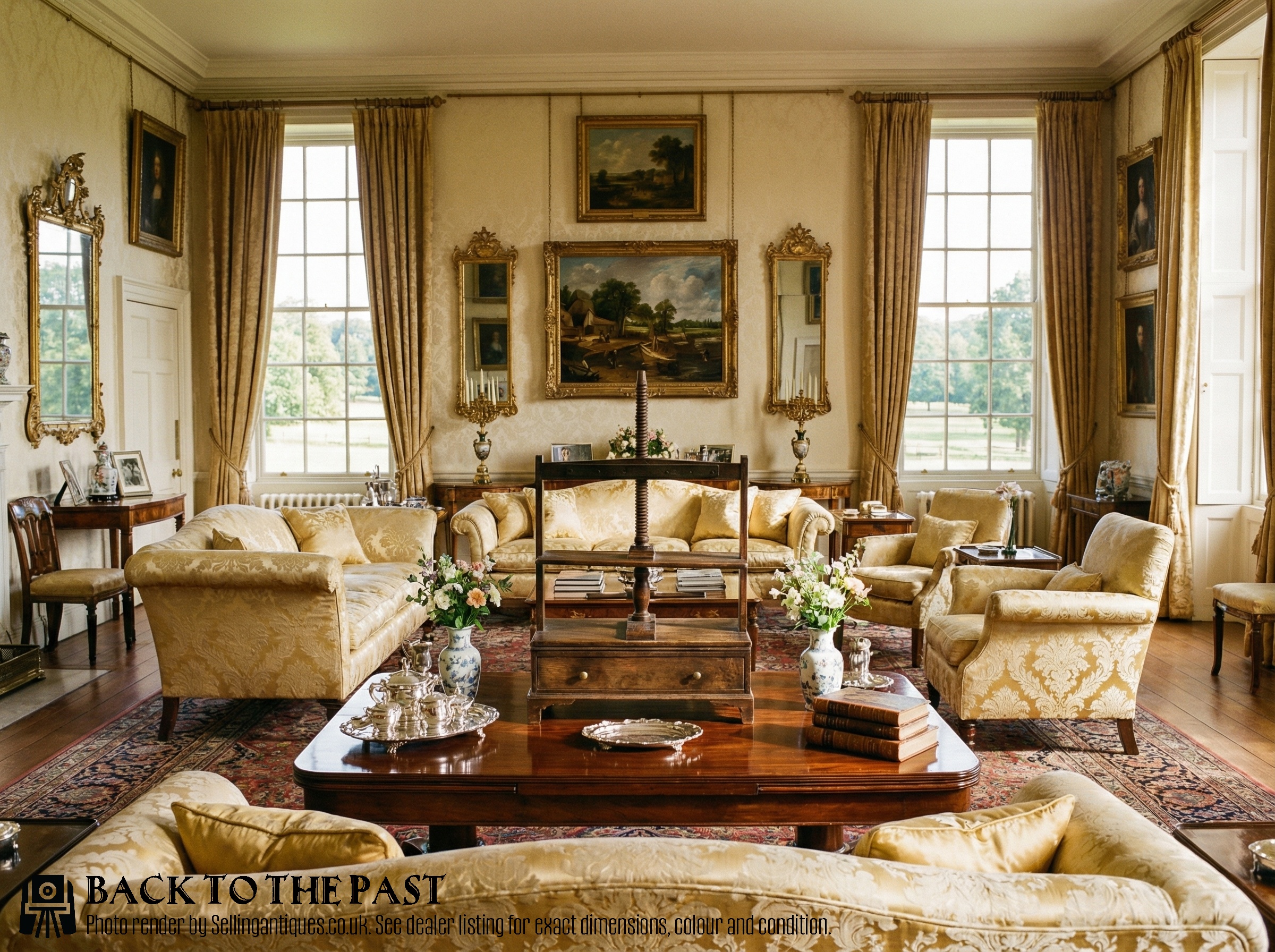
Georgian Wooden Press
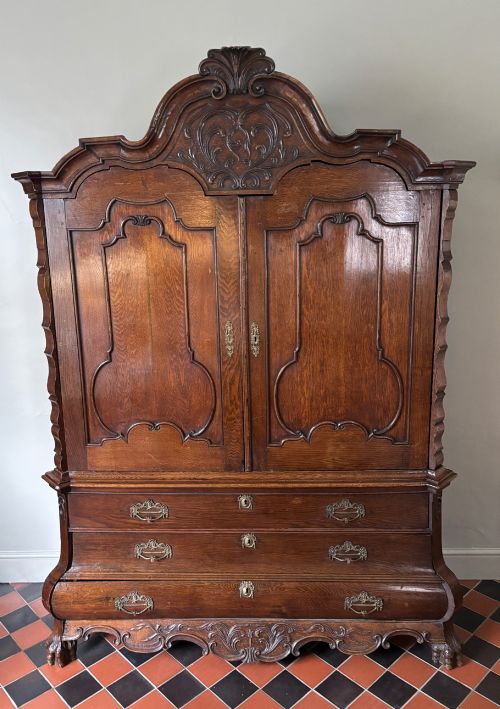
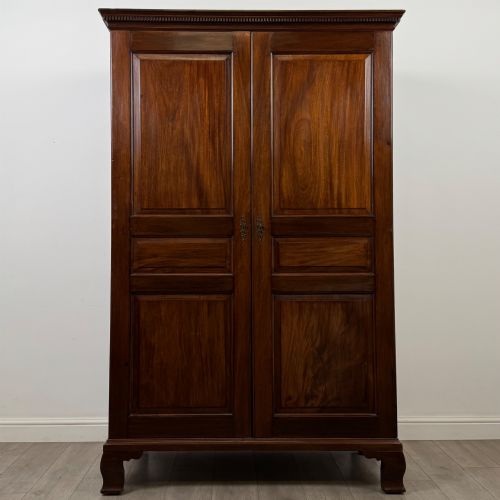
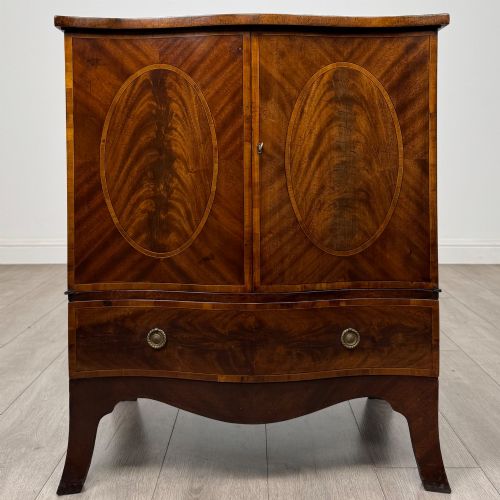
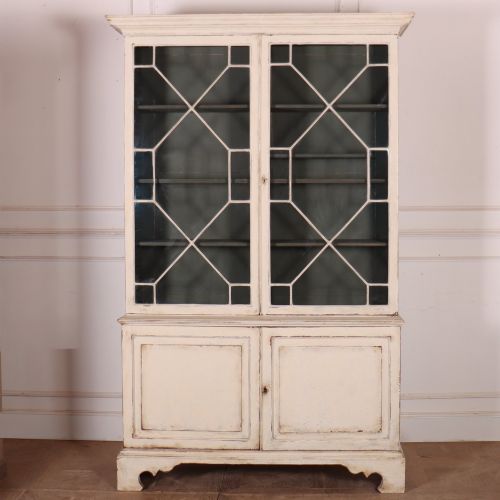
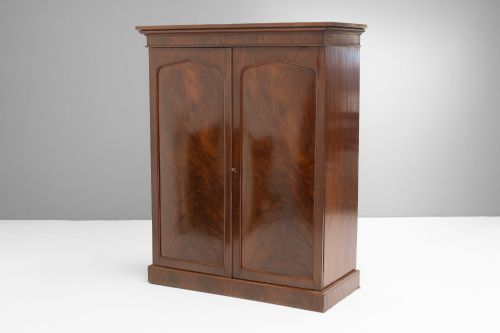
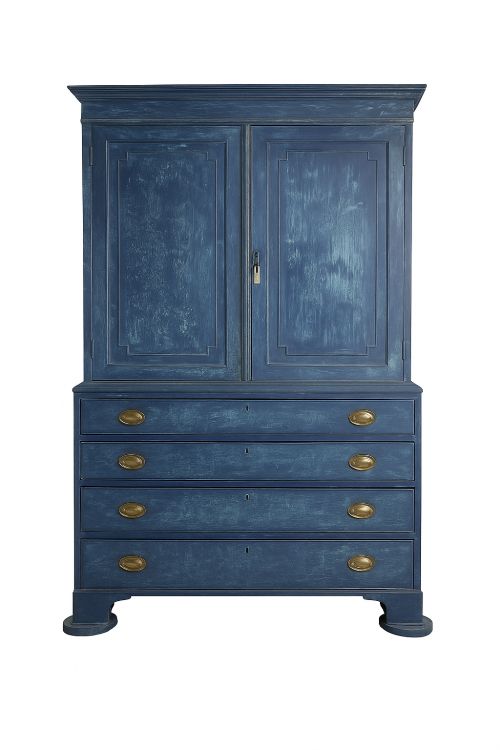
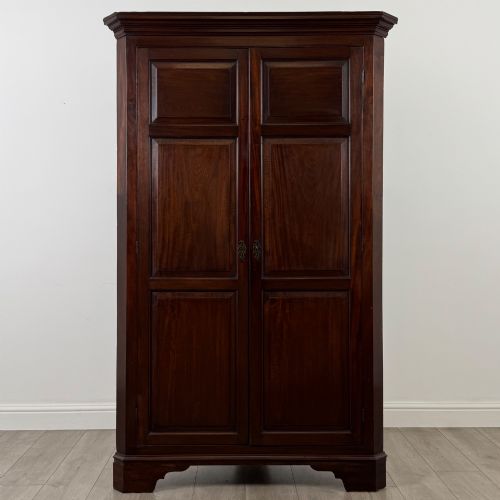
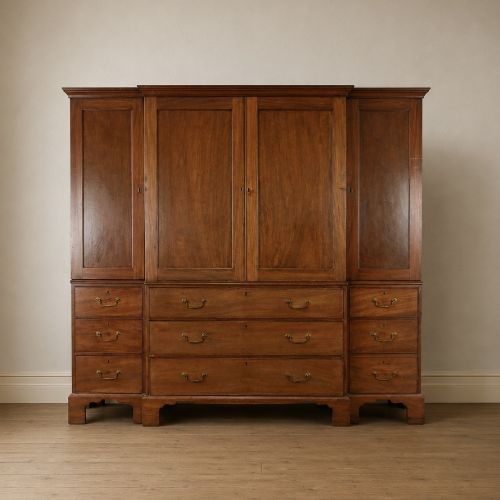
A georgian wooden press is a large storage piece combining a wardrobe section with sliding trays or drawers, originating in the Georgian and Regency periods. The forms include linen presses, wardrobes, cupboards, and bookpresses.
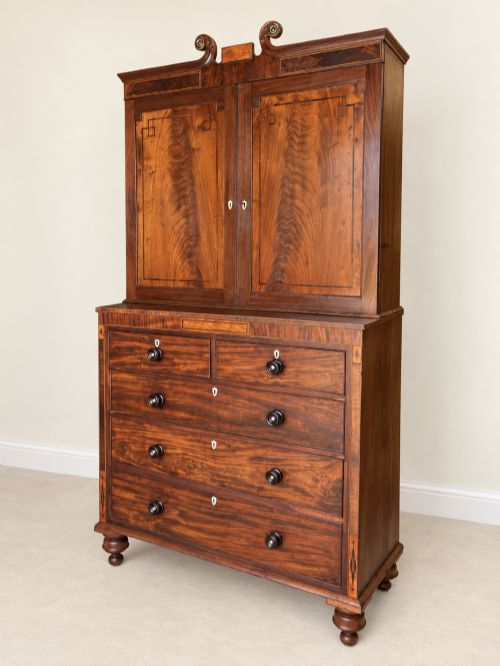
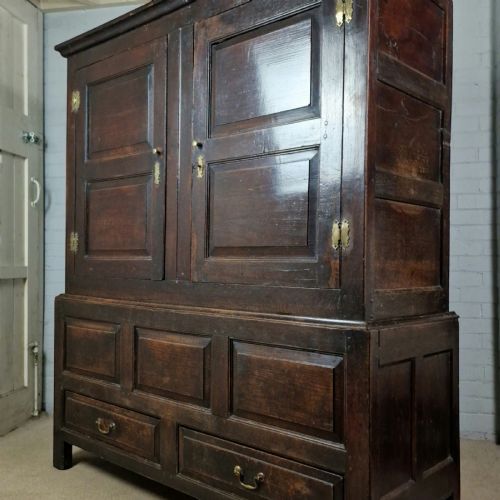
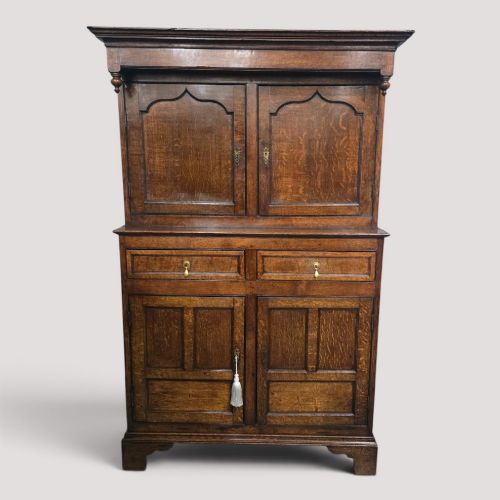
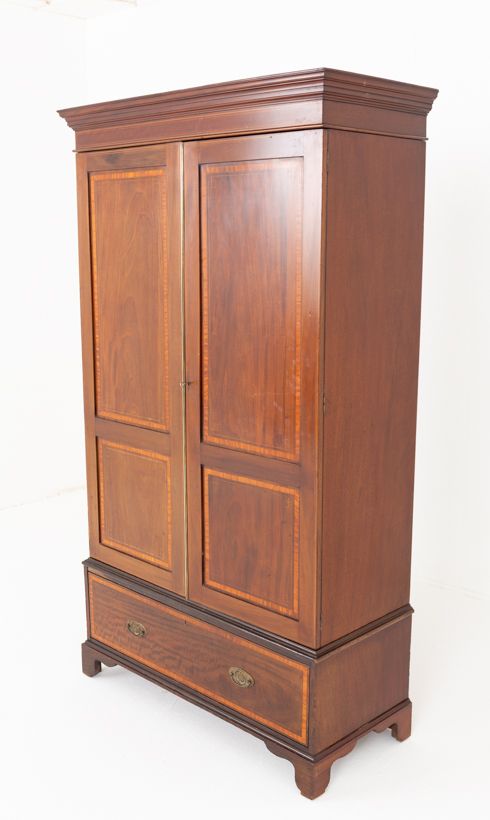
You will most frequently meet mahogany and oak examples on this page, often showing the classic two-door upper section above a chest of drawers. Country and provincial variants appear alongside formal George III designs.
The practical function remains the same as it was centuries ago: storing household textiles, garments, and books behind sturdy wooden doors.
How they were made
Cabinet makers utilised solid timbers such as mahogany, oak, elm, and pine, frequently applying flame mahogany veneer and satinwood inlay to the primary display surfaces. Iron and brass hardware completed the construction, providing durable hinges, handles, and internal screw mechanisms.
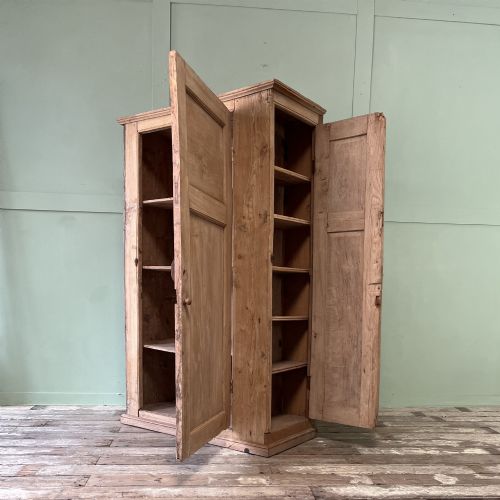
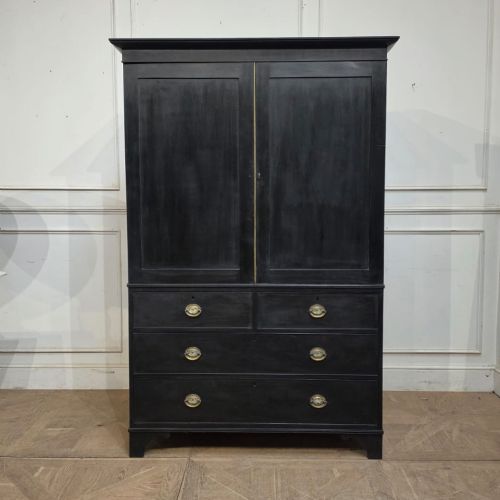
Surface treatments ranged from polished mahogany and ebonised finishes to original paint and waxed pine. Joinery techniques ensured that large knockdown wardrobes could be dismantled for transport in country houses.
Listings feature mahogany, oak, pine, and elm, spanning periods from the eighteenth century through the Edwardian era.
What varies in quality
The distinction between standard utility storage and finer pieces lies in the selection of timber, such as figured mahogany or marquetry inlay. Cabinet proportion and the crispness of carved detail elevate certain examples above plain provincial storage.
Original internal sliding trays, surviving brass handles, and working screw mechanisms separate well-preserved presses from those altered over time.
The Georgian Wooden Press Glossary
- Linen press
- A tall piece of furniture featuring upper doors enclosing sliding trays for folded textiles, placed above a chest of drawers. This form dominated bedrooms before fitted wardrobes became common.
- Flame mahogany veneer
- A decorative wood slice cut from the fork of the mahogany tree to create a distinctive flickering flame pattern. Cabinet makers applied this to drawer fronts and door panels for visual depth.
- George III
- The stylistic period spanning from 1760 to 1820, characterised by classical proportions and fine cabinet making. Pieces from this era often display polished mahogany or subtle string inlay.
- Knockdown wardrobe
- A large piece constructed to be taken apart into sections for easier transport between rooms or houses. This clever design utilised hidden pegs and bolts within the timber frame.
- Bookpress
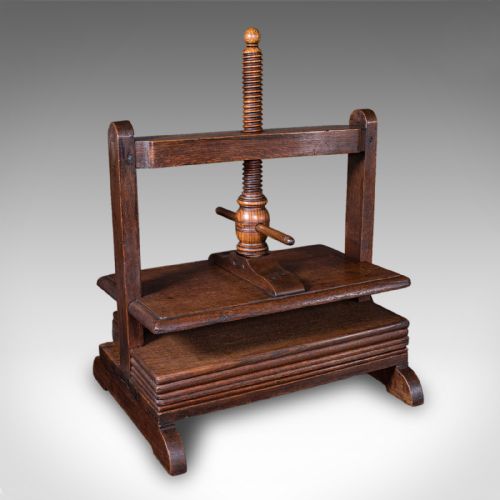
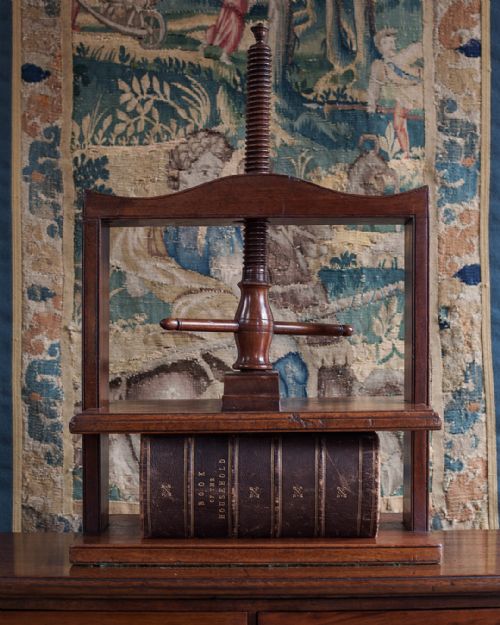
- A specialised mechanical press utilised for flattening paper or binding books, occasionally constructed in mahogany during the nineteenth century. These operate via a heavy wooden or iron screw.
Georgian Wooden Press: Frequently Asked Questions
What is a georgian wooden press used for?
These pieces served primarily for storing household linen, folded garments, and textiles in bedrooms and landing spaces.
Today, they function as spacious wardrobes and cupboards in modern homes, offering deep shelving and hanging capacity.
How do I identify a georgian wooden press?
Look for the characteristic two-door upper cabinet sitting above a chest of base drawers, typically constructed from mahogany or oak.
Proportions remain solid and architectural, reflecting the design standards of the eighteenth and nineteenth centuries.
Are these presses difficult to move?
Many examples are large and heavy, requiring two people and careful handling to navigate doorways and staircases safely.
Certain pieces feature knockdown construction designed specifically to be dismantled into manageable sections.
What woods were used for these presses?
Makers relied heavily on mahogany, oak, and pine, sometimes incorporating walnut, elm, and satinwood for specific regional styles.
Finishes range from polished timber and flame mahogany veneer to painted surfaces and natural wax.