





Antique Table Press
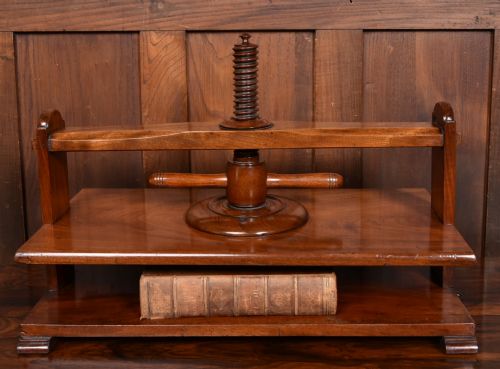
An antique table press brings heavy mechanical utility indoors, taking forms from book presses to cheese presses built in oak, mahogany, and iron.
Antique Table Press
When you examine an antique table press, you look at utilitarian hardware adapted for domestic or workshop surfaces from the Georgian, Victorian, and Edwardian periods.
The most common formats on this page combine wooden or iron screw mechanisms with heavy timber bases, often taking the form of book presses or cheese presses designed to sit upon furniture.
Makers integrated these presses into everyday tasks, applying structural timber frames to apply sustained downward pressure for binding, pressing cheese, or flattening linen.
Materials and construction methods
Makers utilised dense hardwoods such as oak, mahogany, and elm for the heavy platens and base tables, ensuring the wood resisted warping under continuous mechanical tension.
Iron and brass components formed the threaded screw mechanisms, handles, and press plates, providing the necessary torque and durability for heavy compression tasks.
A cast iron mangle from Cheshire sits surprisingly comfortably among delicate opalescent scent bottles and heavy book presses.
Distinctions in quality and execution
The standard of a press rests in the integrity of its timber frame and the smooth operation of its metal screw thread, where crisp casting or hand-cut threading separates workshop pieces from simpler domestic tools.
Better examples retain their original matching wooden platens and functional iron handles without replacement parts, showing honest wear through centuries of use.
Burgess Brothers of Weaverham·Arnott and Co Dublin
The Antique Table Press Glossary
- Platen
- The flat heavy block or plate in a press that distributes downward pressure evenly across the material placed beneath it. This wooden or metal surface moves vertically via the main screw mechanism.
- Screw mechanism
- The threaded metal shaft and internal thread assembly that translates rotational force into vertical compression. It forms the mechanical heart of any book or cheese press.
- Linen press
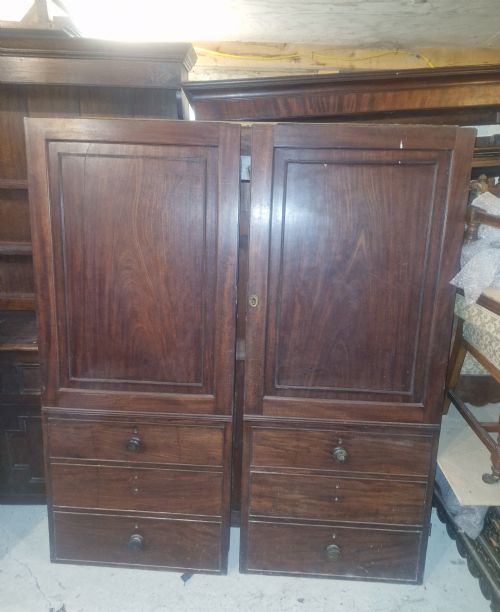
- A tall piece of furniture or table-top device used originally for smoothing and storing textiles under pressure. They frequently incorporate heavy panel doors or internal sliding trays.
- Cheese press
- A heavy timber or iron frame designed to squeeze moisture from curd during cheese making. Table versions scale this agricultural utility down for smaller batches.
Antique Table Press: Frequently Asked Questions
What is an antique table press used for?
These presses served specific functional roles in homes and binderies, applying steady mechanical pressure to flatten paper, bind books, or press dairy curds.
Today, they function primarily as decorative objects with visible industrial history, though their mechanical screws often remain entirely operational.
How do I identify the period of a press?
Dating relies on timber selection, fastening methods, and the style of the ironwork rather than stamped signatures, which rarely appear on utilitarian machinery.
Georgian and early Victorian examples generally feature hand-cut wooden threads or heavier cast iron frames, while Edwardian pieces introduce standardised machine-milled components.
Are table presses made of solid wood?
The structural elements and thick platens utilise solid timbers like oak, elm, or mahogany to withstand the immense physical stress of the turning screw.
Constructed without veneers, these heavy sections were built entirely for utilitarian strength rather than decorative show wood.
Where should I place a heavy press?
Due to the substantial weight of cast iron and dense hardwood, these presses require sturdy sideboards, console tables, or dedicated heavy surfaces.
Ensure the support furniture can handle concentrated downward weight, particularly if the press is frequently operated.