
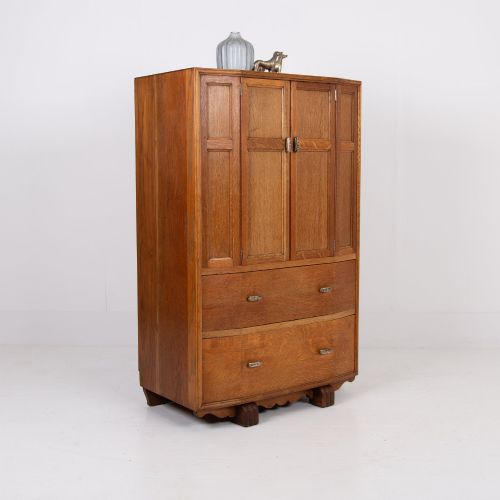


Wooden Linen Press Drawer
A wooden linen press drawer offers serious storage and character, bringing period craftsmanship into daily use.
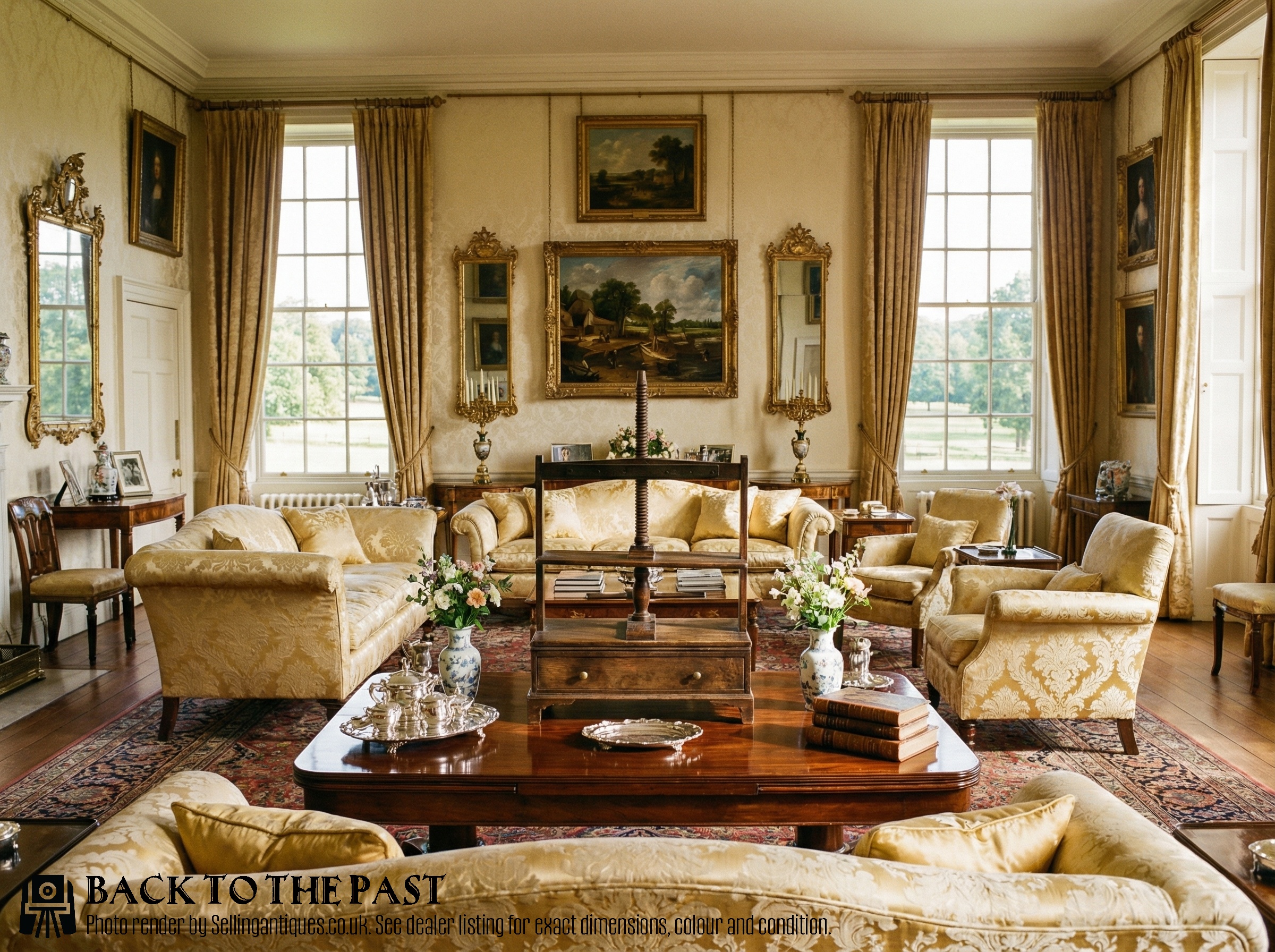
Wooden Linen Press Drawer
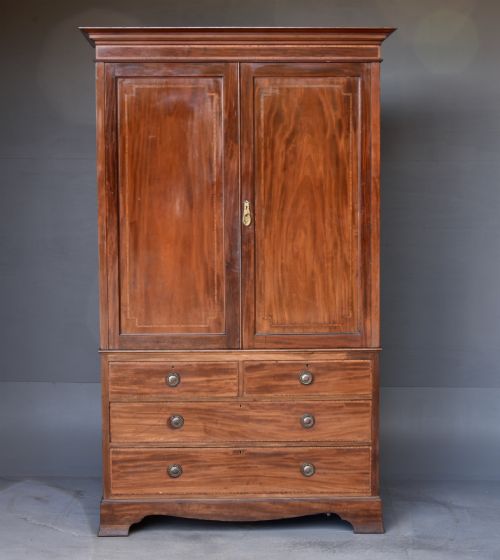
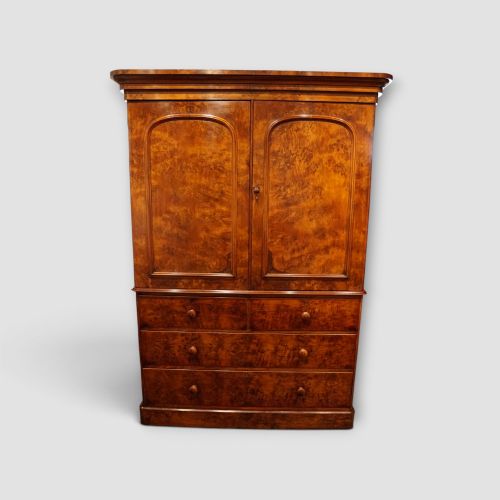
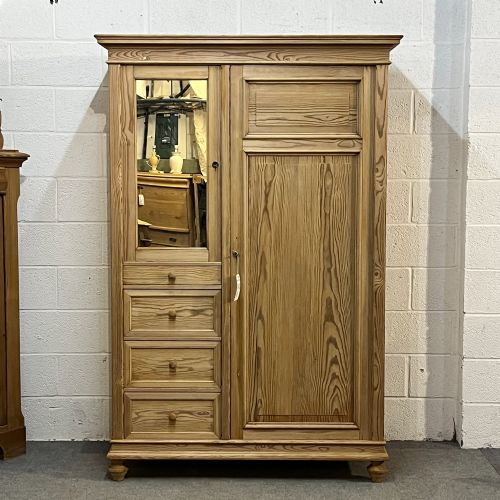
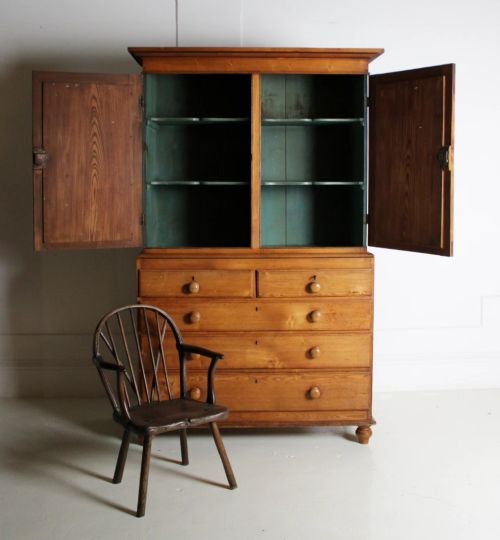
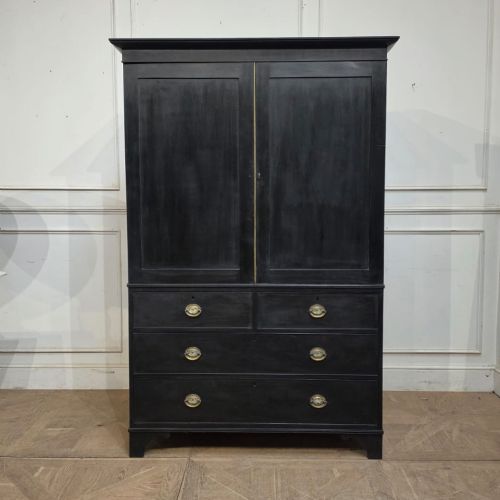
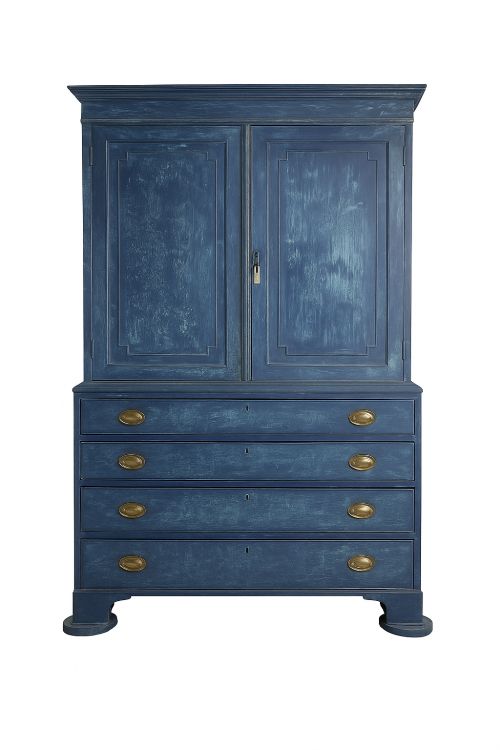
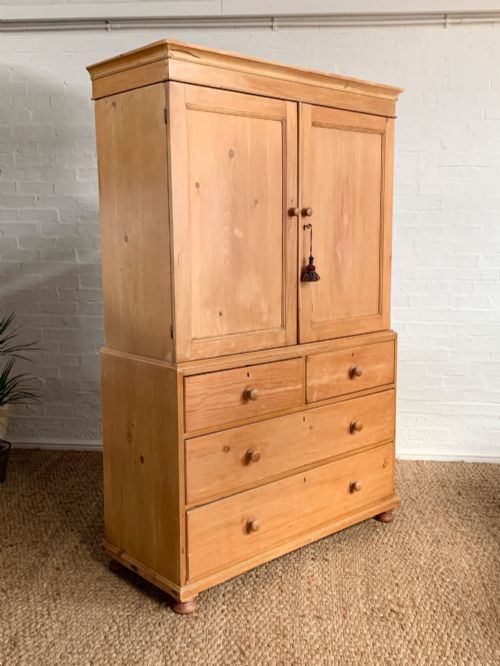
When you search for a wooden linen press drawer, you are looking at substantial storage furniture designed to hold folded textiles, garments, and household items. These pieces combine upper cupboard sections with lower banks of drawers, uniting deep storage capacity with domestic utility.
The versions you are most likely to meet on this page span the Georgian, Victorian, and Edwardian periods, constructed in forms ranging from provincial pine cupboards to polished mahogany tallboys. Makers utilised woods such as mahogany, oak, pine, and walnut to build these functional storage cabinets.
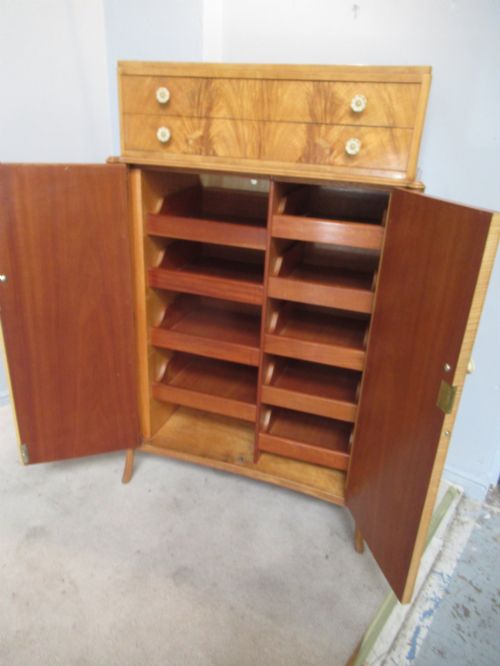
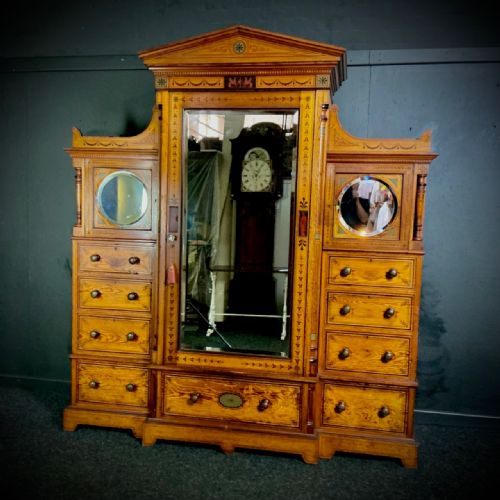
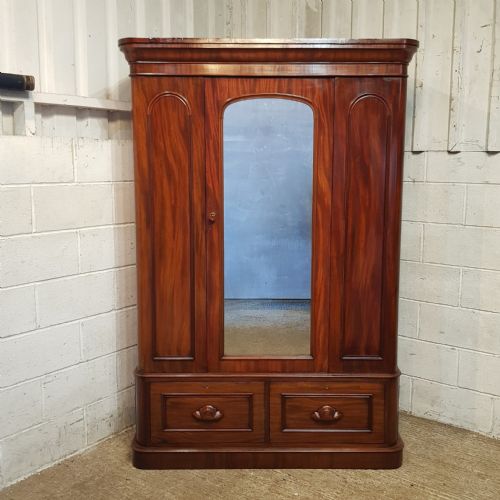
Many examples incorporate sliding trays or internal shelves behind cupboard doors above a chest of drawers base. Others appear as compactums, wardrobes, or miniature cabinets reflecting regional English, Dutch, and continental workshops.
How they were made
Cabinetmakers constructed these pieces using solid timbers like mahogany, oak, and pine, frequently applying veneers of burr walnut, flame mahogany, or satinbirch to prominent surfaces. Structural elements often combined primary show woods with secondary softwoods for internal drawer linings and backboards.
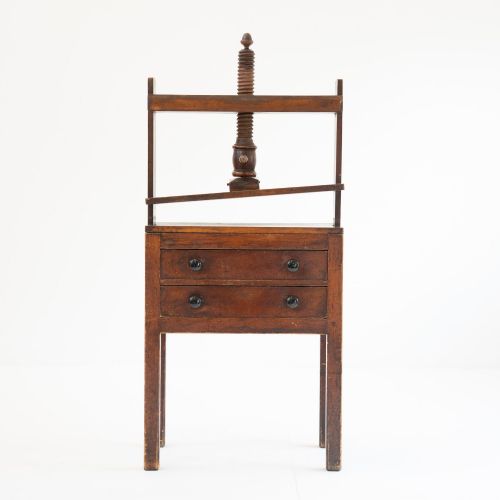
Joinery techniques relied on dovetailed drawer construction, pegged mortise and tenon joints, and panelled door frames. Some specialised examples incorporated mechanical elements such as internal screw mechanisms or sliding trays to press fabrics flat.
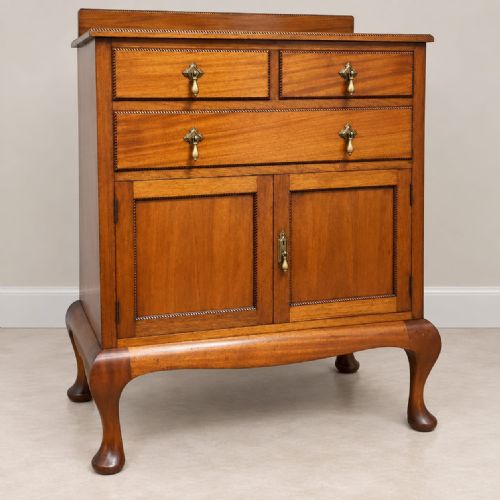
Surface finishes ranged from French polish and clear wax to painted treatments, ebonising, and lacquering. Brass hardware, including drop handles, escutcheons, and hinges, completed the construction.
One miniature Anglo-Indian press stands ready to store minuscule linens, proving that grand storage can happen on a very small scale.
What varies in quality
The selection of timber dictates much of the distinction across these pieces, with choice figured veneers and dense primary hardwoods occupying the upper tier. Plain secondary timbers and utilitarian construction methods appear on provincial and country workshop examples.
The sophistication of the internal fittings and the precision of the joinery separate standard storage furniture from finer cabinet work. Pieces featuring secondary internal drawers, original brasses, and well-executed moulding details demonstrate higher workshop capability.
maples & co·Johnston’s of London·Heal's
The Wooden Linen Press Drawer Glossary
- Linen Press
- A tall piece of furniture featuring upper cupboard doors enclosing shelves or sliding trays, mounted above a base section fitted with horizontal drawers. Originally designed for storing household linens flat.
- Tallboy
- A tall chest of drawers standing upon another chest or cupboard base, combining vertical storage with a compact footprint. Georgian and Victorian examples often integrate a wardrobe or press element at the top.
- Compactum
- A fitted wardrobe or storage cabinet combining multiple internal configurations, such as hanging space, shelves, and drawers, within a single unified case. Edwardian and Art Deco versions frequently utilise this layout.
- Sliding Trays
- Horizontal wooden shelves housed inside the upper cupboard section of a press, allowing folded garments to be stored and accessed easily without stacking deep piles.
- Satinbirch
- A pale, figured timber derived from birch trees, utilised by Victorian cabinetmakers for decorative veneers and contrasting banding on wardrobes and chests.
Wooden Linen Press Drawer: Frequently Asked Questions
What is a wooden linen press drawer used for today?
These cabinets serve as practical storage solutions for clothing, linen, and household items in modern bedrooms and hallways. The combination of deep drawers and upper shelving accommodates folded garments and bulky textiles.
Their substantial proportions and timber surfaces also provide a strong decorative presence within traditional and contemporary interiors.
How do I tell a Georgian press from a Victorian one?
Georgian pieces typically display restrained classical proportions, cleaner bracket feet, and timber choices like solid mahogany with subtle cockbeading around the drawers. Victorian examples often feature bolder architectural cornices, flame mahogany veneers, or turned wooden knobs.
Regional country pieces from both eras frequently utilise pine or ash with simpler pegged construction.
Did linen presses always have sliding trays inside?
Many traditional presses housed wooden sliding trays behind the upper doors to keep linen neatly stacked and compressed. Other variations were manufactured with standard fixed shelves or converted later into hanging wardrobes.
Cabinets designated as tallboys or compactums often prioritised drawer stacks and clothes hanging space over traditional linen slides.
How do I care for a waxed pine or polished mahogany press?
Maintain polished hardwood surfaces by applying a quality beeswax periodically and buffing with a soft cloth to preserve the finish. Keep wooden furniture away from direct heat sources and strong sunlight to prevent timber warping or veneer cracking.
Waxed pine pieces benefit from occasional re-waxing to nourish the dry softwood and maintain the surface sheen.