

Vintage Satinwood Bookcase
A vintage satinwood bookcase brings a pale, reflective timber and refined neoclassical revival design into a room.
Vintage Satinwood Bookcase
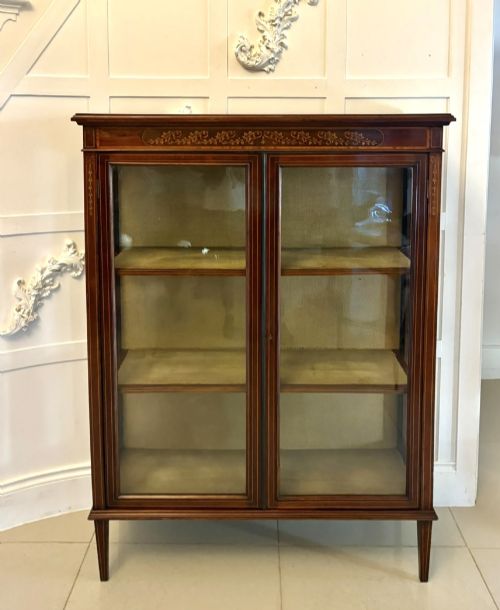
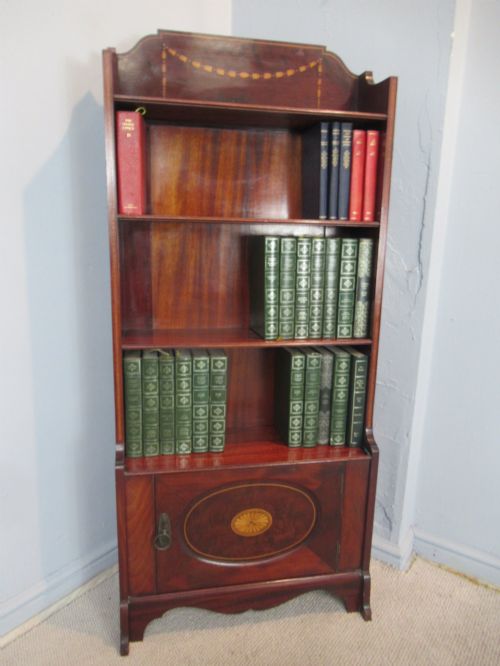
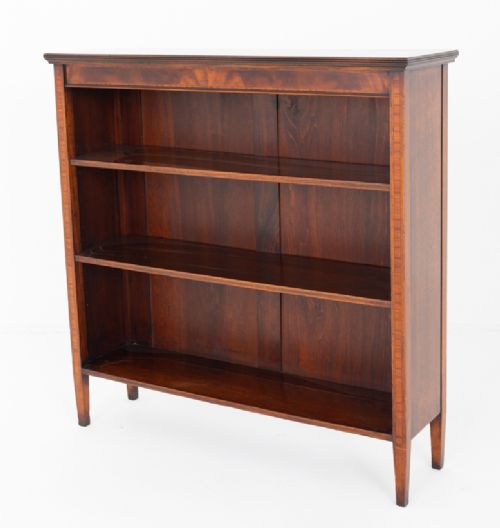
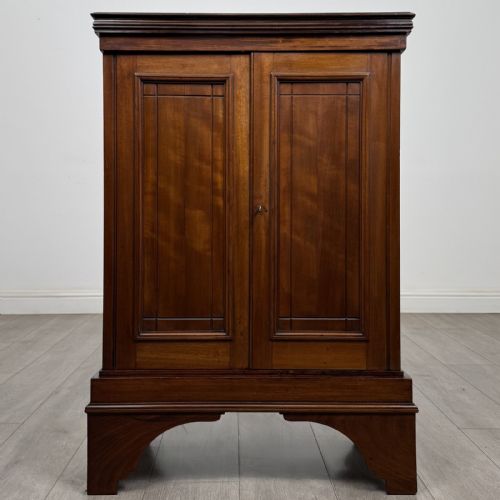
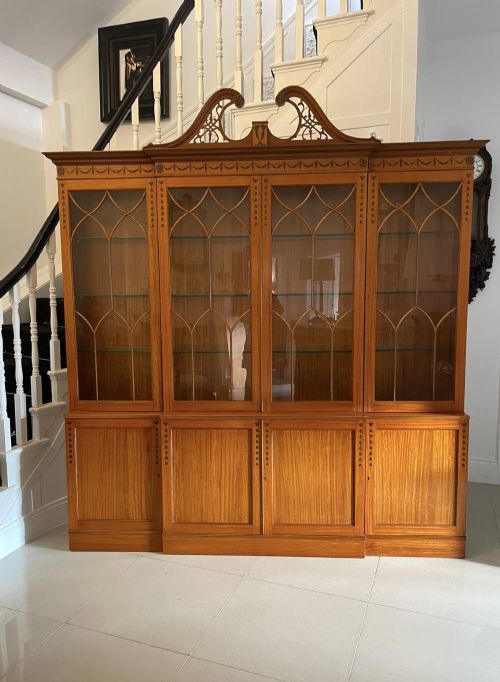
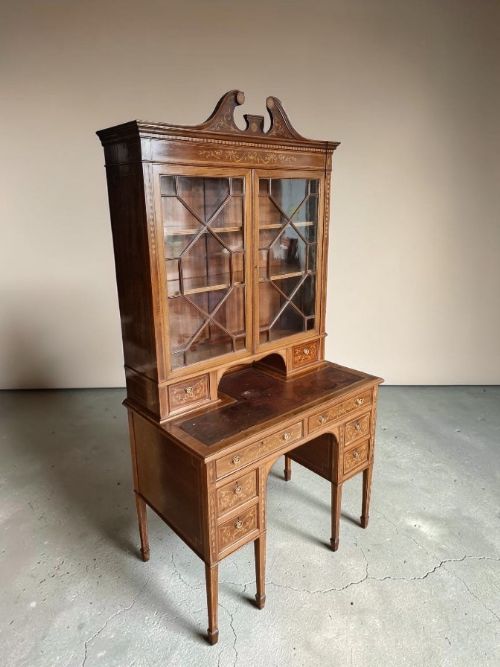
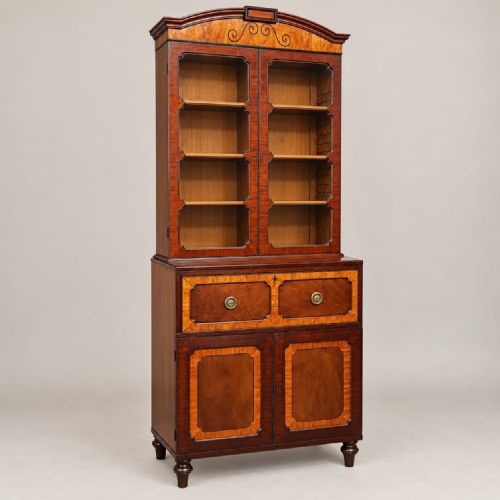
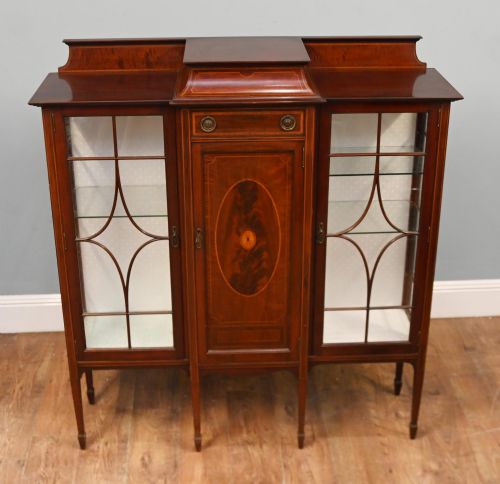
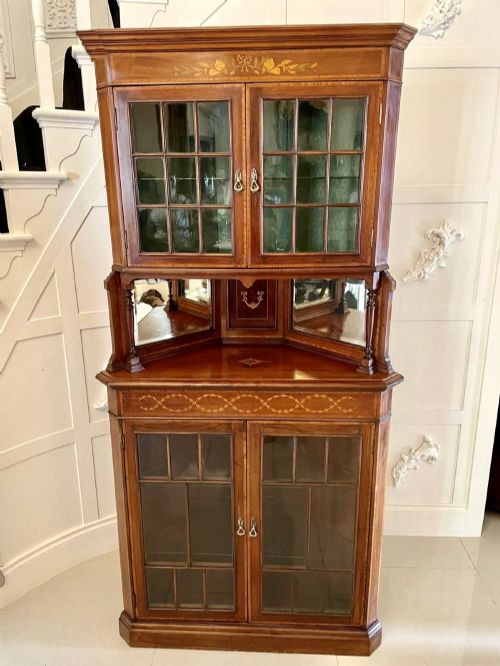
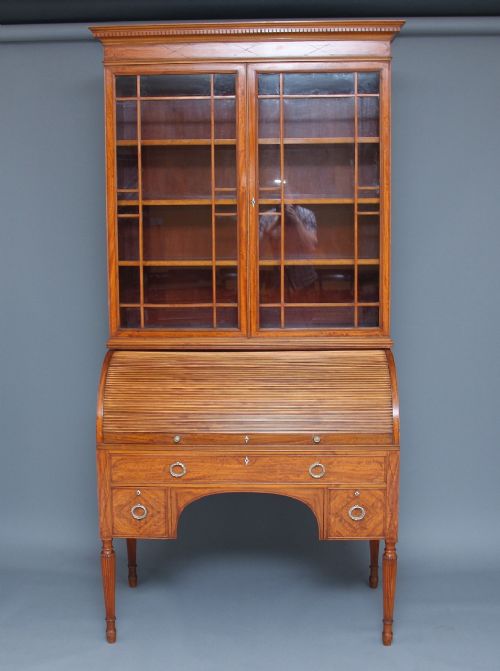
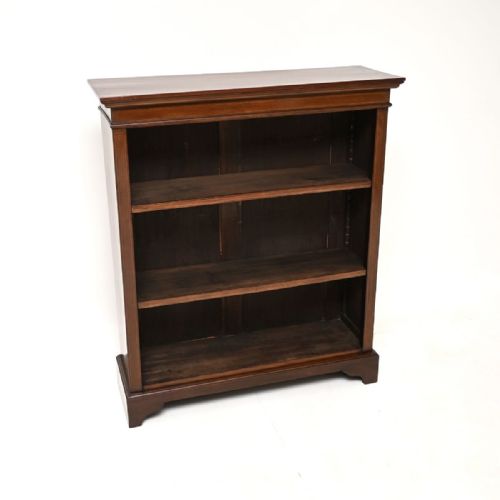
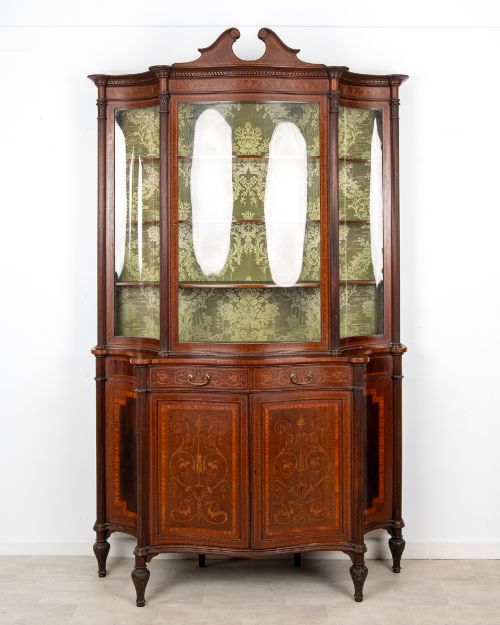
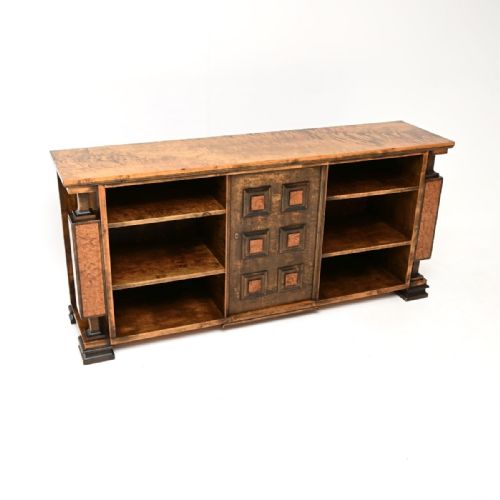
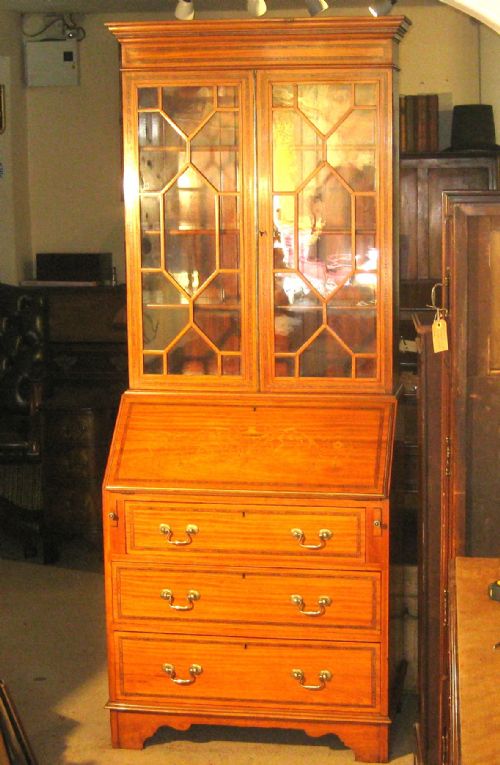
When you search for a vintage satinwood bookcase, you encounter pieces spanning from the late nineteenth century through to the art deco period, with Edwardian Sheraton Revival examples appearing most frequently. These forms range from open shelves and revolving bookcases to glazed display cabinets and bureau bookcases incorporating mahogany and boxwood details.
Makers utilised this light exotic timber primarily for revivalist furniture intended to brighten drawing rooms and libraries. Many items feature delicate inlay work or painted decoration rather than heavy, dark finishes.
How they were made
Cabinet makers built these pieces using solid timbers and secondary woods faced with satinwood veneers, often framing the grain with contrasting bandings of mahogany, walnut, or boxwood. Marquetry panels and hand-painted decorative motifs frequently adorned the doors and friezes.
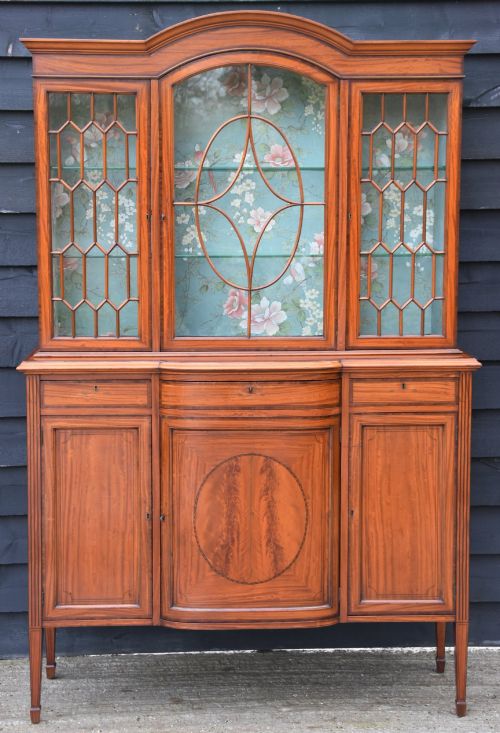
Glazing techniques varied from simple rectangular panes to astral glazing bars on breakfront display cabinets. Brass fittings and mirror backs appeared on select Edwardian and Victorian examples to enhance light reflection.
Vintage Satinwood Bookcase Retail Price Guide 2026
Typical asking prices for vintage satinwood bookcase among the pieces listed under this phrase on Sellingantiques today, from the lower quarter to the upper quarter. They describe what is for sale here now, not the wider market.
Listings span the eighteenth century to nineteen thirty, showing materials including satinwood, mahogany, walnut, boxwood, and mirror glass.
What varies in quality
The standard of execution in the marquetry and string inlay distinguishes finer pieces from ordinary production. Crispness in the botanical or neoclassical motifs and the selection of figured satinwood veneers indicate superior workshop origins.
Structural complexity also separates the tiers, moving from simple open shelves to revolving mechanisms with internal cross-framing or large breakfront cabinets with original painted decoration.
Maple & Co.·Collinson & Lock London
The Vintage Satinwood Bookcase Glossary
- Satinwood
- A dense tropical timber known for its yellowish colour and natural sheen. It takes a high polish and provides a bright contrast in inlaid furniture.
- Sheraton Revival
- A late nineteenth and early twentieth century style emulating the neoclassical designs of George Sheraton. It relies on symmetrical geometry, fine inlay, and painted details.
- Astral Glazing
- Cabinet doors divided into small glass panes held by slender wooden bars. This technique creates a lighter visual appearance than a single large sheet of glass.
- Marquetry
- The art of applying pieces of veneer to a structure to form decorative patterns. Craftsmen used various tinted woods to build pictorial or geometric designs.
- Secretaire
- A desk disguised as a cabinet or bookcase with a drop-front writing drawer. It often conceals pigeonholes and small drawers inside.
Vintage Satinwood Bookcase: Frequently Asked Questions
How do I care for satinwood furniture?
Keep the timber away from direct sunlight to preserve the pale yellow tone and prevent the veneers from drying out. Dust regularly with a soft, dry cloth and avoid silicone-based polishes.
Maintain stable humidity levels in the room to protect the underlying carcase woods and prevent movement in the delicate inlay work.
What is a revolving bookcase?
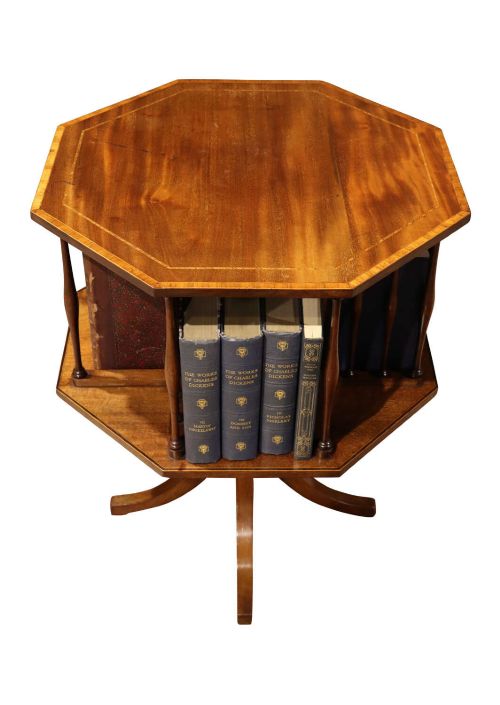
A revolving bookcase is a compact, freestanding shelf unit mounted on a concealed pivot base. This design allows the user to spin the entire unit to access books from all four sides in a small footprint.
Cabinet makers produced these primarily in mahogany and satinwood during the Edwardian period for use beside armchairs or in libraries.
Are these bookcases suitable for modern homes?
The light colour of satinwood makes these pieces easier to integrate into contemporary interiors than heavy Victorian mahogany or dark oak furniture. Their compact proportions fit typical room layouts.
Open shelves and glazed display cabinets provide practical storage for books while reflecting natural light around living spaces.
How do I distinguish Edwardian Sheraton Revival from original pieces?
Edwardian revival furniture from around nineteen hundred typically employs machine-cut veneers and secondary woods like pine or oak alongside mahogany. Construction methods and interior drawer linings reflect twentieth-century workshop practices rather than eighteenth-century techniques.
Examining the backboards, screw types, and interior hardware helps determine whether a piece dates to the original eighteenth-century Sheraton period or the later revival era.