


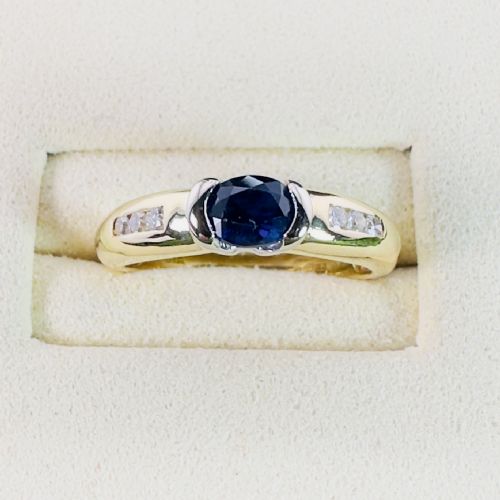


Vintage Sapphire Solitaire
A vintage sapphire solitaire pairs a single, prominent stone with enduring precious metal work, offering a striking focal point for the hand.
Vintage Sapphire Solitaire
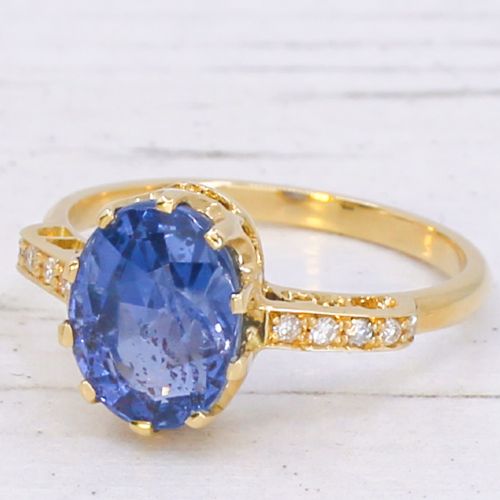
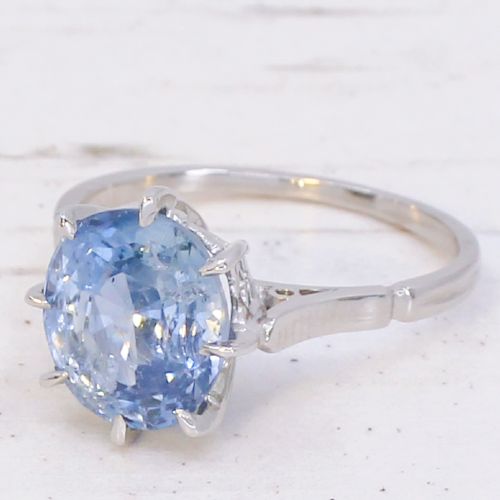
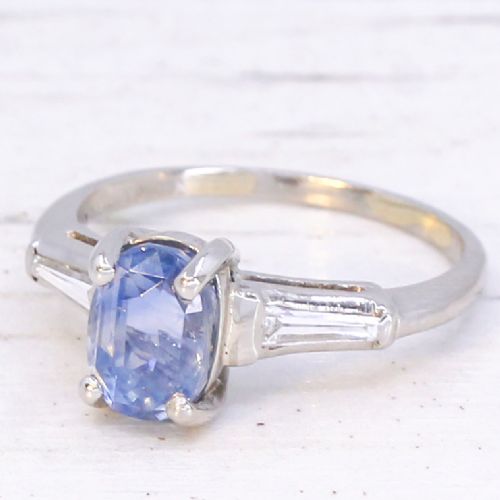
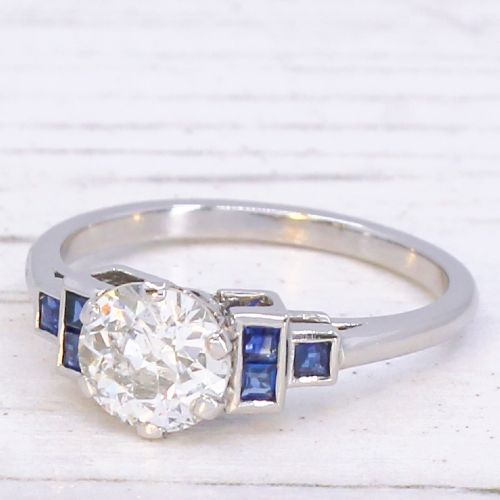
When you search for a vintage sapphire solitaire, you look at rings and pendants centred on a single prominent gemstone rather than a cluster. The selection spans the nineteenth century through the mid-twentieth century, capturing periods such as the Victorian era, Edwardian period, Art Deco movement, and mid-century decades. Rings dominate the evidence, though pendants appear.
The stones themselves arrive in various geological origins and treatments, with unheated Ceylon, Kashmir, and Burmese sapphires appearing alongside green, orange, and purple variants. Metal choices range from platinum to white and yellow gold in nine-carat and eighteen-carat purities. Most pieces encountered on this page date from the early decades of the twentieth century, particularly the Art Deco era.
The mountings vary to suit the cut of the central gem, utilising oval, emerald, round, pear, and star sapphire cuts. Many incorporate diamond accents alongside the primary stone, while others keep strictly to the solitaire format. Buyers encounter both delicate early twentieth-century platinum work and heavier mid-century gold settings.
How They Were Made
Makers set these stones into platinum or various grades of gold, utilising the bright white strength of platinum particularly during the Art Deco period to construct fine, geometric settings. Yellow gold appears in nineteenth-century and mid-century examples, providing a warm contrast to deep blue or green stones. Metalwork relies on hand fabrication, bezel settings, and delicate claw mounts.
Gemstone cutting defines the character of each piece, with lapidaries employing old cut diamonds, transitional cuts, and specific sapphire shapes like oval, emerald, and pear. Unheated stones display their natural crystal properties without thermal enhancement, whilst precision faceting maximises light return through the table of the gem.
Several pieces include star sapphires that display a floating six-rayed star across the curved stone when caught in the light.
What Varies in Quality
The distinction between tiers rests upon the origin, heat treatment status, and weight of the central sapphire. Stones with certified geographical origins, such as Kashmir, Burma, or Ceylon, and those lacking thermal enhancement command greater attention than standard commercial stones. Carat weight also divides the range, moving from modest fractions up to substantial stones exceeding six carats.
Metalwork execution and period integrity separate standard items from superior examples. Fine platinum work with crisp geometric pierced galleries represents the pinnacle of Art Deco construction, whilst well-preserved settings maintain the original integrity of their claws and shoulders without excessive thinning from past sizing.
The Vintage Sapphire Solitaire Glossary
- Solitaire
- A piece of jewellery featuring a single dominant gemstone set alone. This format focuses attention entirely on the central gem.
- Unheated sapphire
- A natural gemstone that has not undergone thermal enhancement to improve its colour or clarity. These stones rely entirely on natural earth processes.
- Old cut diamond
- A hand-faceted diamond cut before the standardisation of the modern brilliant cut in the early twentieth century. These stones typically feature smaller tables and higher crowns.
- Platinum
- A dense, durable, and naturally white precious metal used extensively in Edwardian and Art Deco jewellery. Its strength permits very fine wirework and secure claw settings.
- Transition cut
- A diamond cutting style used during the shift from old European cuts to modern brilliants. It bridges nineteenth-century techniques and twentieth-century optical geometry.
Vintage Sapphire Solitaire: Frequently Asked Questions
How do I date a vintage sapphire solitaire?
Dating relies on stylistic markers within the mounting, such as geometric platinum filigree typical of the Art Deco era or heavy yellow gold bands characteristic of the nineteenth century. Cut styles of accompanying diamonds and the method of stone setting also provide clear chronological indicators.
Assay marks and hallmarks stamped inside the band offer definitive clues to the year and place of manufacture. Comparing the construction techniques against known periods helps narrow the origin down to specific decades like the nineteen-twenties or nineteen-fifties.
Are all sapphires in these rings blue?
While deep blue is the most common colour, sapphires occur in a wide spectrum of natural shades. The selections include green, orange, and purple variations alongside traditional blue tones.
Geographical origin often influences the specific hue, with Ceylon stones known for bright vibrancy and Kashmir stones displaying a velvety saturation. Star sapphires also appear, showing optical phenomena within the cabochon cut.
What is the difference between platinum and white gold?
Platinum is a naturally white, dense, and strong precious metal that maintains its colour throughout. White gold is an alloy of yellow gold mixed with white metals like palladium or nickel, traditionally plated with rhodium to enhance brightness.
In period jewellery, platinum was favoured for intricate Art Deco settings because of its structural resilience. White gold became more widespread in later mid-century manufacturing.
How should I care for a vintage ring?
Daily wear requires basic mindfulness, such as removing the ring during heavy manual labour or swimming to protect the setting. Regular checks by a professional jeweller ensure the claws holding the sapphire and any accent diamonds remain secure.
Cleaning is best performed using warm soapy water and a soft brush to remove accumulated oils from beneath the stone. Ultrasonic cleaners should be avoided unless verified safe for treated or included gemstones.