
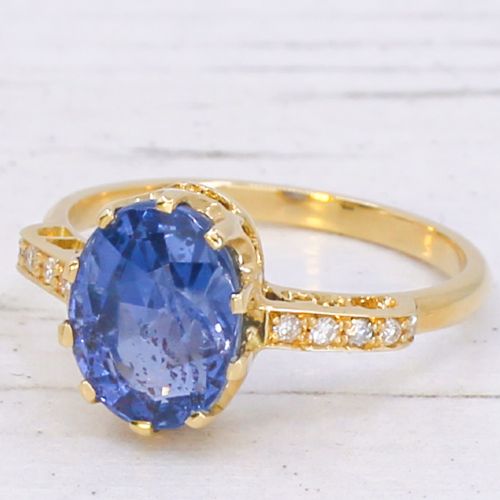
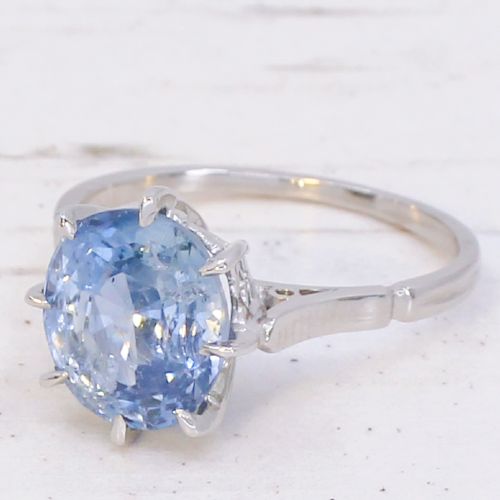
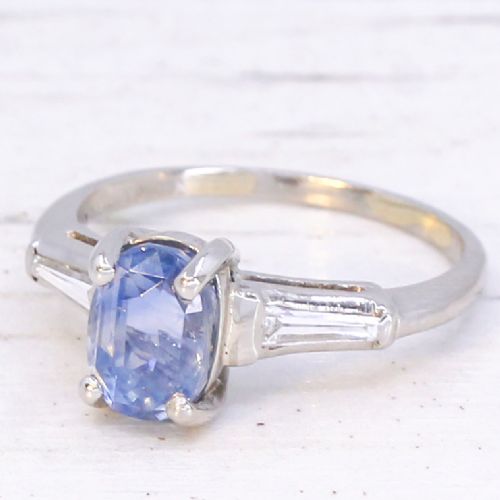
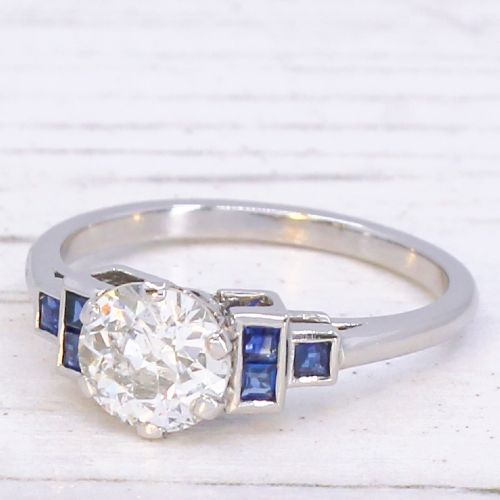


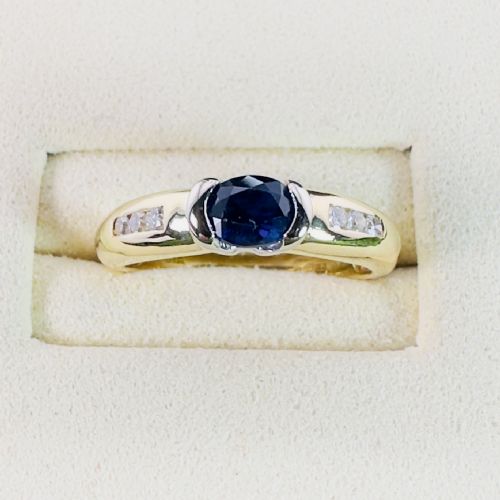


Blue Sapphire Solitaire Ring
A blue sapphire solitaire ring brings together deep blue corundum and precious metal, offering a concentrated flash of colour on the hand.
Blue Sapphire Solitaire Ring
A blue sapphire solitaire ring centres upon a single prominent blue sapphire, often flanked by smaller diamonds or set alone in precious metal. These pieces span multiple decades, appearing frequently in Art Deco, Mid-Century, and Victorian iterations.
The sapphire itself takes varied forms, including oval and round cuts, alongside notable examples originating from Ceylon, Kashmir, and Burma. Buyers encounter rings created across the late nineteenth, twentieth, and mid-century periods, showcasing diverse carat weights.
Materials and Construction
Cut and placement define the silhouette, combining old cut or transitional cut diamonds with oval or round sapphires. Metalwork techniques adapt to the period, from intricate twist bands to clean geometric platinum shoulders.
Defining Quality
The origin and thermal history of the stone heavily influence distinction, with unheated stones from specific regions like Ceylon, Kashmir, or Burma commanding particular attention. Natural colour variation, from deep blue to greenish blue, alters the visual impact of the gem.
The integration of the metal mount with the stone reveals the standard of workmanship, whether in a platinum Art Deco setting or a robust gold band. Balance between the central sapphire and any accompanying diamonds determines the visual harmony of the piece.
The Blue Sapphire Solitaire Ring Glossary
- Solitaire
- A jewellery setting featuring a single central gemstone, most commonly a diamond or sapphire. This design focuses attention entirely on the main stone.
- Unheated
- A gemstone that has undergone no artificial heat treatment to enhance its colour or clarity. Such stones retain their natural geological properties.
- Old Cut
- A hand-cut diamond shape typical of older periods, featuring a small table, high crown, and large culet. These cuts produce a softer, candlelit sparkle.
- Transition Cut
- A diamond cut used during the evolution from old European cuts to modern brilliant cuts, spanning the early to mid-twentieth century.
- Ceylon Sapphire
- A sapphire originating from the mines of Sri Lanka, known for a bright and lively blue tone. These stones appear across multiple historical periods in these rings.
Blue Sapphire Solitaire Ring: Frequently Asked Questions
What periods do these rings come from?
The pieces span from the nineteenth century through the Edwardian, Art Deco, and mid-century eras. Each period brings distinct metal choices and mounting styles.
Craftsmanship shifts from Victorian gold work to the geometric platinum settings of the 1920s and the bolder forms of the 1950s.
How do I care for my ring?
Sapphire and diamond rank high on the hardness scale, making them durable for regular wear. Regular cleaning in warm soapy water restores the brilliance of the stone.
Mounts in platinum or gold benefit from periodic checks by a jeweller to ensure the claws remain secure.
What is an unheated sapphire?
An unheated sapphire is a natural stone that has not been subjected to high temperatures to alter its colour or clarity. This natural state is documented in the stone's characteristics.
Such stones derive their appearance entirely from natural geological processes over millions of years.
Are these rings suitable for daily wear?
Corundum is a resilient gemstone well suited to everyday use on the hand. Platinum and gold settings provide sturdy support for the central gem.
Prudent care involves removing the ring during heavy manual tasks to protect the precious metal and the stone.