




Vintage Sailing Ship Model
A vintage sailing ship model captures the romance of the sea through meticulous hand-crafted maritime folk art and scale representations.
Vintage Sailing Ship Model
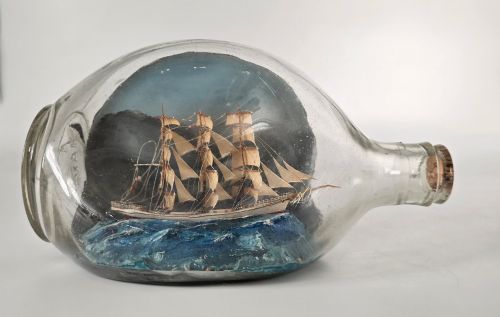
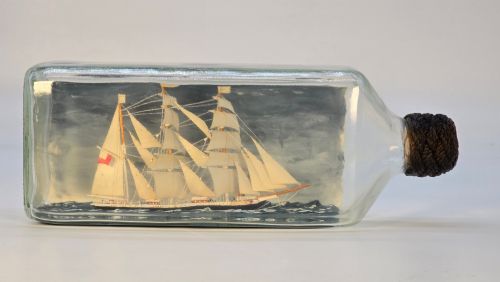
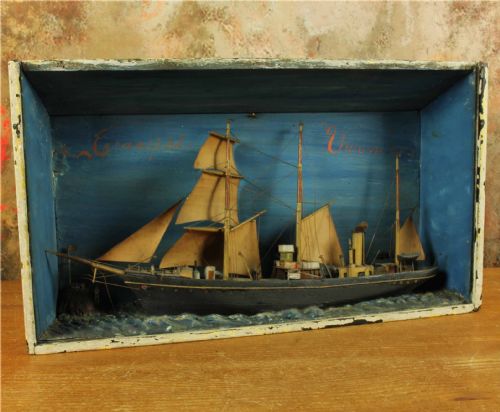
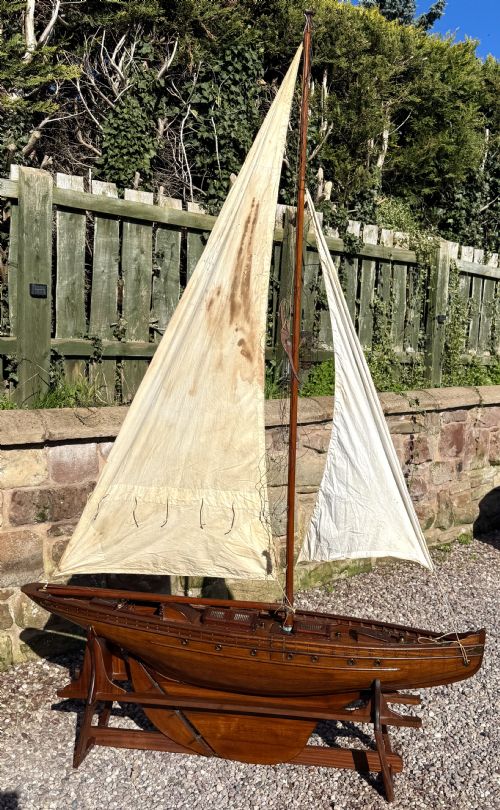
When you search for a vintage sailing ship model, you encounter a diverse range of maritime folk art and scale models spanning from the Victorian and Edwardian eras into the twentieth century. These objects include intricate models housed within glass bottles, detailed shadow box dioramas, and substantial pond yachts designed for open water sailing.
The most common representations on this page are cased dioramas and ships sealed in glass bottles, often mounted on wooden plinths. Pieces such as the nineteenth century French handmade boat model in a box or the early twentieth century English scratch-built ship model reflect vernacular traditions created by sailors and local artisans.
Originating from English, Welsh, French, and Cornish workshops, these pieces encompass various vessel types including clippers, barques, ketches, and racing yachts. Each form preserves a distinct aspect of maritime history, ranging from named vessels like the Glynllifon and the Queen Anne to generic folk art interpretations.
Materials and construction techniques
Makers utilised traditional timber and wood alongside canvas and fabric for sails, rigging the vessels with fine thread and metal wire. These elements were assembled by hand, often incorporating painted backgrounds and plaster components to create realistic sea waves within enclosed boxes or bottles.
Scratch-built techniques dominated the creation of these models, relying on simple hand tools rather than commercial kits. Artisans carved solid blocks of wood for hulls and meticulously fashioned masts and spars, demonstrating considerable ingenuity in fitting complex rigging through narrow bottle necks.
The listings span from the Victorian and Edwardian eras through to the 1930s, featuring wood, glass, canvas, and brass.
Distinguishing craftsmanship and depth
The degree of anatomical accuracy in the rigging and hull proportions separates standard decorative objects from superior maritime folk art. Finer examples display precise scaling and authentic nautical detail that reflect a deep understanding of actual sailing vessels.
The complexity of the setting also defines the grade of the piece, particularly in dioramas where painted backdrops and carved waves create a convincing sense of movement at sea. Original cases, undisturbed bottles, and well-preserved wooden plinths enhance the integrity of the surviving object.
The Vintage Sailing Ship Model Glossary
- Diorama
- A three-dimensional scene depicting ships at sea, typically enclosed within a wooden and glass case or shadow box.
- Barque
- A sailing vessel with three or more masts having the fore and main masts square-rigged and the mizzen mast fore-and-aft rigged.
- Scratch-built
- A model constructed entirely from raw materials and individual components rather than from a pre-manufactured assembly kit.
- Pond yacht
- A large model sailing boat designed and weighted to be sailed across open water on ponds or lakes.
- Folk art
- Utilitarian or decorative objects created by self-taught or traditional craftsmen outside academic artistic traditions.
Vintage Sailing Ship Model: Frequently Asked Questions
How do I date a ship in a bottle?
Dating relies on construction methods, the style of the wooden plinth, and any inscribed paper labels or titles left inside the bottle.
Materials such as early glass types and traditional cotton threads also provide clues to whether a piece originates from the Victorian period or the early twentieth century.
What is a shadow box diorama?
A shadow box diorama is a framed, glass-fronted case containing a model ship set against a painted canvas background.
This format protected the delicate rigging and textile sails from dust while allowing a clear three-dimensional view of the vessel.
Where were these models made?
These models were produced across coastal communities in England, Wales, France, and Cornwall by both professional shipwrights and local folk artists.
Many pieces reflect regional maritime traditions, particularly ports with strong fishing and trading histories.
How should I display my model?
Keep cased dioramas and bottled ships away from direct sunlight and areas of high humidity to protect the wood, paint, and paper components.
Ensure that large pond yachts and freestanding models rest on sturdy surfaces where their rigging remains clear of accidental contact.