
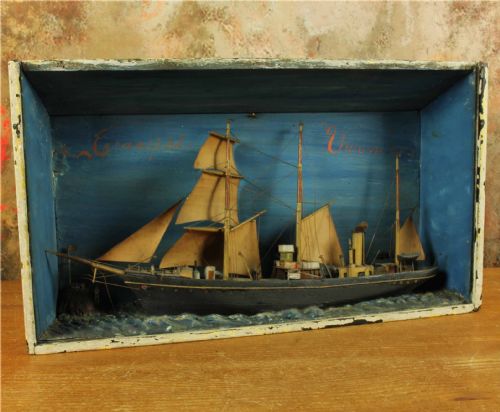


Nautical Ship Model
These nautical ship model pieces bring the tactile record of maritime craft into a room, offering tangible links to nineteenth-century sail and steam navigation.
Nautical Ship Model
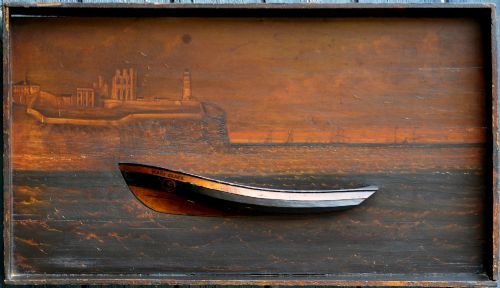
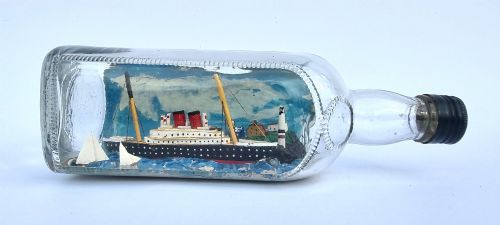
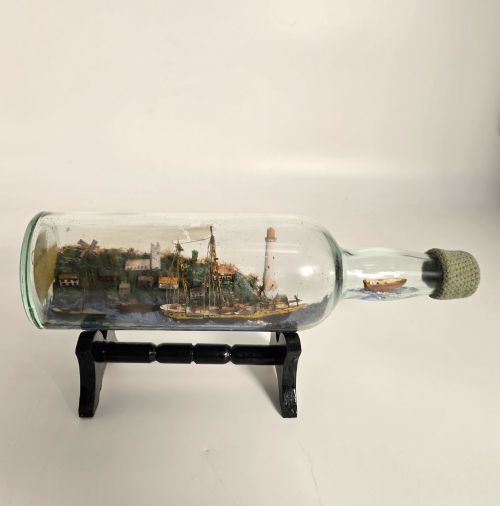
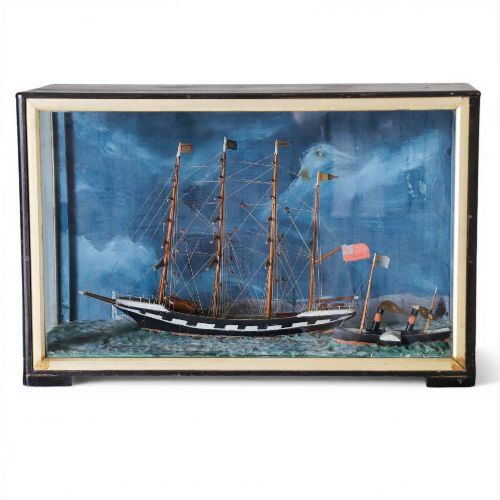
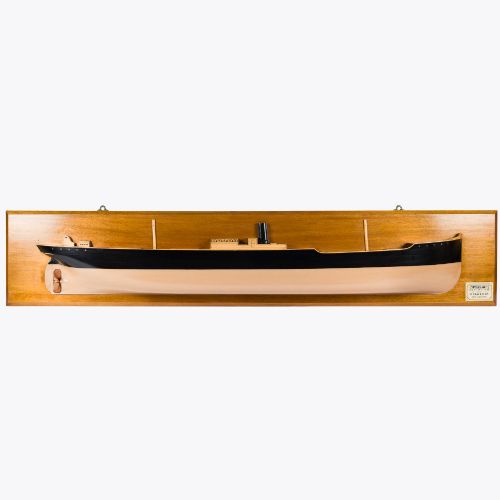
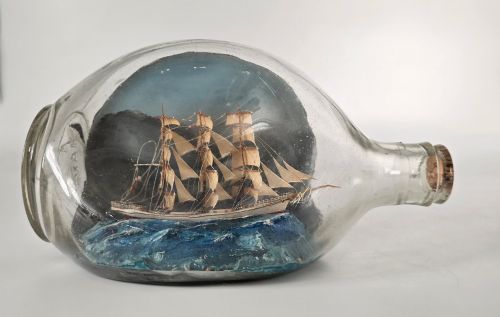
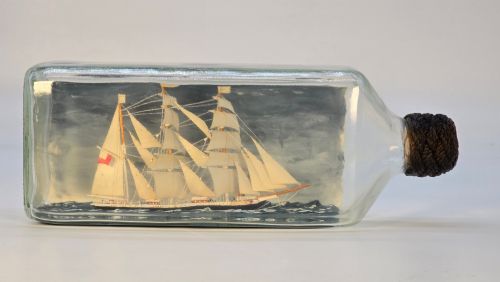
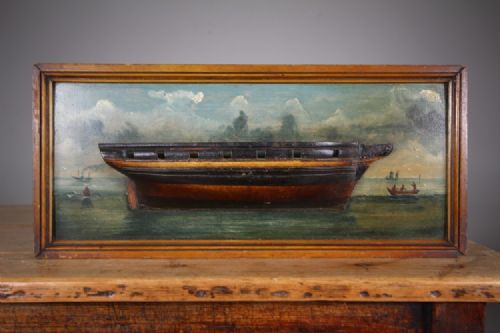
A nautical ship model encompasses cased dioramas, half-hull wooden shapes, and intricate vessels enclosed within glass bottles. These objects emerge primarily from the nineteenth century, the Victorian era, and the early decades of the twentieth century, reflecting the working maritime culture of Britain and France.
Buyers encounter shadow box dioramas showing racing vessels and clippers in full sail, alongside pond yachts and folk art scratch-built constructions. Maritime folk art and domestic craftsmanship dominate the forms available here, often shaped by sailors or local builders working away from commercial shipyards.
The selection ranges from large architectural half-hull models to compact bottled scenes mounted on wooden plinths. Each piece captures a specific vessel or generic maritime scene, utilising traditional materials harvested from coastal trades and domestic workshops.
Materials and construction
Makers relied on carved wood, pine, sycamore, and painted canvas to build the primary hulls and rigging of each nautical ship model. Metal, brass, thread, and plaster added fine structural details, while glass protected delicate dioramas and bottled scenes from dust and moisture.
Folk art pieces often involved scratch-built assembly using scrap materials and natural fibres to simulate sails and rigging. Half-hull models utilised layered wooden boards shaped to represent the exact underwater profiles of commercial trawlers and luxury yachts.
Listings feature items spanning the nineteenth century through the 1930s, incorporating wood, glass, canvas, and metal across diverse folk art and scale forms.
Separating standards of execution
Quality rests in the precision of the rigging, the natural movement suggested in painted seascapes, and the fidelity of the hull proportions. Professional ship builders half-hull models demonstrate technical accuracy intended for dockyard records, whereas folk art examples show individual interpretation and resourcefulness.
The integration of the diorama box or glass bottle influences the overall visual impact, with superior pieces maintaining intact painted backgrounds and stable internal mountings. The handling of textiles for canvas sails and the delicacy of carved wooden details separate utilitarian workshop pieces from accomplished decorative works.
W. Grey & Co·Liverpool Ship Building Co.
The Nautical Ship Model Glossary
- Diorama
- A three-dimensional scene enclosed within a glass-fronted case or box. These displays use painted backdrops and carved elements to recreate vessels moving across the sea.
- Half Hull Model
- A longitudinal slice of a ship hull mounted on a backboard. Ship builders used these to test hydrodynamic forms and record vessel designs.
- Barque
- A sailing vessel with three or more masts having square sails on the fore and mainmasts and fore-and-aft sails on the mizzenmast. This rig appeared frequently on nineteenth-century ocean-going cargo routes.
- Ketch
- A two-masted sailing boat where the smaller rear mast sits forward of the rudder post. This configuration provided manageable handling for coastal trading.
- Scratch Built
- An object constructed entirely from raw materials and individual components rather than from a commercial kit. Makers fabricated these pieces using timber, thread, and metal scraps.
Nautical Ship Model: Frequently Asked Questions
What is a maritime diorama?
A maritime diorama is a cased three-dimensional model depicting ships under sail or steam. These pieces use painted canvas backgrounds and carved wooden waves to simulate motion at sea.
Enclosed behind glass, they protected delicate rigging from sea air and domestic dust while serving as decorative objects in homes and offices.
How were ships built inside bottles?
Makers constructed the vessel with folding masts and rigging that laid flat along the deck. The finished hull passed carefully through the narrow neck of the bottle.
Once inside, pull-strings or wires raised the masts into an upright position, anchoring the rigging permanently within the glass vessel.
What is a half-hull model?
A half-hull model represents one side of a ship split vertically down the middle. Shipyards utilised these wooden shapes to study hull lines and calculate cargo capacity before building full-scale vessels.
Later examples transitioned into decorative objects mounted on wooden boards or marble bases for display in maritime offices and domestic interiors.
How do I date a ship model?
Dating relies on the rigging style, the vessel type depicted, and construction materials such as early plastics, brass fittings, or hand-woven thread. Documentary evidence on attached plaques or within painted details also helps place pieces in the nineteenth or early twentieth century.
Folk art constructions often match the operational lifespan of the actual ship they portray, recorded through contemporary shipping registers.