



Vintage Boat Model
These vintage boat model pieces bring maritime history indoors, offering a tangible connection to traditional craftsmanship that collectors prize for display.
Vintage Boat Model
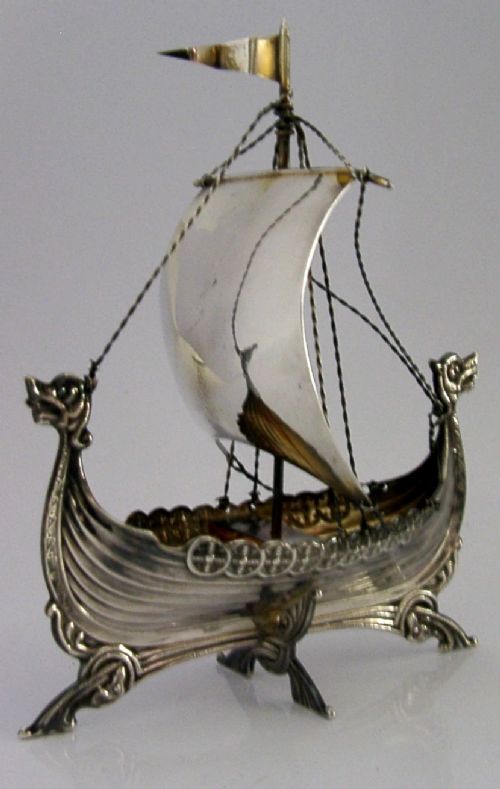
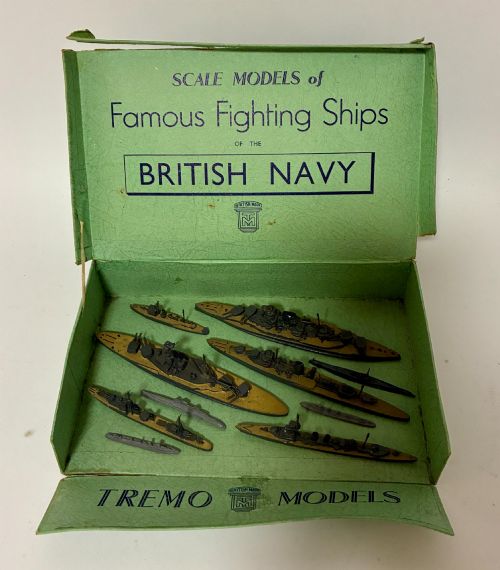
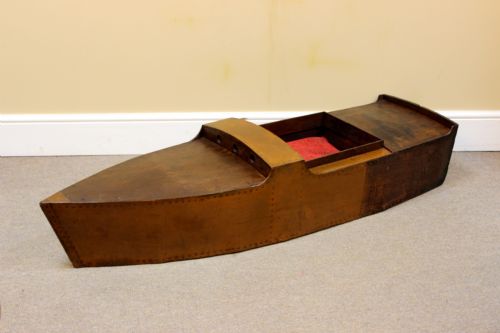
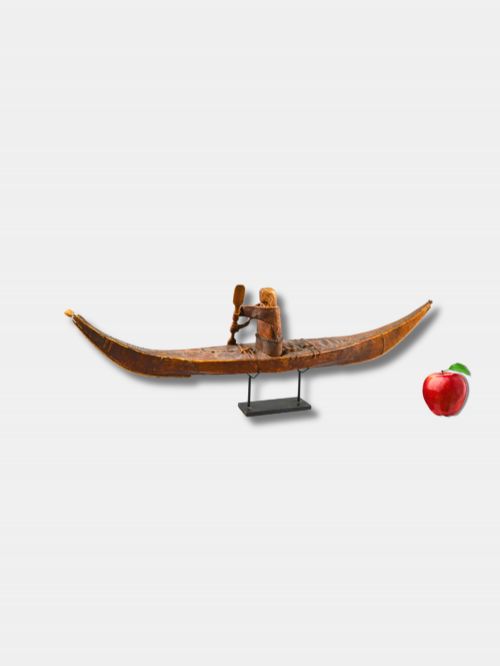
The objects originate from various periods including Victorian, Edwardian, and interwar eras, reflecting the distinct naval and leisure sailing interests of their times. Examples range from English and French workshop pieces to Canadian Inuit kayaks fashioned from tanned seal skin, wood, and bone. Buyers meet substantial pond yachts standing several feet high alongside miniature silver Viking ships and detailed fighting ship scales.
Navigating this selection reveals both professional builder models and charming folk art interpretations made by makers outside formal shipyards. The forms divide neatly between free-sailing pond yachts designed for water and static display models intended for mantelpieces or cabinets. Each piece carries the distinct character of its decade of origin, from the late nineteenth century hulls to nineteen twenties scratch-built items.
How they were made
Makers constructed these hulls primarily from wood, timber, and sycamore, often employing carvel planking methods for larger pond yachts and scratch-built sailing vessels. Metal and brass components frequently form the fittings, rudders, and delicate rigging elements that hold masts and canvas sails in place. Paint provides the exterior finish for both hull waterlines and decorative deck structures.
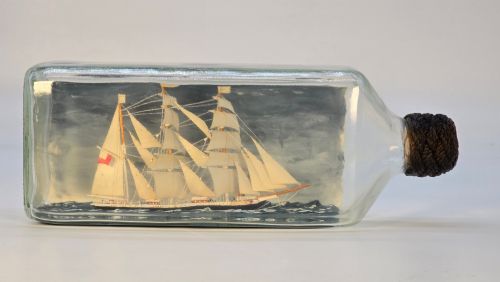
Dioramas and cased models incorporate glass protection, enclosing miniature ships set within painted maritime backgrounds or sealed inside glass bottles. Specialised materials appear in specific cultural examples, such as tanned seal skin and bone utilised by Inuit artisans for traditional kayak sculptures. Thread and cordage complete the standing and running rigging on multi-masted schooners and clippers.
The site listings feature wood, paint, metal, canvas, glass, brass, thread, and timber across items spanning the nineteenth and twentieth centuries.
What varies in quality
The standard of a vintage boat model depends heavily on the precision of the scale and the accuracy of the rigging relative to actual vessels. Scratch-built examples demonstrate the maker's individual skill through the neatness of planking and the proportion of spars and deck furniture. Original paint finishes and untouched structural surfaces carry more integrity than heavily restored or later repainted hulls.
The complexity of the housing also influences the standing of cased models and dioramas, where secure internal mounting and clear glass preservation protect the delicate components within. Pond yachts retain greater appeal when retaining their original deck hardware, keels, and rudder assemblies rather than replacement components added later. The sophistication of the joinery and the selection of fine timbers such as sycamore distinguish workshop pieces from simpler amateur items.
The Vintage Boat Model Glossary
- Half hull
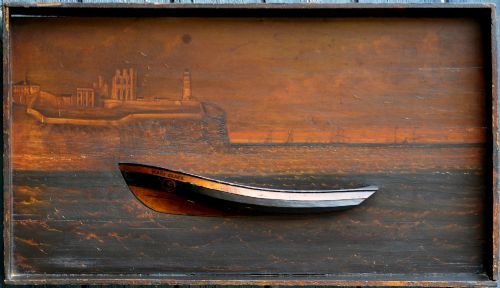
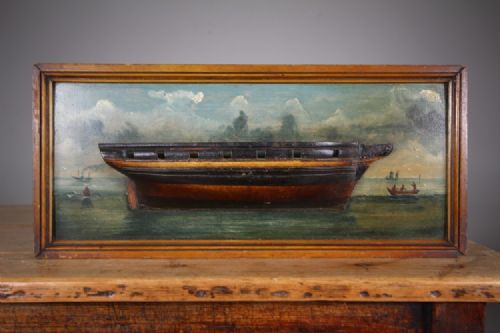
- A model representing one side of a ship's body, split vertically down the centre line and mounted on a wooden backboard. Ship builders historically used these to plan hull shapes before full-scale construction.
- Diorama
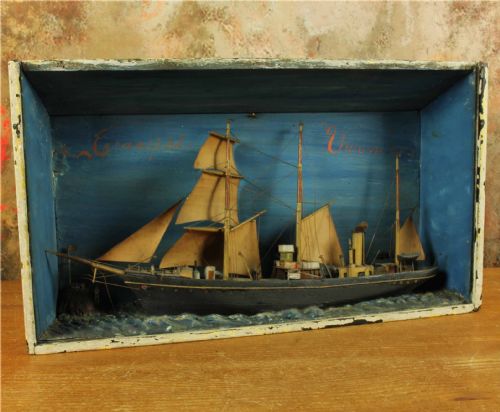
- A three dimensional scene depicting a ship at sea, often enclosed within a wooden box, glazed case, or glass bottle. These displays utilise painted backgrounds and textured plaster or putty to simulate waves.
- Pond yacht
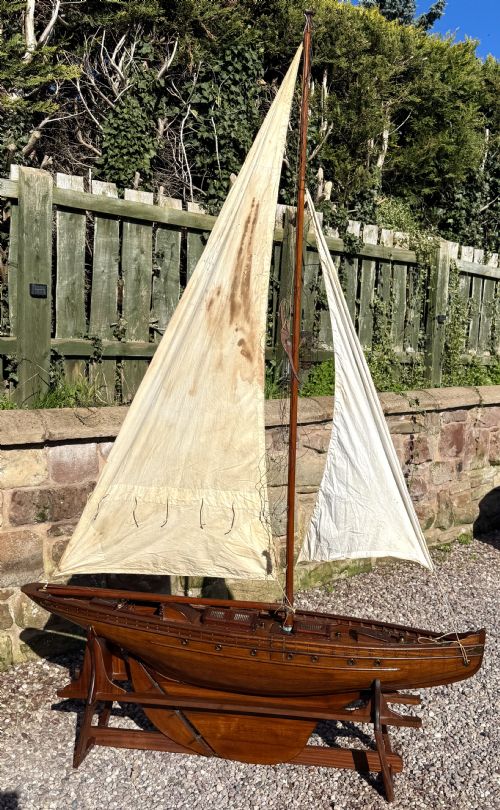
- A free-sailing toy or model boat designed to be sailed on lakes and park ponds without remote control. They rely on self-steering rigs that adjust the sails automatically when the boat turns.
- Scratch built
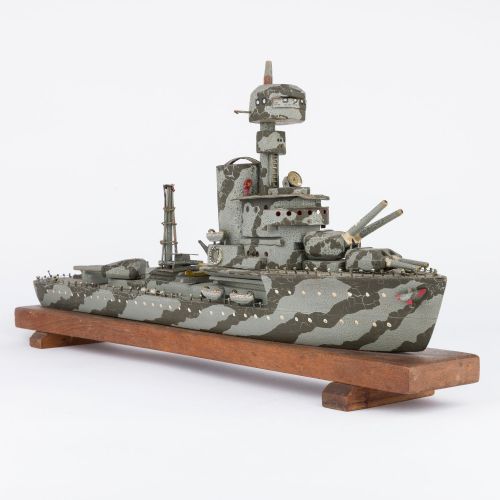
- A model constructed entirely from raw materials and individual components rather than assembled from a commercial kit. Such pieces rely on the builder's own measurements and resourcefulness.
- Carvel hull
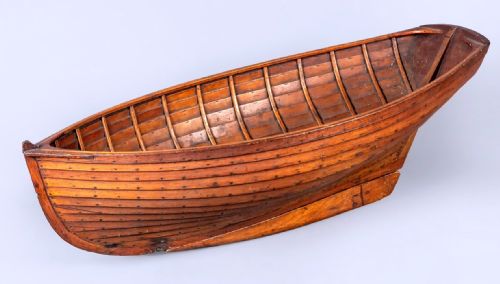
- A boat building method where hull planks are laid edge to edge flush against each other and fastened to a supporting internal framework. This technique produces a smooth exterior surface.
Vintage Boat Model: Frequently Asked Questions
How do I display a large pond yacht?
Large pond yachts require a sturdy wooden stand or plinth to support the heavy keel and hull securely on a flat surface. Positioning them away from direct sunlight and radiators protects the aged wood and painted finishes from cracking.
Allowing sufficient clearance around the masts and rigging prevents accidental damage in busy rooms. Many collectors place taller models on low tables or dedicated floor plinths to showcase their full height.
Are these model boats waterproof?
Most vintage pond yachts were originally built to sail on water using wooden hulls and lead ballast keels. However, decades of drying timber and fragile rigging mean modern water testing risks irreversible damage to historic joints and paint.
Treating these pieces as static decorative objects preserves their structural integrity and delicate thread components. Submerging them today can cause the old glues and seals to fail.
What is a ship in a bottle model?
A ship in a bottle is a diorama where a fully rigged sailing model is carefully assembled inside a glass container. Makers typically construct the masts with hinged bases that fold flat along the deck, allowing the hull to pass through the narrow neck before being pulled upright using attached threads.
Sealing the bottle protects the miniature vessel from dust and atmospheric moisture indefinitely. These traditional folk art pieces reflect hours of patient needlework and dexterity.
How do I identify the age of a model?
Dating relies on examining the construction materials, hardware styles, and any accompanying builder plaques or written provenance on the hull. Traditional metal fastenings, early types of glass in cased dioramas, and specific rig configurations offer clear chronological clues.
Comparing the vessel type to historical ship launches provides a reliable estimated period of construction. Unsigned folk art pieces are typically dated by the wear of the paint and the tooling marks on the timber.