


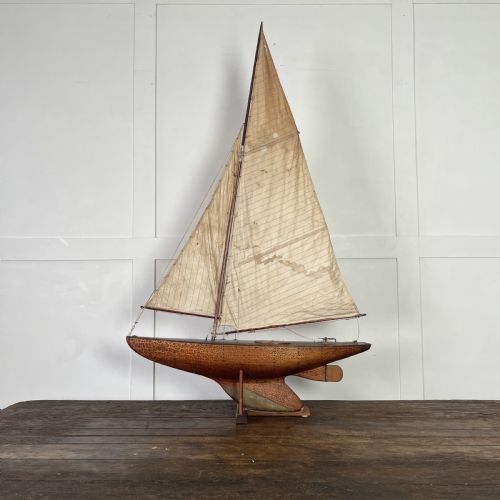


Carved Nautical Vessel
A carved nautical vessel brings maritime history indoors, offering detailed wooden craftsmanship from the nineteenth and early twentieth centuries.
Carved Nautical Vessel
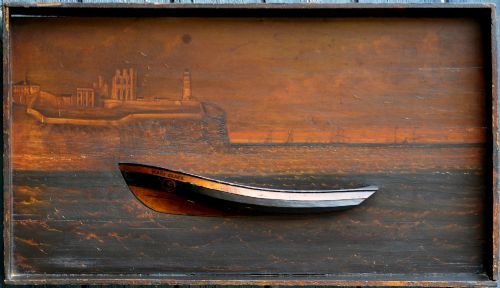
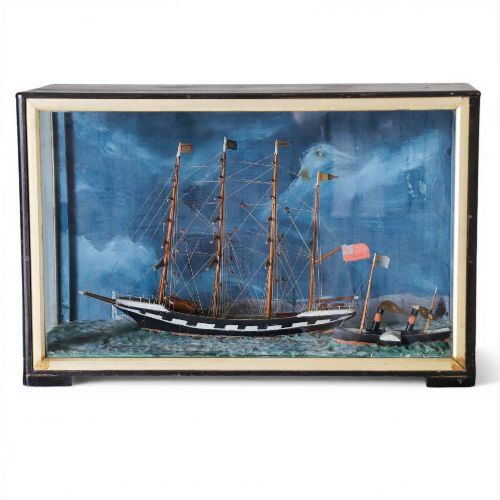
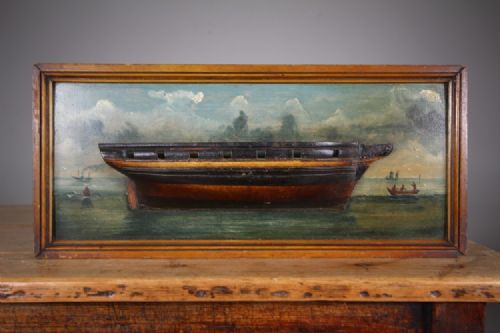
When you search for a carved nautical vessel, you encounter a range of maritime shadow boxes, half hull ship models, and dioramas dating from the nineteenth century into the Edwardian era. These pieces capture sailing ships, racing vessels, and steam barges through folk art traditions.
The most common examples on this page are cased dioramas and wooden models built by maritime makers, often reflecting British and French craftsmanship. They range from sycamore luxury yachts on marble bases to naive wooden dioramas and pond yachts.
Materials and construction
Makers utilised wood, timber, sycamore, and pine to carve the hulls and masts, often combining glass and plaster within cased dioramas to create depth and movement. Paint adds maritime detail to the sea and the vessels themselves.
Brass and other metals appear in fittings, while marble serves as a solid base for specific luxury yacht models. Scratch built construction methods rely on traditional carpentry and folk art techniques.
Some nineteenth-century makers cleverly squeezed entire multi-masted sailing ships inside glass bottles, leaving guests wondering how the rigging ever got in there.
What separates the finest examples
Quality rests in the precision of the carving and the complexity of the maritime scene, distinguishing naive folk art from master model making. The preservation of original painted surfaces and glass cases dictates the overall integrity of the piece.
Proportion and scale play significant roles, where intricate rigging and detailed hull shaping separate standard decorative objects from superior historical models.
W. Grey & Co
The Carved Nautical Vessel Glossary
- Diorama
- A three-dimensional scene enclosed in a glass case, typically depicting ships at sea with painted backgrounds. These pieces protect delicate rigging from dust and damage.
- Half Hull Model
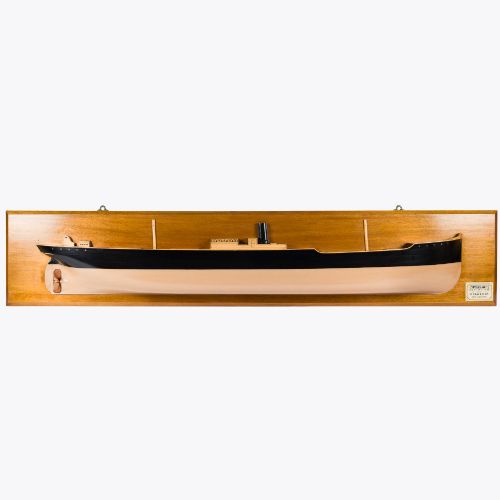
- A representation of a ship's starboard or port side mounted on a board, historically used for naval architecture and design. They focus attention purely on the hull contours.
- Folk Art
- Objects created by self-taught or traditional artisans outside formal academic traditions. Maritime examples reflect community craftsmanship and nautical heritage.
- Scratch Built
- A model constructed entirely from raw materials and components rather than a commercial kit. This method highlights the individual maker's ingenuity and skill.
Carved Nautical Vessel: Frequently Asked Questions
What is a half hull model?
A half hull model displays one side of a ship mounted on a backboard, capturing precise naval architecture. Shipwrights originally used these designs to test hull shapes before full construction.
Today, they function as wall-hanging decorative objects that highlight traditional woodworking skills.
How are shadow box dioramas constructed?
These pieces enclose carved wooden ships within a wooden and glass frame, often featuring a painted canvas backdrop of the sea. Plaster and mixed media create textured waves around the vessel.
The enclosed design protects the fragile rigging from environmental wear.
What materials did maritime folk artists use?
Makers relied on accessible materials such as pine, sycamore, timber, and paint to build their models. Brass fittings and glass enclosures completed the presentation of the maritime scenes.
Scrap metals and everyday supplies frequently appeared in scratch built pieces.
How do I date an antique ship model?
Dating relies on the vessel type depicted, construction techniques, and materials such as early glass or marble bases. Nineteenth-century pieces often show distinct naive folk art characteristics compared to Edwardian examples.
Inscribed plaques and maker details also help establish the exact period.