


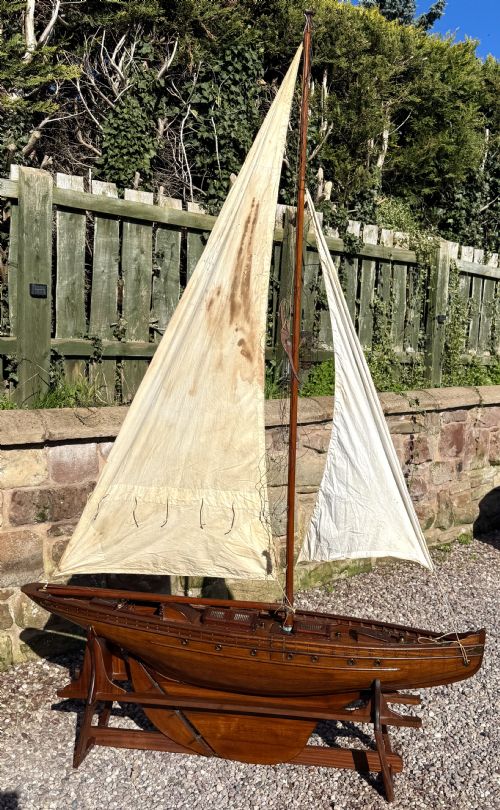


Vintage Ship Display Model
A vintage ship display model brings maritime history indoors, offering detailed craftsmanship through cased dioramas, pond yachts, and bottles.
Vintage Ship Display Model
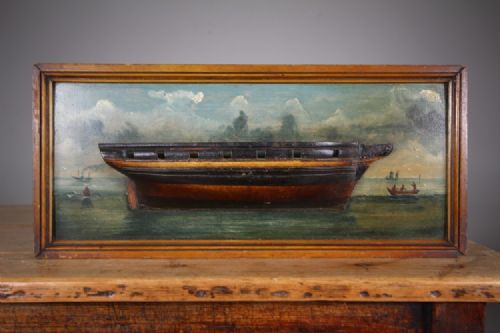
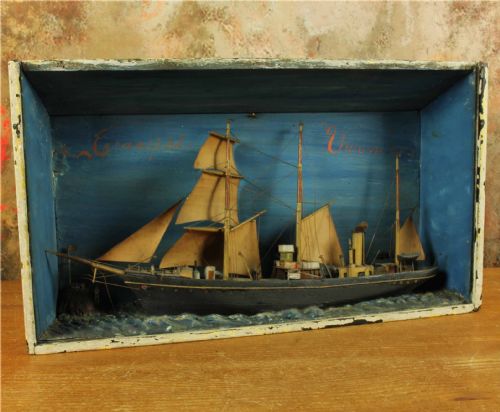
Buyers seeking a vintage ship display model encounter diverse maritime representations spanning the nineteenth century through the early twentieth century. These objects include cased shadow box dioramas, wooden pond yachts, scratch-built vessels, and intricate models preserved inside glass bottles.
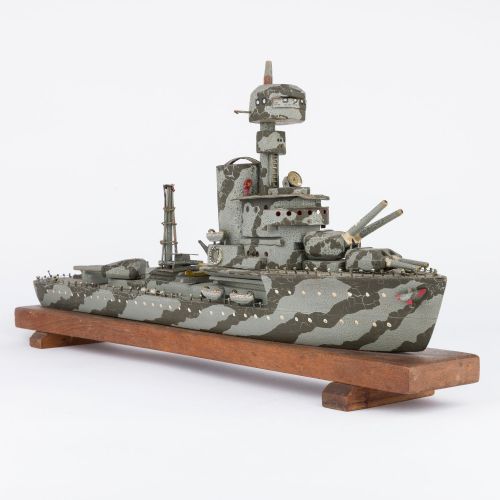
The selection here encompasses Victorian maritime folk art, Edwardian pieces, and specific vessel types such as three-mast sailing ships, barques, and royal navy battleships. Examples range from French handmade boats in boxes to Cornish and Welsh folk art creations.
Most pieces combine decorative appeal with historical documentation, often naming specific vessels like the Glynllifon, Queen Anne, or The Hippolyta. The form varies widely from large eight-foot pond yachts on stands to miniature scale models housed in modest display cases.
How they were made
Construction relies heavily on wood and carved sycamore, shaped to form hulls, masts, and decks alongside metal components, brass fittings, and plaster details. Artisans utilised canvas and threaded cordage to rig sails across single, two, or three-mast configurations.
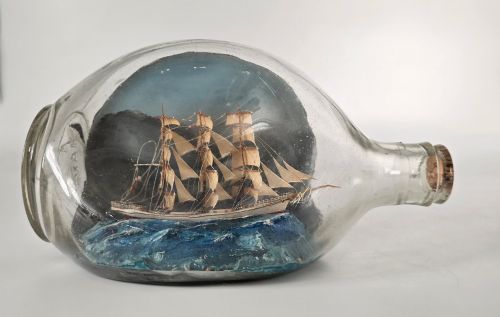
Makers integrated paint to render sea swells, flags, and hull colours, while glass cases protected delicate rigging from dust and damage. Certain models, such as ships in bottles, required meticulous assembly inside confined spaces using specialised internal tools and collapsible masts.
Listings feature items from the nineteenth century, Victorian era, and 1930s, utilising wood, brass, glass, and canvas.
What varies in quality
The standard of a vintage ship display model depends on the precision of the scale work and the intricacy of the rigging. Scratch-built examples featuring detailed deck furniture and accurate proportions command greater appreciation than simpler decorative objects.
The preservation of original materials, including aged paint, intact glass cases, and authentic wooden hulls, elevates a piece. Evidence of skilled hand-carving, such as sculpted waves in a marine diorama, separates standard folk art from superior maritime craftsmanship.
The Vintage Ship Display Model Glossary
- Diorama
- A three-dimensional scene depicting vessels in a realistic setting, often enclosed in a glazed wooden case. These frequently portray ships racing at sea or resting in coastal waters.
- Pond Yacht
- A large-scale sailing model designed to be sailed on water, usually fitted with a wooden hull and a substantial display stand. They date from the Victorian and Edwardian eras.
- Scratch build
- A model constructed entirely from raw materials and individual components rather than from a commercial kit. This method highlights the artisan's personal skill and interpretive accuracy.
- Barque
- A sailing vessel with three or more masts having the fore and main masts square-rigged and the mizzenmast fore-and-aft rigged. This specific rig appears frequently in marine dioramas.
- Folk Art
- Objects created by self-taught makers using traditional methods and accessible materials. Maritime examples often reflect local coastal craftsmanship and vernacular design.
Vintage Ship Display Model: Frequently Asked Questions
How were ships put in bottles?
Makers constructed the vessel with hinged masts and folded rigging that lay flat against the deck, allowing the hull to pass through the narrow neck of a bottle. Once inside, strings attached to the masts were pulled to raise them upright.
Adhesives and putty secured the ship to the bottom of the bottle, often concealing the base beneath a painted sea surface. Artisans then trimmed the control threads to complete the illusion.
Where were pond yachts used?
Pond yachts were sailed recreationally on ornamental park lakes and coastal ponds by hobbyists during the nineteenth and early twentieth centuries. Owners adjusted the sails and rudders so the boat would cross the water unassisted.
Due to their substantial size, many surviving examples now function as interior decorative objects mounted on wooden stands. They capture a distinct era of leisure and maritime recreation.
How do I date a model?
Dating relies on stylistic clues, construction methods, and materials such as early glass, hand-carved wood, and original paint finishes. References to specific historical eras, like the Victorian period or WWI, provide a foundational timeframe.
Inscribed names of documented vessels or contemporary maker notes preserved on the hull or case help narrow the origin further. Comparing the hull shape and rigging style to dated navy or commercial records confirms the era.