

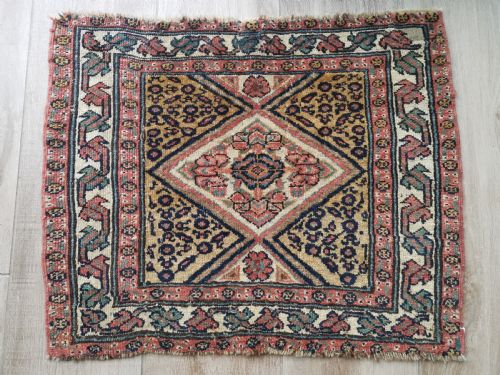


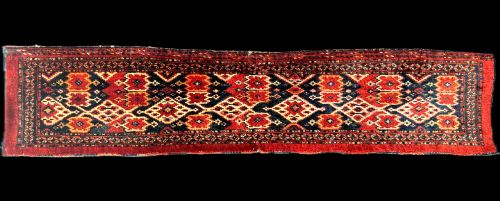


Vintage Rug Fragment
A vintage rug fragment offers tribal artistry and dense symbolism from nineteenth-century weaving traditions in smaller, preserved formats.
Vintage Rug Fragment
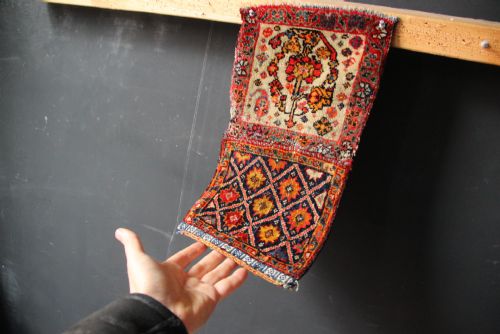
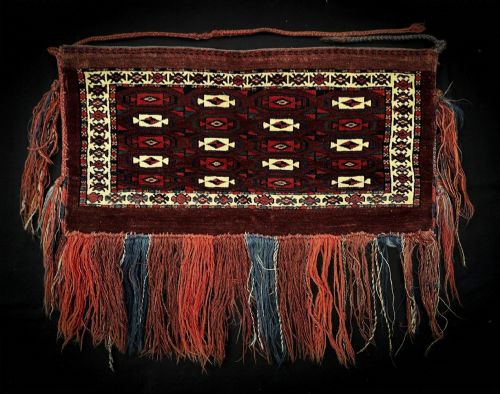
A vintage rug fragment represents sections of larger nomadic and tribal textiles, including saddlebag faces, storage sacks, and torbas created across Persia, the Caucasus, and Central Asia. These pieces preserve specific motifs and structures from functional items used by nomadic groups such as the Afshar, Yomut, Tekke, and Shahsavan tribes.
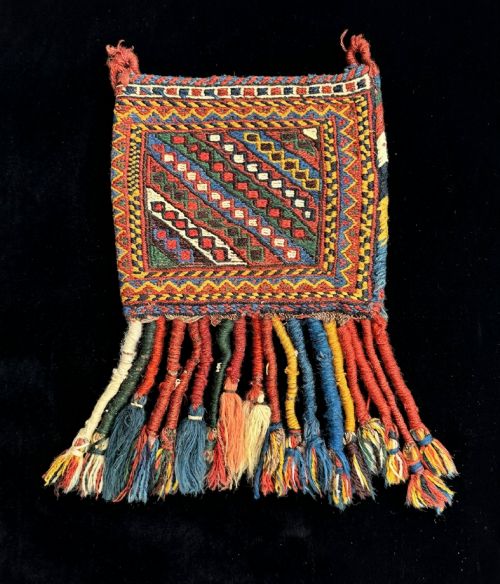
The selections encountered here originate primarily from the nineteenth century up to the early twentieth century, spanning periods from eighteen fifty to nineteen twenty. They include specific forms like the tacheh, khorjin, and juval, which were originally woven for domestic storage or transport during tribal migrations.
Buyers look to these fragments to examine regional designs, tribal symbols, and older weaving techniques without acquiring a full-sized carpet. Each item demonstrates the distinct visual vocabulary of specific tribal groups residing in regions like the Chahar Mahal, Trans-Caspian steppes, and Kerman province.
Wool, Cotton, and Natural Dyes
The construction of these pieces relies predominantly on wool, hand-spun wool, and cotton foundations, occasionally incorporating silk and metallic thread for specific decorative details. Natural dyes provide the palette, yielding stable tones that age with patination across the pile and flatweave structures.
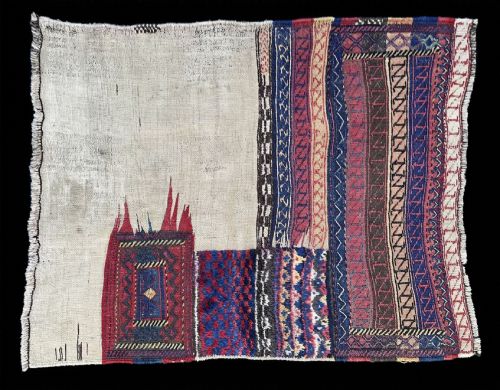
Weaving techniques vary by origin, encompassing pile knots alongside flatwoven structures such as soumak and sumac work, which allow for crisp geometric detailing. Artisans constructed these fragments on portable nomadic looms using locally gathered materials suited to daily utility.
Vintage Rug Fragment Retail Price Guide 2026
Typical asking prices for vintage rug fragment among the pieces listed under this phrase on Sellingantiques today, from the lower quarter to the upper quarter. They describe what is for sale here now, not the wider market.
Listings feature nineteenth-century materials including hand-spun wool, cotton, silk, and natural dyes applied across Persian, Caucasian, and Central Asian nomadic tribal formats.
Material Purity and Design Clarity
Quality in these fragments depends on the handling of materials, particularly the use of lustrous hand-spun wool and deeply saturated natural dyes that retain visual depth. Superior examples display precise execution of tribal guls, boteh motifs, or animal designs with minimal distortion.
The preservation of the original borders, selvedges, and structural integrity distinguishes finer survivals from heavily compromised remnants. Greater clarity in the tribal iconography and structural balance elevates the visual impact of the remaining textile art.
The Vintage Rug Fragment Glossary
- Gul
- A primary medallion or repeating octagonal motif used extensively in Turkmen and Central Asian carpet design. These symbols often denoted specific tribal lineages.
- Soumak
- A flatweaving technique that wraps supplementary weft threads around the warp to produce a durable fabric with a textured surface. It creates distinct geometric patterns without a pile.
- Boteh
- An almond-shaped motif representing a floral sprout or stylized cypress tree. This design appears frequently across Persian and Caucasian textile arts.
- Juval
- A large storage sack produced by nomadic tribes for bedding or household goods. Only the decorated face often survives as a collectible fragment.
Vintage Rug Fragment: Frequently Asked Questions
What is a rug fragment?
A rug fragment is a surviving section of a larger tribal textile, such as a bag face, storage sack, or runner, separated over time from its original format.
These pieces allow collectors to study authentic tribal designs, regional dyes, and older knotting techniques on a manageable scale.
How were tribal bags used?
Nomadic groups utilised bags like torbas, juvals, and khorjins for transporting and storing household possessions during seasonal migrations.
They hung inside tents or fastened to pack animals, serving practical daily functions while displaying traditional tribal patterns.
How do I care for fragments?
Protect these textiles from direct sunlight to prevent natural dye fading, and avoid placing heavy objects on fragile woolen pile or flatweave surfaces.
Many collectors mount or frame older fragments to relieve physical stress on the antique cotton and wool foundations.
How are tribal origins identified?
Origins are determined by specific structural characteristics, colour palettes, and distinct motifs like guls or boteh designs associated with particular nomadic confederations.
Region-specific weaving traits link individual pieces to areas such as the Caucasus, Western Persia, or Central Asian steppes.