

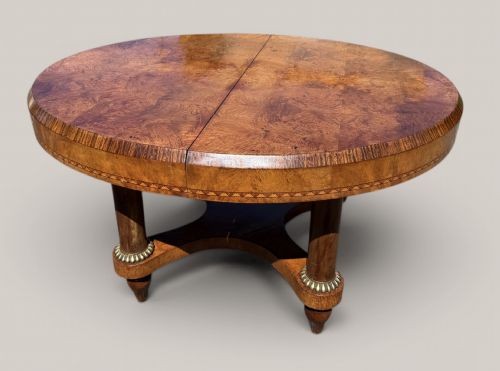


Vintage Round Walnut Table
A vintage round walnut table brings warmth and rich grain to a room, ranging from sleek Art Deco coffee pieces to ornate Victorian designs.

Vintage Round Walnut Table
A vintage round walnut table encompasses a diverse array of circular forms designed for everyday utility and display. When searching for a vintage round walnut table, buyers frequently encounter pieces originating from the nineteenth century up to the modernist designs of the nineteen-thirties.
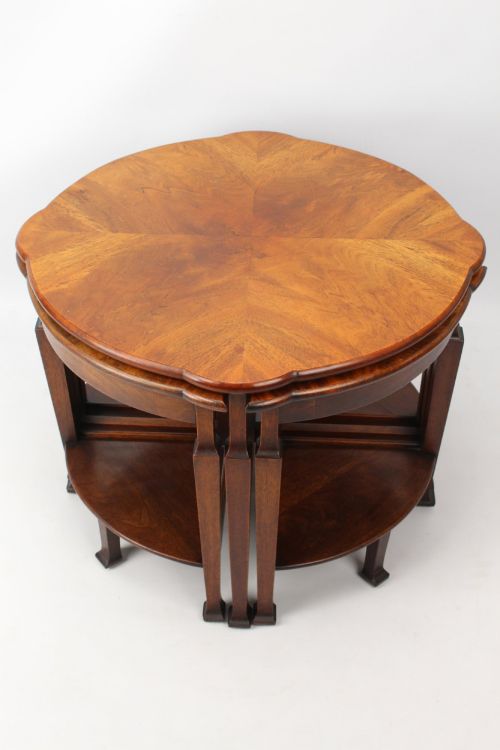
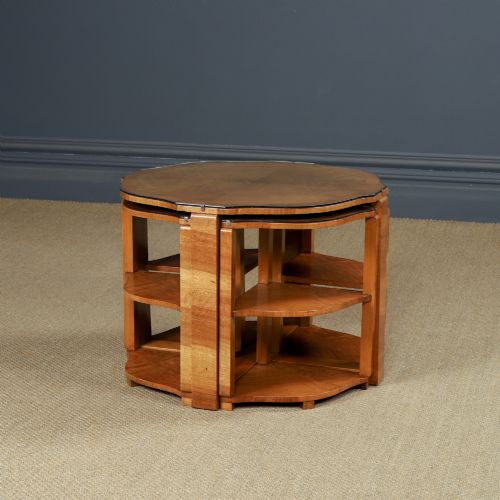
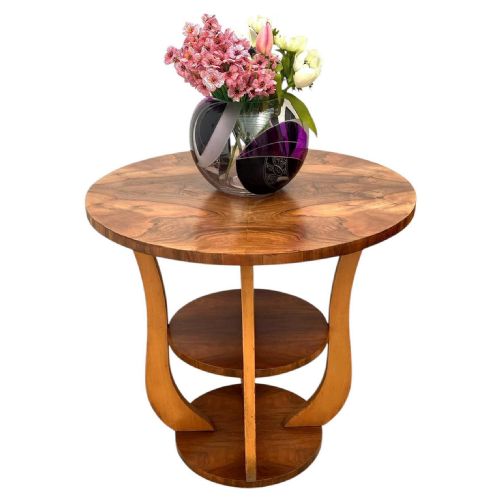
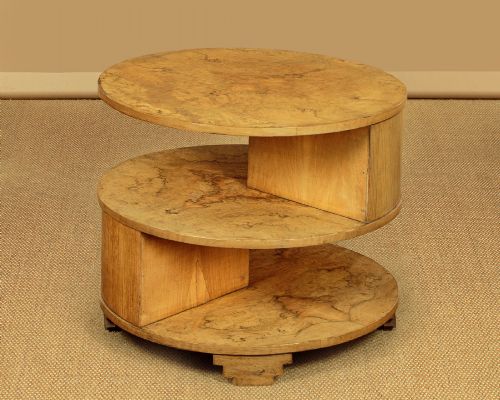
The selection on this page leans heavily towards compact formats suited for modern living, including low coffee tables, tiered occasional tables, and compact centre pieces. Alongside these, larger dining formats and occasional lamp tables appear, spanning Victorian, Edwardian, and Art Deco aesthetics.
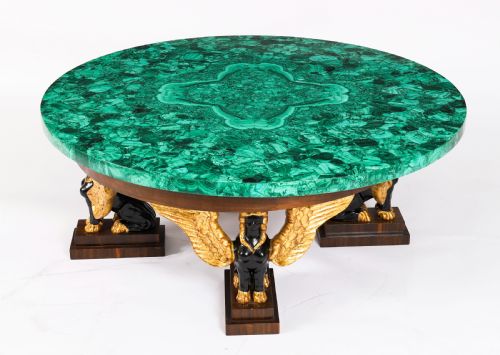
Makers and designers from various regions utilised circular formats to showcase the natural patterning of timber. Whether finding a French marble-topped gueridon or an English Art Deco coffee table, each item serves a distinct domestic function while maintaining a circular footprint.
How They Were Made
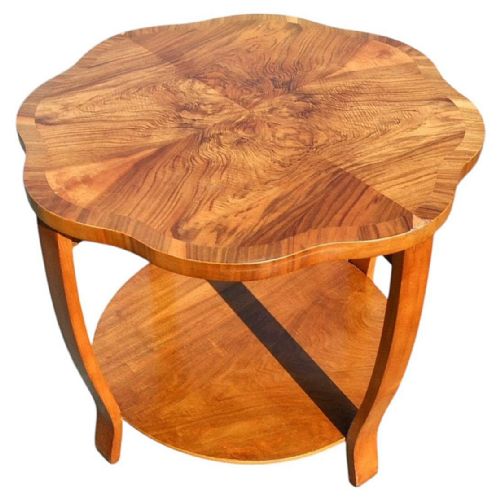
Craftsmen built these tables using solid timber frames combined with finely cut veneers to display dramatic wood figuring. Burr walnut and figured walnut feature prominently, sliced into thin sheets and laid across table tops to create symmetrical patterns and rich visual depth.
Structural elements frequently incorporated solid walnut, ebonised wood, and secondary timbers to provide stability beneath the decorative surfaces. Workshops applied French polishing and clear varnishes to protect the timber and accentuate the warm tones inherent in the walnut grain.
Many examples integrate contrasting materials into the construction, mounting white marble slabs, inset glass, or maple details into the wooden framework. Joinery techniques varied from traditional turning and carving on Victorian supports to clean, streamlined geometry on later twentieth-century pieces.
Vintage Round Walnut Table Retail Price Guide 2026
Typical asking prices for vintage round walnut table among the pieces listed under this phrase on Sellingantiques today, from the lower quarter to the upper quarter. They describe what is for sale here now, not the wider market.
Common forms on this page include coffee tables, multi-tiered occasional tables, drum-shaped bedside cabinets, and circular dining tables.
What Varies in Quality
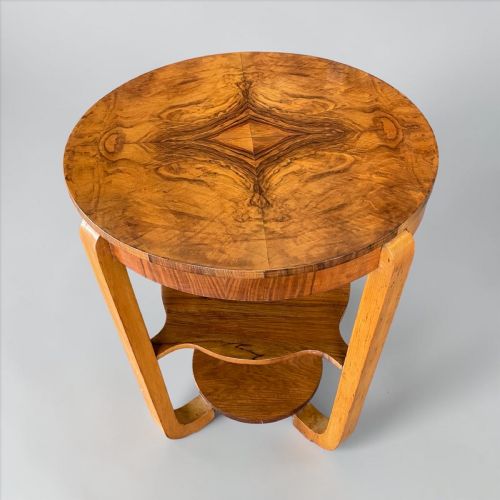
The distinction between standard production and exceptional craftsmanship rests upon the selection and matching of the timber veneers. Superior pieces display book-matched burr walnut where the natural grain swirls symmetrically across the entire circular surface, whereas lesser examples utilise plain cuts with minimal patterning.
Construction methods and secondary details dictate the longevity and refinement of each table. Finely executed items demonstrate tight joints, precise marquetry inlay, and harmonious proportions, while simpler tables rely on basic turned legs and straightforward assembly without decorative embellishment.
The Vintage Round Walnut Table Glossary
- Burr Walnut
- A specialised wood cut from the abnormal growth of a walnut tree, yielding highly twisted and knotted grain patterns. This material was prized by cabinetmakers for decorative veneering on table tops.
- Art Deco
- A design style dominant during the nineteen-thirties, characterised by streamlined geometric forms and modern materials. Tables from this period often emphasise smooth curved surfaces and symmetry.
- Veneer
- A thin slice of superior wood applied over a stable secondary timber base. This technique allowed makers to utilise rich walnut figuring efficiently across large circular surfaces.
- Gueridon
- A small French occasional table supported by one or more columns or pedestals. These frequently feature marble tops and decorative circular frames.
- Marquetry
- The art of applying pieces of veneer to a structure to form decorative patterns. Artisans used this technique to create elaborate pictorial or geometric designs on table tops.
Vintage Round Walnut Table: Frequently Asked Questions
Where should I place a round walnut table?
These circular tables fit comfortably beside sofas, in the centre of smaller reception rooms, or as standalone lamp tables in corners. Their curved edges soften linear room layouts and allow for easy movement around the furniture.
Larger dining variants suit compact eating spaces where a circular top encourages conversation. Coffee tables work well positioned centrally within seating arrangements to keep drinks and decorative items accessible.
How do I care for walnut veneer surfaces?
Maintain walnut surfaces by dusting regularly with a soft, dry cloth and avoiding excessive moisture. Keep wooden tables away from direct heat sources and strong sunlight to prevent the timber and French polish from fading or drying out.
Use coasters and placemats beneath glasses and hot dishes to protect the polished finish from rings and marks. Periodic application of quality beeswax helps nourish the wood and maintain its natural lustre.
What is the difference between occasional and centre tables?
Centre tables are traditionally designed to stand freely in the middle of a room, finished with detail on all sides. They often serve a decorative function or act as a focal point for displaying objects.
Occasional tables are lighter, more portable pieces brought out as needed for specific tasks like holding drinks or books. On this page, many occasional and coffee table designs overlap in height and everyday utility.
How can I tell an Art Deco table from a Victorian one?
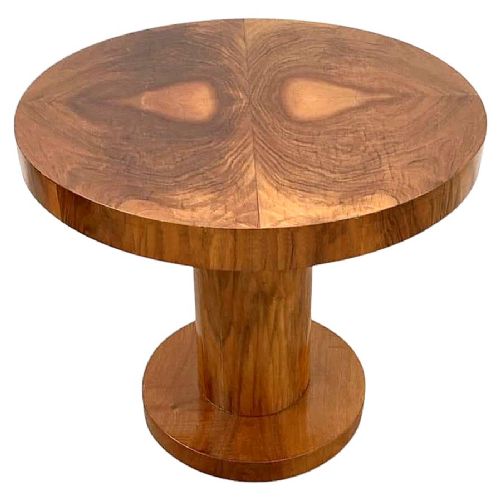
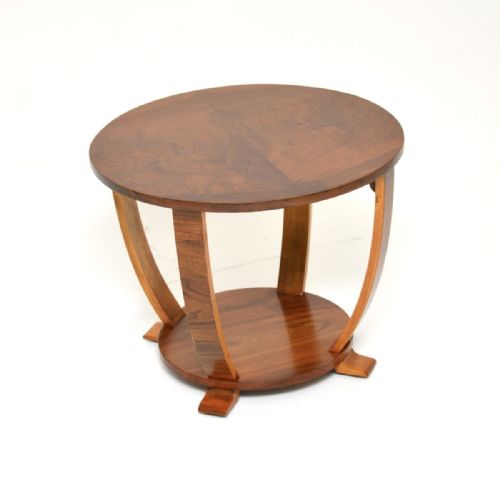
Art Deco tables, typically dating around nineteen-thirty, feature clean geometric lines, smooth curved tiers, and streamlined moderne styling. They often showcase dramatic burr walnut veneers without heavy carving.
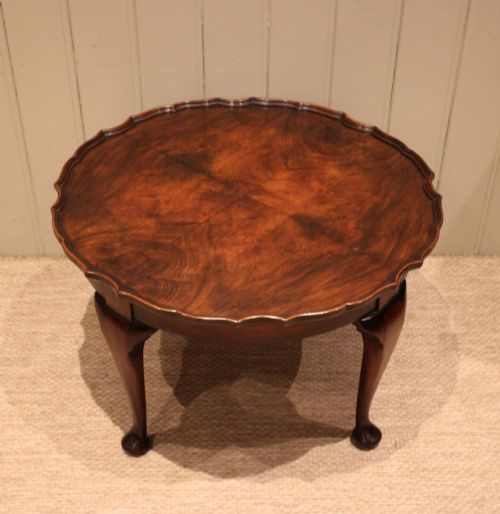
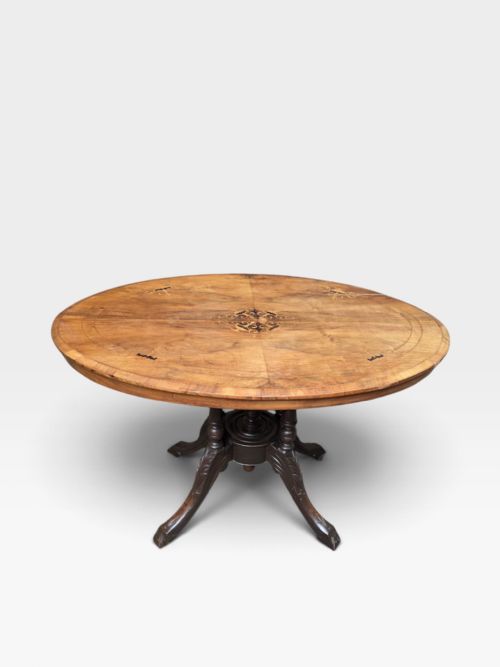
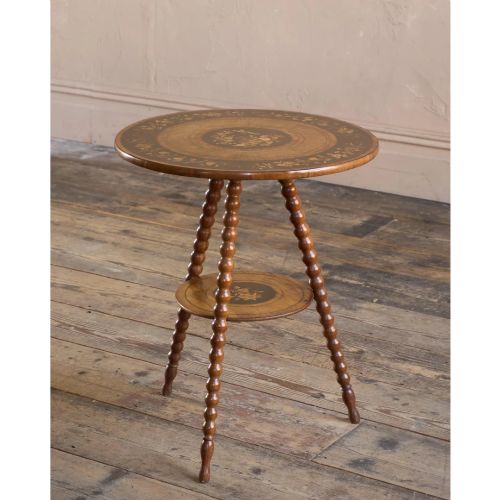
Victorian pieces, originating from the nineteenth century, generally display more ornate decoration such as carved pedestals, turned bobbin legs, or pie crust edges. Their design leans towards historic revival styles rather than modernist abstraction.