





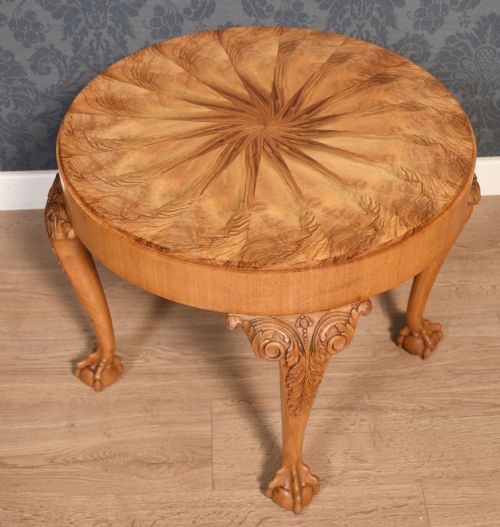
Warm Walnut Tea Table
These warm walnut tea table pieces offer rich timber tones and versatile forms, bringing period character and practical surface space into a room.

Warm Walnut Tea Table
A warm walnut tea table brings together rich timber surfaces and functional forms designed for serving or display, capturing centuries of cabinet-making skill. When you search for a warm walnut tea table, you encounter diverse shapes ranging from occasional tables to coffee tables and folding tables.
The pieces on this page span several distinct eras, including the eighteenth century, Victorian period, and Edwardian period, alongside later twentieth-century examples. You are most likely to meet Victorian and Edwardian occasional or coffee tables in this timber.
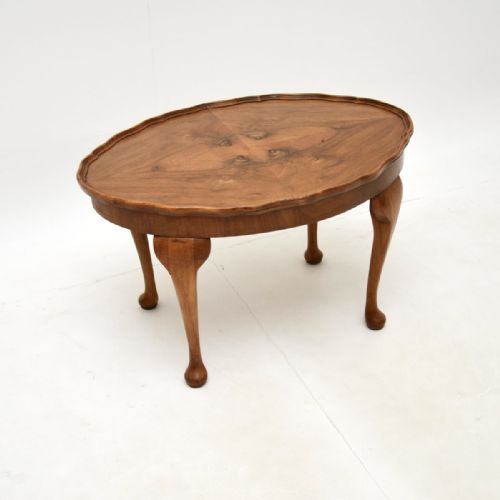
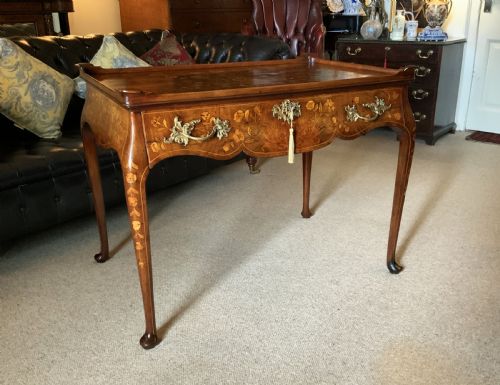
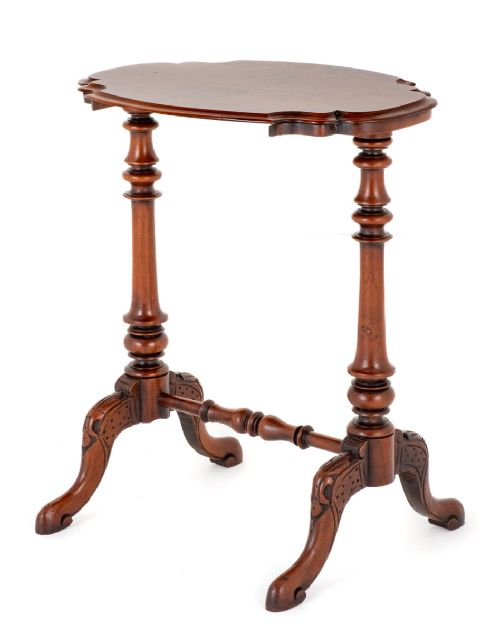
Stylistic influences vary widely across the selection, featuring Queen Anne Revival, Dutch Rococo, French Provincial, and Aesthetic Movement designs. These historical references dictate whether a piece has cabriole legs, marquetry inlay, or simple turned supports.
Materials and construction
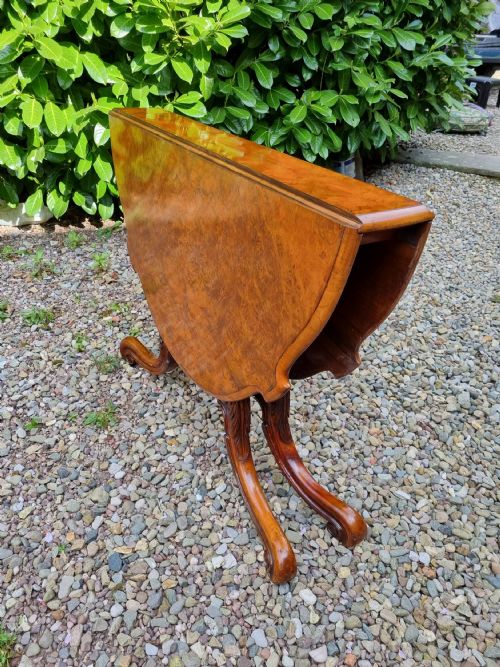
Makers utilised walnut, figured walnut, and burr walnut veneer to create deeply figured, rich brown surfaces that catch the light. Secondary timbers like fruitwood and mahogany appear alongside brass hardware.
Veneering and marquetry techniques define the decorative surfaces, particularly on Dutch Rococo pieces adorned with flowers and birds. Carving and pie crust shaping add texture to edges and supports.
Warm Walnut Tea Table Retail Price Guide 2026
Typical asking prices for warm walnut tea table among the pieces listed under this phrase on Sellingantiques today, from the lower quarter to the upper quarter. They describe what is for sale here now, not the wider market.
Listings feature walnut across the eighteenth century, Victorian era, Edwardian period, and nineteen-thirties.
Assessing quality
The standard of a piece depends heavily on the selection of timber veneers and the intricacy of the carving or marquetry. Highly figured burr walnut and detailed floral inlays distinguish finer examples from plain timber surfaces.
Construction methods and proportions also set pieces apart, from robust structural joinery in eighteenth-century models to the delicate turning found on Victorian occasional tables.
The Warm Walnut Tea Table Glossary
- Burr walnut veneer
- A thin slice of wood taken from a walnut tree growth, showing highly figured, swirling grain patterns. This material was prized for decorative table tops.
- Pie crust edge
- A raised, carved moulding along the rim of a table top that resembles pastry work. It is typically found on round coffee tables.
- Marquetry
- The art of applying pieces of veneer to a structure to form decorative patterns. Eighteenth-century Dutch pieces often display floral and bird motifs.
- Occasional table
- A small, light table designed for use as needed in a room. These forms make up a significant portion of the walnut selections.
- Cabriole leg
- A furniture leg that curves out and then in, resembling an animal's leg. This shape frequently appears on revival pieces inspired by earlier eras.
Warm Walnut Tea Table: Frequently Asked Questions
How do I date an old walnut table?
Dating involves examining the construction methods, timber preparation, and stylistic clues such as carving details or veneer types.
Reference points include period markers like Victorian or Edwardian designs, alongside eighteenth-century marquetry work.
Where should I place an occasional table?
Occasional tables suit living rooms, studies, or hallways where extra surface space is useful beside seating.
Their compact scale allows them to fit easily into corners or beside armchairs.
What styles are common in walnut tables?
Common styles include Queen Anne Revival, Dutch Rococo, French Provincial, and the Aesthetic Movement.
These diverse influences show up in leg shapes, edge profiles, and surface decoration.