





Sunburst Veneered Table
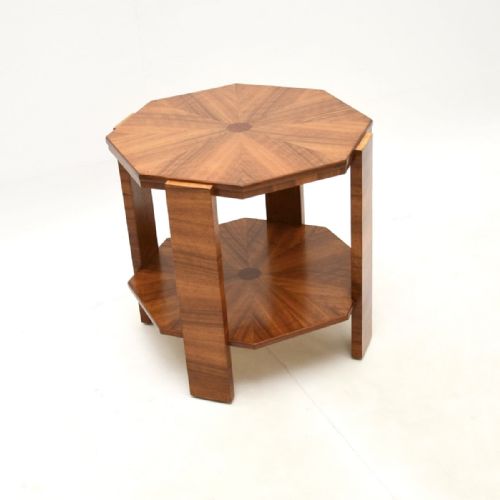
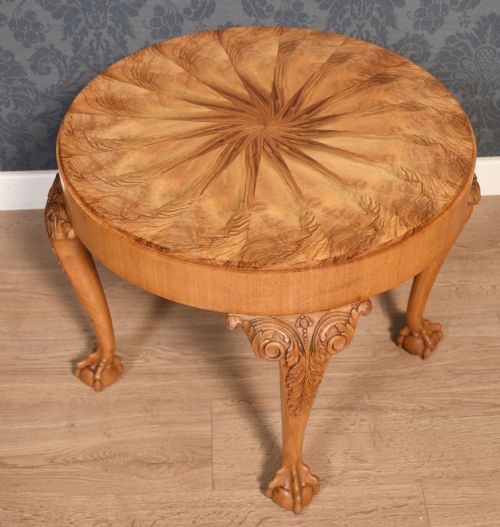
A sunburst veneered table brings geometric radiance into a room, drawing the eye instantly to the intricate grain radiating from the centre.

Sunburst Veneered Table
A sunburst veneered table is defined by its striking geometric wood grain pattern radiating outwards from a central point, creating a vibrant optical effect on the surface. When searching for a sunburst veneered table, buyers encounter a variety of forms including occasional tables, coffee tables, centre tables, and larger dining tables.
The pieces available span multiple periods and design movements, with notable examples originating from the Art Deco era of the 1920s and 1930s, alongside earlier nineteenth-century iterations. Alongside tables, related forms such as desks and clocks occasionally feature within the wider selection.
Most frequently, buyers meet walnut veneered pieces from the 1930s exhibiting the characteristic circular geometry of the Art Deco style. Other variations include birch, mahogany, and satinwood examples drawn from Edwardian and revival periods.
How they were made
Craftsmen utilised thin slices of timber, known as veneers, carefully cut and arranged symmetrically to produce the signature radial or segmented top. Walnut veneer remains the most common choice, prized for its rich tones and pronounced figuring.
Makers frequently combined contrasting timbers such as maple, satinwood, and birch within the geometric patterns to accentuate the optical depth of the design. Ebonised wood and brass details sometimes appear to frame or support the veneered surfaces.
Sunburst Veneered Table Retail Price Guide 2026
Typical asking prices for sunburst veneered table among the pieces listed under this phrase on Sellingantiques today, from the lower quarter to the upper quarter. They describe what is for sale here now, not the wider market.
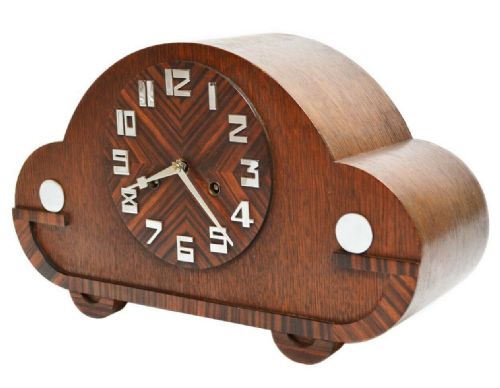
Even a mantel clock manages to sneak into the furniture lineup.
What varies in quality
Quality rests primarily on the precision of the veneer matching at the centre point and the symmetry of the radiating segments. Superior execution ensures tight, seamless joints where the grain pieces meet.
The choice of timber figure and the secondary woods used in the construction determine the overall refinement of the piece. Tables with well-figured walnut or finely inlaid borders represent the upper tier of craftsmanship.
The Sunburst Veneered Table Glossary
- Veneer
- A thin layer of finely figured wood applied to a base timber to provide a decorative surface. This technique allows cabinetmakers to utilise striking grain patterns that would be unstable if used as solid timber.
- Art Deco
- A prominent design style of the 1920s and 1930s characterised by sleek geometric shapes, streamlined forms, and modern materials. Tables from this movement frequently display bold radial veneer patterns.
- Centre Table
- A freestanding table designed to be viewed from all sides and placed in the middle of a room rather than against a wall. These pieces often feature decorative tops intended to be admired from above.
- Occasional Table
- A small, versatile table intended for light, specific uses around the home, such as holding a lamp or book. They are commonly produced in coffee and side table formats.
Sunburst Veneered Table: Frequently Asked Questions
Where should I place a centre table?
A centre table belongs in an open space where people can walk entirely around it and admire the top surface. They function effectively in large hallways or spacious sitting rooms as focal points.
Because these tables are finished on all sides, they do not need to rest against a wall. Ensure you leave adequate clearance for movement around the piece.
How do I care for walnut veneer?
Keep veneered surfaces away from direct sunlight and strong heat sources to prevent the wood from drying out or fading. Dust regularly with a soft, dry cloth and avoid harsh chemical polishes.
Using coasters and mats protects the polished wooden surface from moisture rings and heat damage. Natural wax applied sparingly helps maintain the lustre of the timber.
What is the difference between Art Deco and Regency?
Art Deco dates primarily from the 1920s and 1930s, featuring bold geometric lines and striking veneers like walnut and maple. Regency pieces originate from the early nineteenth century and typically draw inspiration from classical Greek and Roman forms.
Regency revival styles later re-emerged around 1900, blending classical proportions with turn-of-the-century craftsmanship. Examining the overall silhouette and secondary details usually reveals the distinction between the two eras.