


Vintage Revolving Armchair
A vintage revolving armchair brings practical motion and traditional timber character to a study or office.
Vintage Revolving Armchair
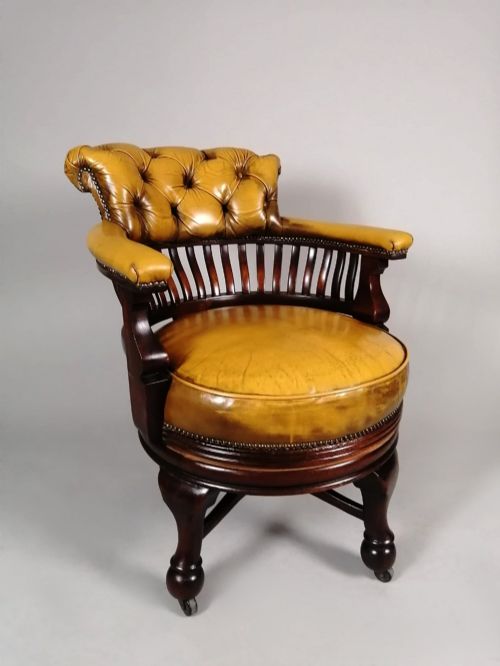
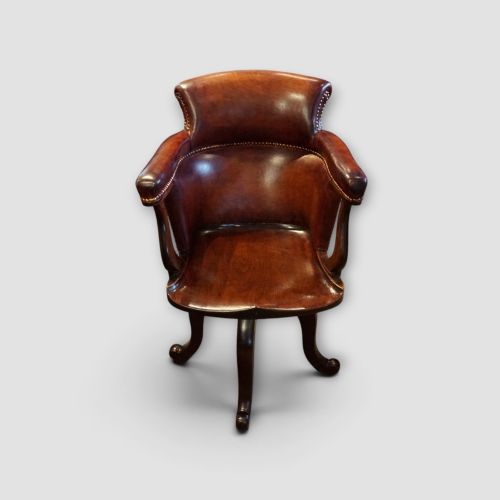
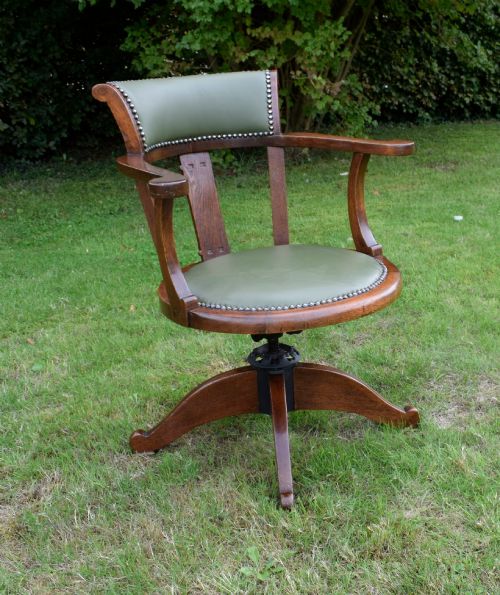
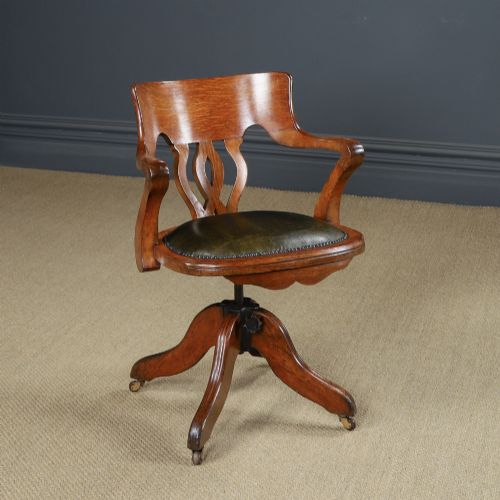
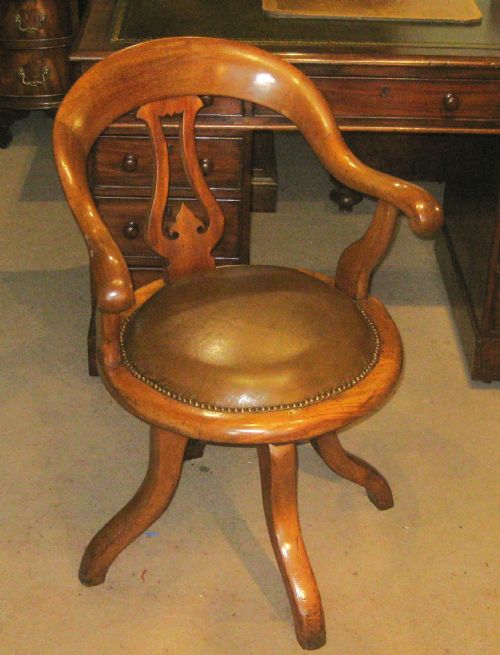
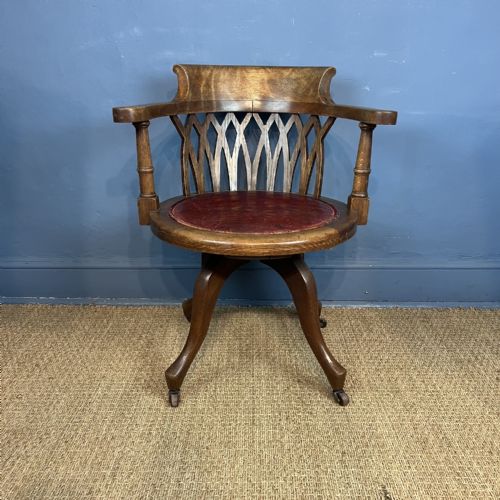
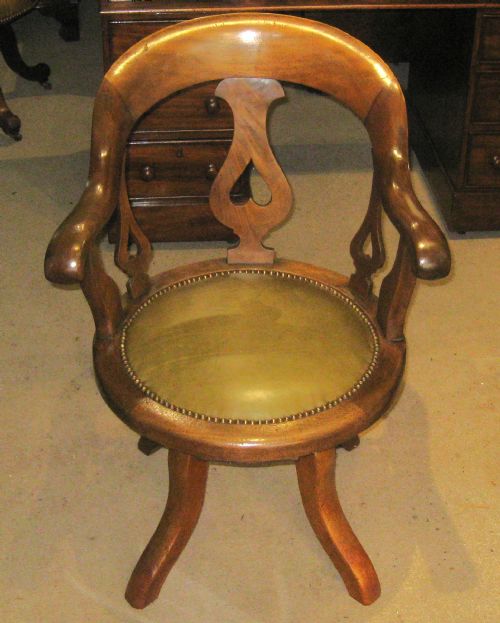
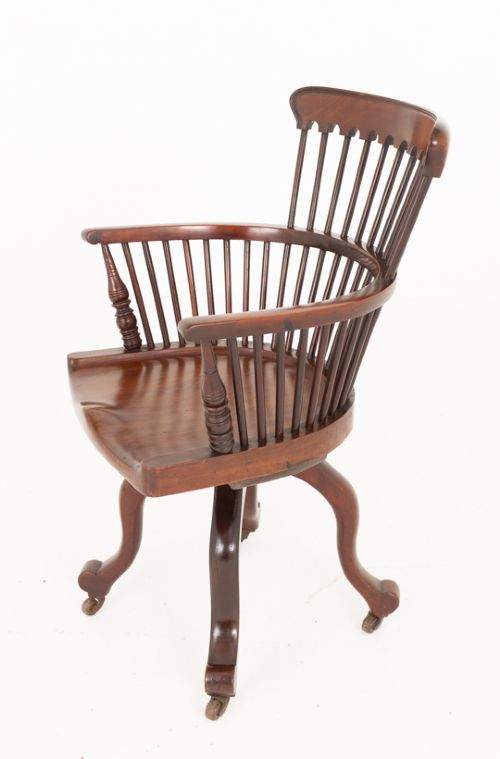
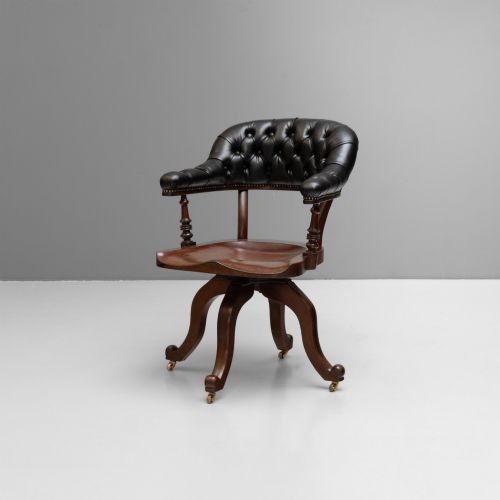
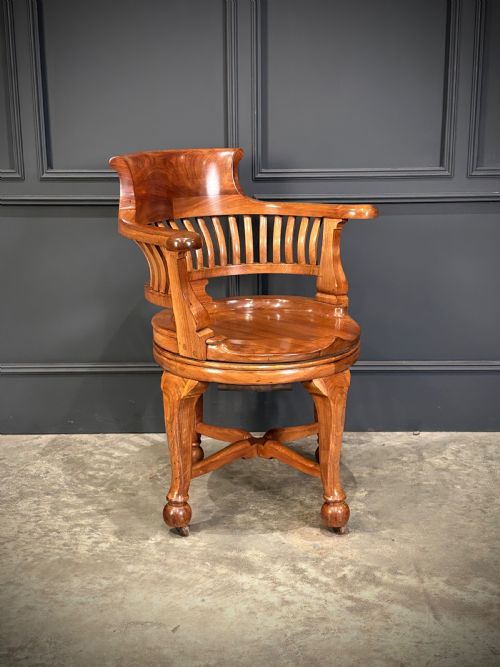
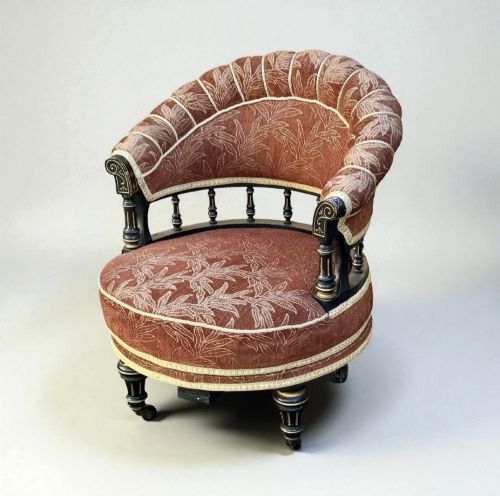
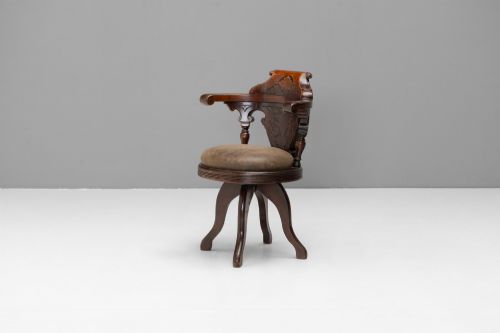
A vintage revolving armchair is primarily built for utility at a desk, drawing on forms from the Victorian, Edwardian and early twentieth century periods. These seating pieces combine a pivoting mechanism with supportive arms, serving both office and library spaces.
Mahogany and oak dominate the timber selections, frequently paired with leather upholstery on the seat or backrest. Most examples originate from the late nineteenth century up to the nineteen-twenties, reflecting the growth of dedicated workspaces.
The most common version met on this page is the desk chair or office chair, constructed in sturdy hardwoods and fitted with a swivel and sometimes a tilt action. Variations include ship chairs and captain's chairs adapted for movement.
Materials and construction
Makers utilised solid hardwoods such as mahogany, oak, walnut, ash and beech to construct the frames of these chairs. These timbers provide the structural strength needed to support the twisting and loading of a revolving mechanism.
Metal and brass components underpin the swivel and height-adjustment systems, often concealed beneath timber columns or exposed as functional cast iron parts. Leather and fabric provide the primary upholstery surfaces for seats and armrests.
Several heavy oak chairs trace their lineage to maritime service, built to keep nineteenth-century captains firmly planted while the ledger rolled.
Quality differences
The sophistication of the revolving mechanism and the integrity of the timber framing distinguish finer examples from simpler workshop output. Better models feature smooth swivel and tilt actions that operate without lateral wobble in the column.
Carving detail, timber grain selection and the quality of the leather hide define the upper tier of these chairs. Subtle details such as satinwood inlay, ebonised finishes or specialised hardware elevate certain pieces above standard utility office furniture.
Edward William Godwin
The Vintage Revolving Armchair Glossary
- Swivel
- A mechanism allowing the seat of the chair to rotate fully on its vertical axis. This permits the sitter to turn easily between different areas of a desk.
- Tilt
- A functional adjustment that enables the backrest and seat to angle backward under pressure. It provides ergonomic give during long periods of seated work.
- Bergere
- A type of upholstered armchair featuring enclosed cane panels on the back or sides. In swivel variants, this adds a lighter decorative texture to the hardwood frame.
- Ships Chair
- A specialised heavy chair designed to remain stable in maritime conditions. These often feature robust construction and carved details suited to shipboard offices.
Vintage Revolving Armchair: Frequently Asked Questions
How do I use a vintage revolving armchair safely?
These chairs are built for standard seating and gentle rotation at a desk or table. Avoid excessive leaning or rapid spinning, as older mechanical columns and castors handle load differently than modern office chairs.
Check that the height adjustment and swivel mechanism move smoothly before applying full weight. Placing a suitable floor mat beneath the chair protects both the castors and the flooring.
How do I care for the leather and wood?
Apply a suitable leather balsam periodically to maintain suppleness and prevent the hide from drying out. Clean timber surfaces with a soft cloth and feed the wood with bees-wax to preserve the polish.
Keep these chairs away from direct heat sources and strong sunlight to protect both the timber grain and the leather upholstery from cracking.
How do I tell Victorian chairs from Edwardian ones?
Victorian models frequently display darker mahogany timbers, heavier carved detailing, and sometimes Gothic Revival influences. They often present a dense, substantial presence suited to formal nineteenth-century libraries.
Edwardian and later examples tend to utilise lighter oak or mahogany, occasionally incorporating Arts and Crafts simplicity or simpler turnings. The lines become cleaner, reflecting changing interior tastes toward lighter workspaces.
Were these chairs meant for offices?
Many examples served professional environments, including legal chambers, administrative offices, and private home studies. The incorporation of revolving mechanisms allowed clerks and professionals to reach ledgers across large desks.
Specialist variants such as ship chairs also served maritime or institutional settings where sturdy, fixed-position seating with rotation was necessary.