


Vintage Retail Display Counter
A vintage retail display counter turns domestic interiors into commercial galleries, framing objects behind glass with the authority of the old High Street.
Vintage Retail Display Counter
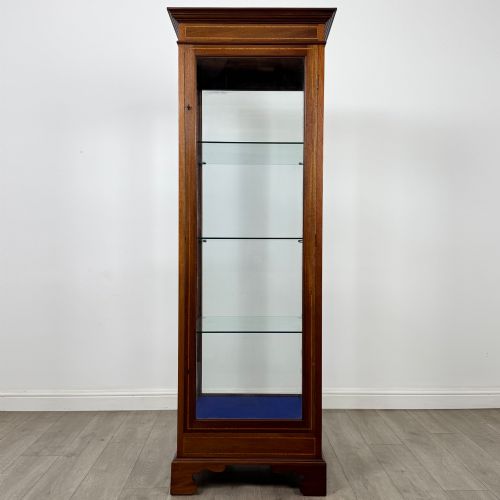
A vintage retail display counter serves as the architectural anchor of a shop interior, designed to present merchandise while withstanding the daily friction of commerce. The pieces gathered here span from the late nineteenth century through the Art Deco developments of the 1930s, encompassing substantial timber shop fittings alongside compact countertop units.
The most frequent encounters on this page are Edwardian and 1920s commercial cabinets built in mahogany or oak, often fitted with glazed panels to protect delicate wares. Specialist forms such as haberdashery drawer units, pharmacy counters, and chocolate advertising cases reflect the specific trades they originally served.
Materials and Construction
Makers relied on dense hardwoods like mahogany and oak for structural carcasses, frequently pairing them with brass, bronze, or cast iron frames to support heavy glass panels. Interiors often incorporated mirrored glass to amplify light and velvet linings to cushion displayed items.
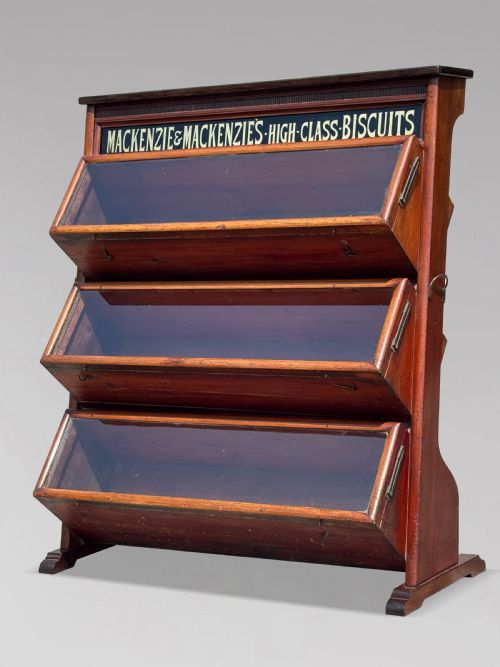
Joinery techniques prioritised durability, utilising panelled construction for counter bases and rebated framing to secure large panes of plate glass. Advertising cabinets integrated glazed doors with painted or enamelled branding panels, securing commercial graphics directly into the structure.
Listings feature oak, mahogany, glass, and brass across Victorian, Edwardian, and 1930s commercial periods.
Craft and Proportion
Quality rests in the architectural harmony of the proportions and the integrity of the original hardware, distinguishing utilitarian shop storage from bespoke mercantile joinery. Superior pieces display refined timber moulding, tight mitre joints, and intact maker inscriptions on brass plates or etched glass.
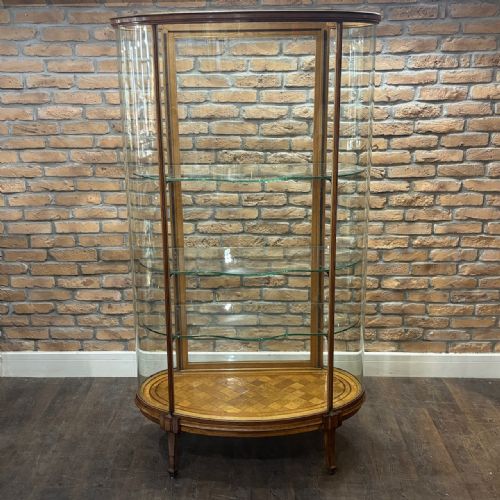
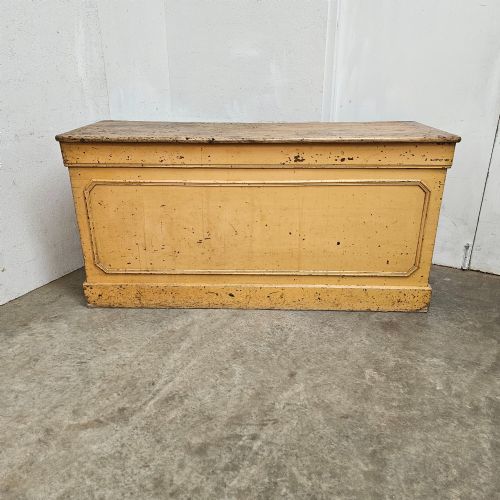
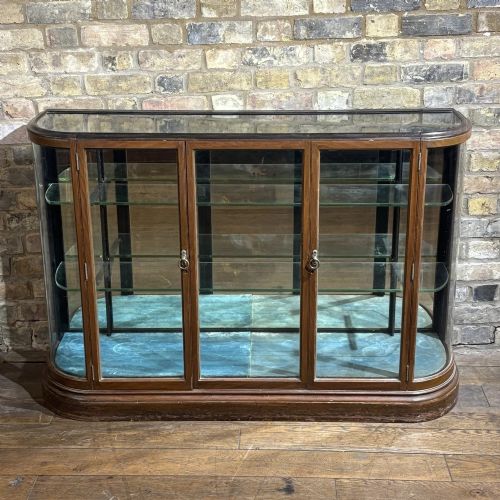
The preservation of original glass, whether curved bow ends or bevelled panels, alters the character of a counter significantly. Original painted finishes and functional brass sliding doors elevate an example above later adaptations or heavy restorations.
F. Sage & Co·Dudley & Co·Saml. Elliott & Sons
The Vintage Retail Display Counter Glossary
- Haberdashery counter
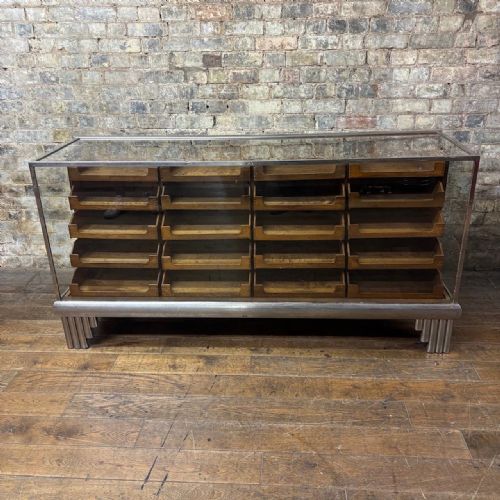
- A shop fitting characterised by multiple shallow drawers, originally designed for ribbons and threads. These often incorporate glass fronts to display contents.
- Bow end
- A curved glass panel or cabinet end that softens rectangular geometry. This technique requires specialist glass-bending skill.
- Countertop display cabinet
- A portable glazed showcase designed to sit atop a main serving counter. It places small merchandise directly at eye level.
- Advertising cabinet
- A branded display unit commissioned by manufacturers such as chocolate or confectionery firms. They combine functional storage with permanent product promotion.
- Shop fitting
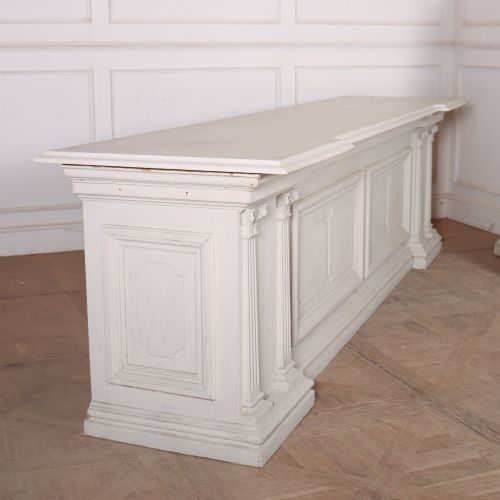
- Heavy commercial furniture built specifically for retail interiors. These pieces were often integrated directly into the floor plan of a shop.
Vintage Retail Display Counter: Frequently Asked Questions
What trades used these counters?
These counters served diverse trades including drapers, grocers, chemists, and confectioners who required secure product presentation.
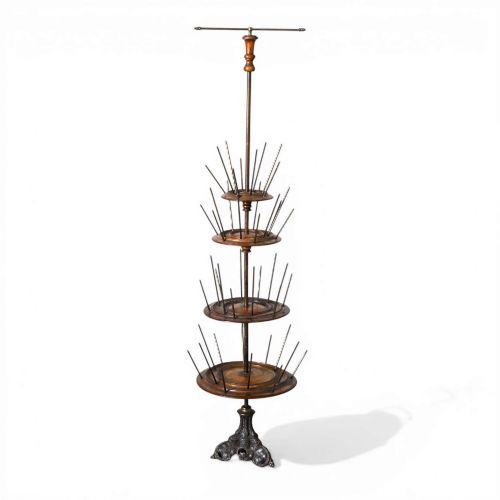
Specialist cabinetry was built for specific goods like cotton reels, pharmaceuticals, and sweets.
How do I clean the glass safely?
Historic glass requires gentle cleaning solutions applied with a soft cloth to avoid damaging aged putty or wooden frames.
Avoid harsh chemical sprays that might seep behind bevelled edges or degrade original painted lettering.
Can I use a counter as a kitchen island?
Many buyers repurpose long shop counters and haberdashery units as kitchen islands or storage consoles.
The deep drawers and glazed display areas provide practical organisation for modern domestic living.
How do I identify an Edwardian piece?
Edwardian counters often feature clean oak or mahogany framing with bevelled glass and minimal ornamentation.
Construction from this era typically balances sturdy commercial timber framing with lighter display aesthetics than Victorian predecessors.