



Vintage Regency Accent Chairs
Vintage regency accent chairs bring architectural poise and refined seating to a room, drawing on classical forms.
Vintage Regency Accent Chairs
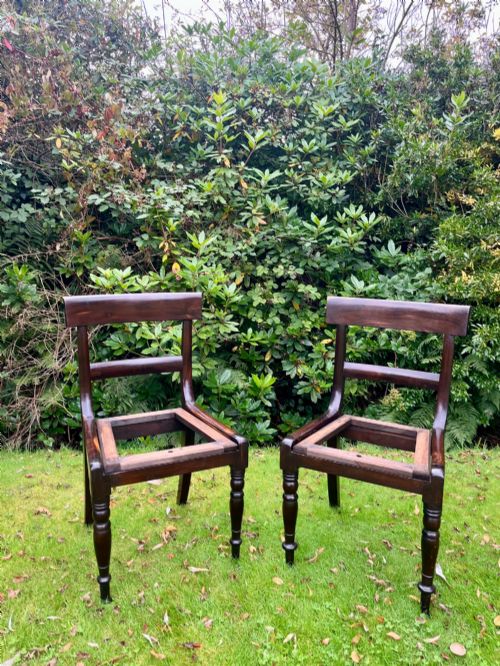
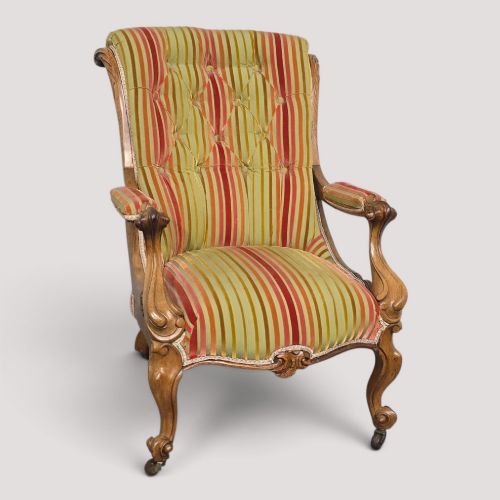
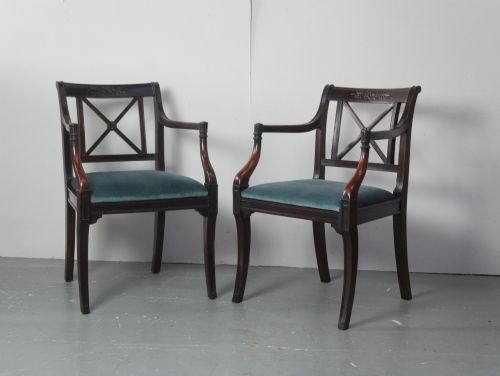
Vintage regency accent chairs encompass seating from the Regency period proper alongside later revivals spanning the nineteenth and early twentieth centuries. The selection spans armchairs, side chairs, hall chairs, rocking chairs, slipper chairs, and bergères designed for the drawing room, library, or hall.
Origins include English workshops as well as Scottish, Anglo-Indian, and Swedish interpretations, showing the broad geographical spread of this enduring neoclassical taste.
How they were made
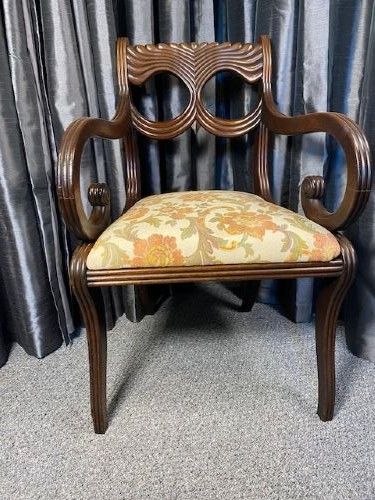
Cabinetmakers utilised dense timbers like mahogany, rosewood, laburnum, fruitwood, and ebony, frequently enhancing the surfaces with paint, ebonising, or gilding. Brass inlays and mounts provided metallic contrast to the dark wood.
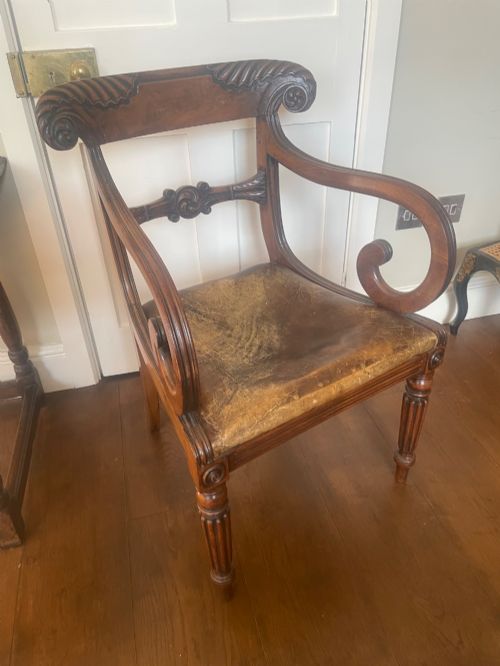
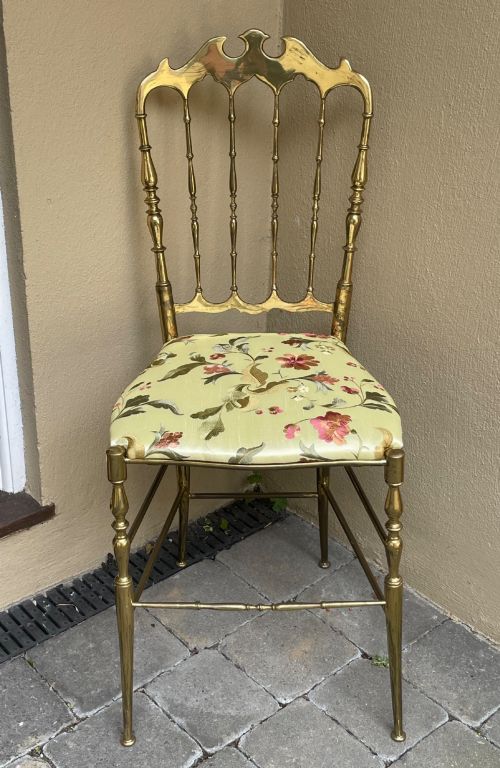
Structural support relied on turned or sabre legs, while seating surfaces incorporated woven cane panels, carved wooden boards, or upholstered pads covered in fabric, velvet, and needlepoint.
Vintage Regency Accent Chairs Retail Price Guide 2026
Typical asking prices for vintage regency accent chairs among the pieces listed under this phrase on Sellingantiques today, from the lower quarter to the upper quarter. They describe what is for sale here now, not the wider market.
Bamboo chairs make unexpected appearances alongside grand mahogany library seats, proving the Regency taste possessed a playful side.
What varies in quality
The hierarchy of quality rests on the crispness of carved details, such as lyre backs and heraldic motifs, and the integrity of applied finishes like original paint, gilding, or polished brass. Superior examples retain their original cane work and solid timber frames without clumsy repairs.
Proportion and execution distinguish ambitious cabinet work from simpler vernacular pieces, with refined proportions and sophisticated joinery marking the upper tier of the range.
Miles & Edward's
The Vintage Regency Accent Chairs Glossary
- Bergère
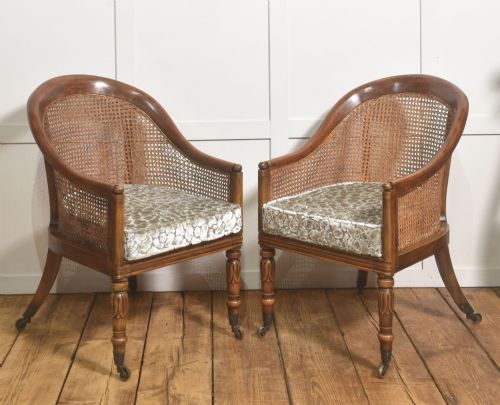
- An enclosed upholstered armchair with wooden framing and cane or upholstered sides. This form offers deep-seated comfort while maintaining a formal silhouette.
- Sabre leg
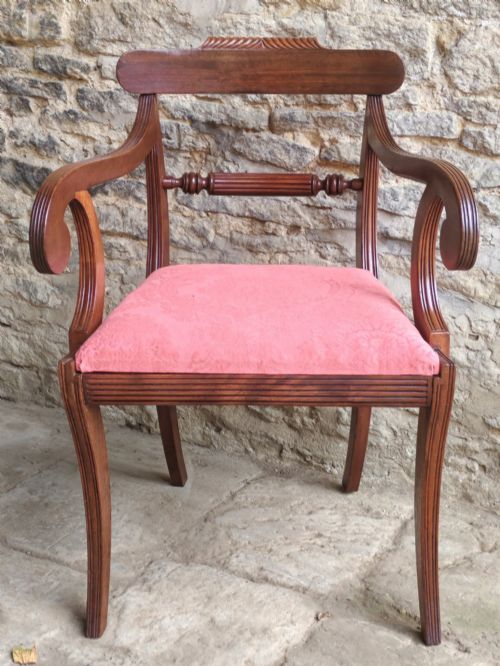
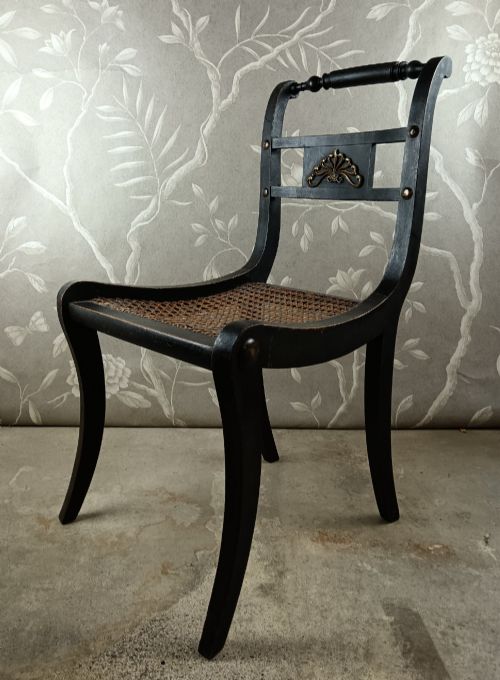
- A concave curved leg tapering toward the foot, typical of neoclassical and Regency seating. This form echoes classical Greek and Roman furniture designs.
- Curule
- An X-shaped stool or chair design derived from ancient Roman magistrate seats. It denotes a curule-style open armchair or stool.
- Lyre back
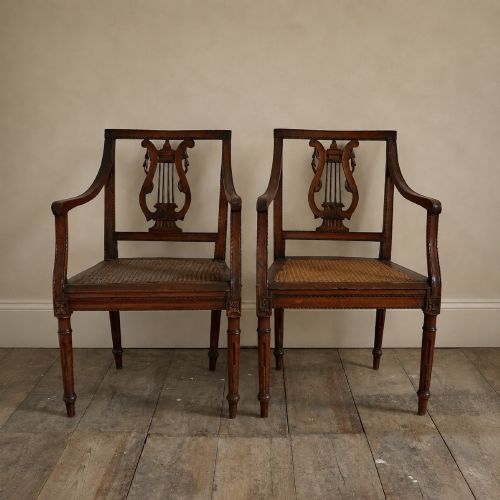
- A chair back featuring a central splat shaped like the musical instrument. It appears frequently in Regency mahogany designs.
- Hall chair
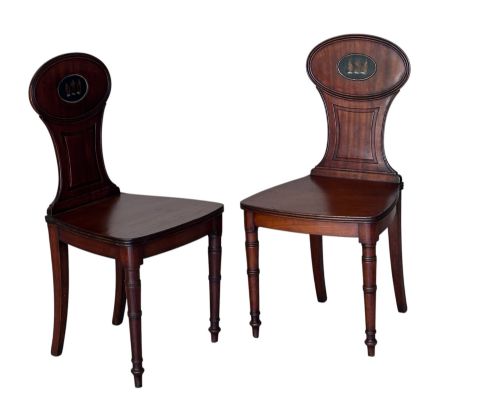
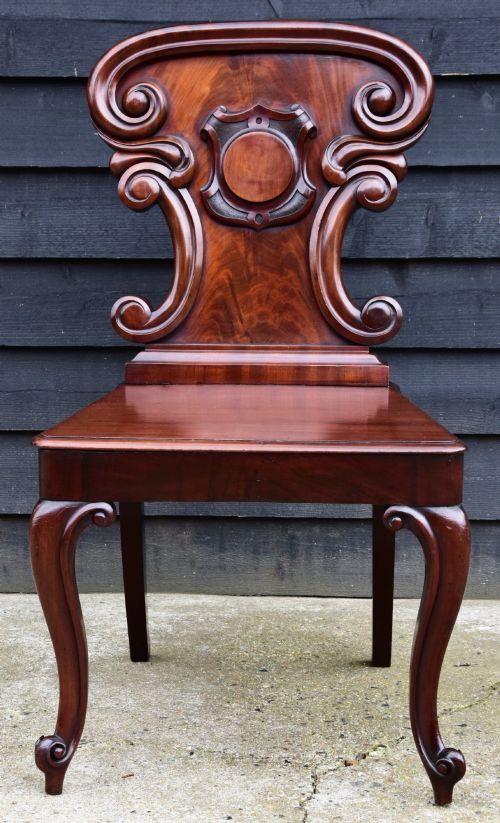
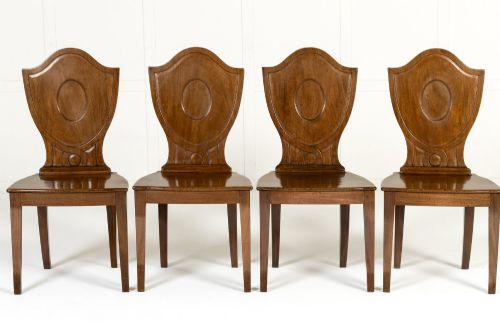
- A rigid wooden seat intended for a hallway rather than long sitting. These often feature painted or carved heraldic motifs and solid timber seats.
Vintage Regency Accent Chairs: Frequently Asked Questions
Are cane seats original on these chairs?
Cane work is frequently original on nineteenth-century library chairs and side chairs. Woven cane provided a light, flexible seating surface that suited the neoclassical aesthetic.
Many surviving pieces retain their historic cane panels, though replacement weaving is common on pieces that saw heavy use.
How do I tell original regency from revival pieces?
Original Regency pieces date roughly from the early nineteenth century and display period timber ageing, hand-cut joinery, and traditional construction methods. Revival pieces usually date from later nineteenth or early twentieth-century periods such as Edwardian or 1920s eras.
Examining the wood species, secondary timbers, and tool marks helps differentiate an 1810 chair from a 1910 revival.
Where should I place an accent chair?
These versatile seats suit drawing rooms, studies, bedrooms, and hallways as decorative yet functional furniture. Side chairs and hall chairs work well against walls or in pairs, while bergères and library armchairs suit reading corners.
The sculptural forms ensure they function as focal points in varied interior schemes.