


Vintage Red Wine Glasses
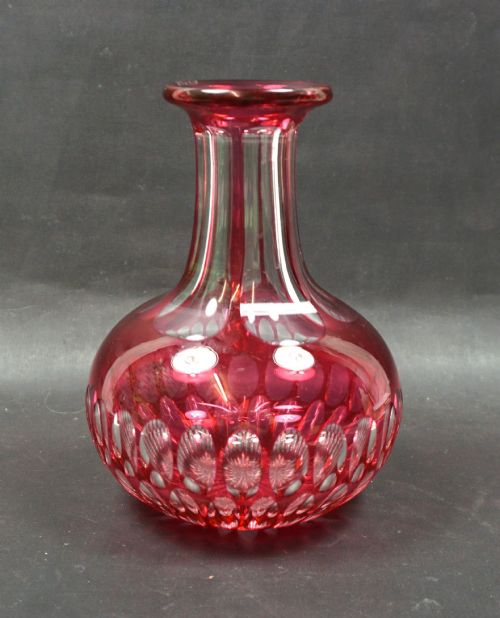
These vintage red wine glasses bring rich cranberry and ruby tones to the table, formed in hand-blown and cut crystal from the Georgian, Victorian, and Edwardian eras.
Vintage Red Wine Glasses
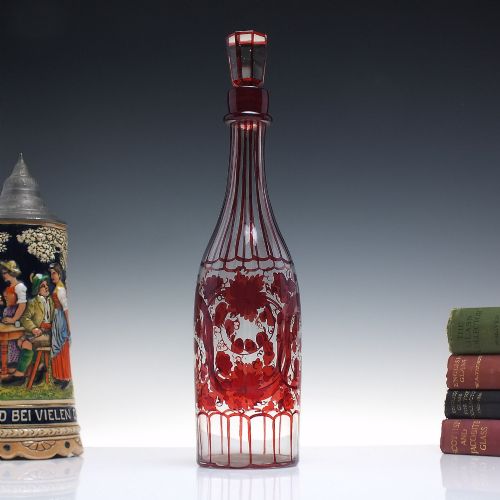
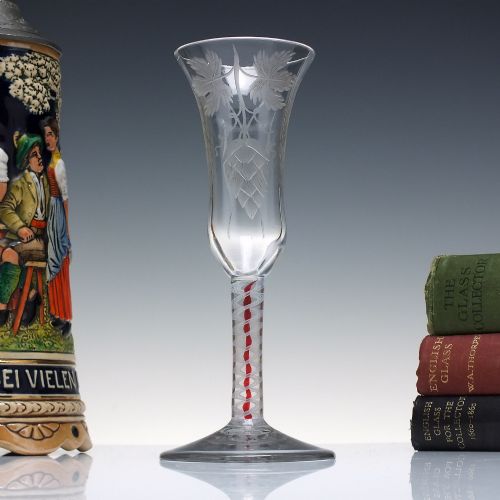
Vintage red wine glasses encompass richly coloured drinking vessels, decanters, and service sets originating from the mid-nineteenth century up through the Edwardian period. Buyers searching this phrase primarily encounter vibrant cranberry glass and ruby glass stemware, often shaped as sets of matching wine glasses or paired decanters.
The selection ranges from tall Bohemian hock glasses to engraved claret jugs and heavy lead crystal carafes. Alongside glassware, occasional related pieces such as mid-century oil paintings depicting wine glasses appear in the listings.
How they were made
The pieces rely on lead glass and lead crystal, shaped through hand-blowing techniques that produce varied wall thicknesses and soft pontil marks on the undersides. Overlay methods fuse a layer of ruby or cranberry glass over clear crystal, which artisans then cut away to reveal contrasting patterns.
Engraving and hand-painting complete many surfaces, utilising wheel-cut motifs like fruiting vines and birds, or delicate enamel detailing applied directly to the glass body.
Listings span periods from Georgian and Victorian times through Edwardian and mid-century eras, using cranberry glass, ruby glass, and cut crystal.
What varies in quality
Quality rests upon the depth of the colour saturation and the crispness of the wheel-cut overlay work. Deeper cranberry hues and cleanly executed engraved details distinguish finer pieces from simpler moulded glass.
Uniformity across a matched set of stemware elevates the standing of the glassware, particularly where hand-blown bowls and stems maintain consistent proportions.
The Vintage Red Wine Glasses Glossary
- Cranberry Glass
- A transparent pinkish-red glass coloured with gold chloride during production. It forms the primary shade found across Victorian stemware and decanters.
- Ruby Glass
- A deep red glass variant used for nineteenth-century decanters and jugs. The intense colour often requires overlay techniques to display clear crystal underneath.
- Lead Crystal
- A heavy glass variety containing lead oxide that increases brilliance and weight. It allows for deep, sharp wheel-cutting without fracturing.
- Overlay
- A manufacturing method where a layer of coloured glass covers a clear glass body. Artisans cut through the outer layer to create contrasting clear and red patterns.
- Pontil Mark
- A rough scar left on the base of glassware where the punty rod was detached after blowing. Its presence indicates traditional hand-blown manufacture.
Vintage Red Wine Glasses: Frequently Asked Questions
Are these glasses safe for daily use?
Antique glassware handles standard dining use well when washed gently by hand. Avoid thermal shock from extreme temperature changes.
Older lead crystal benefits from careful handling rather than automated dishwashing to preserve the surface polish and engraved details.
How do I date cranberry glass?
Dating relies on the manufacturing marks, pontil scars, and stylistic traits associated with the Victorian and Edwardian periods. Deeper tones and heavy lead weight frequently point to nineteenth-century production.
Matching decanters with sterling silver mounts often feature hallmarks that provide an exact year of assay.
What is the difference between cranberry and ruby glass?
Cranberry glass typically displays a lighter, pinker red shade achieved through gold suspension. Ruby glass tends towards a darker, heavier crimson hue.
Both materials appear widely across nineteenth-century decanters and wine glasses in this collection.
How should I display my decanters?
Place decanters where natural light can pass through the cranberry or ruby overlay glass. This highlights the wheel-cut patterns of vines and birds.
Keep them away from direct, intense sunlight to protect any delicate hand-painted enamel details over time.