
Clear Stem Glass Goblets
Clear stem glass goblets bring tactile weight to the table, offering centuries of drinking vessels shaped by lead crystal and historic glassmaking.
Clear Stem Glass Goblets
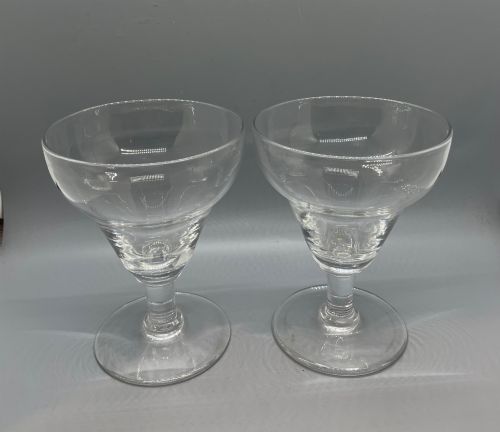
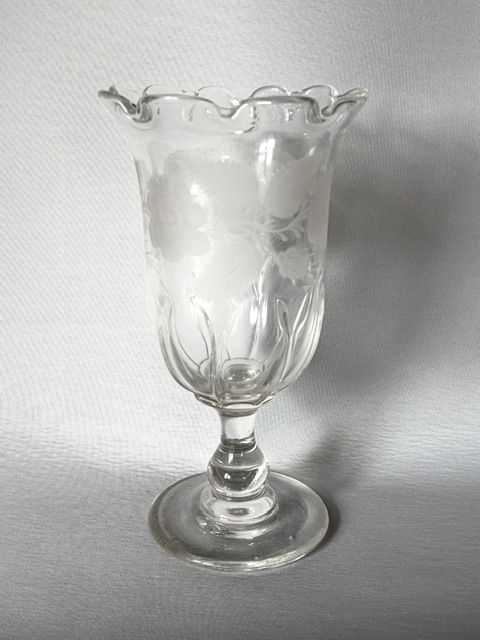
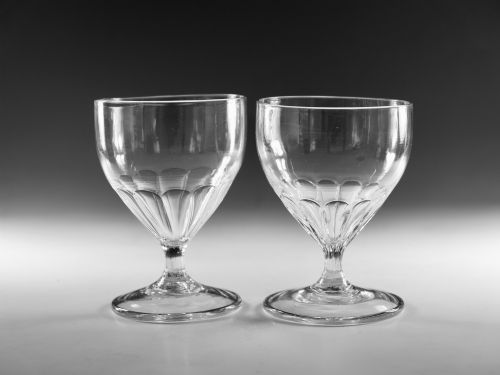
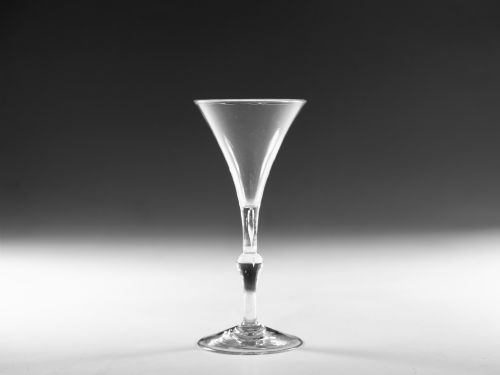
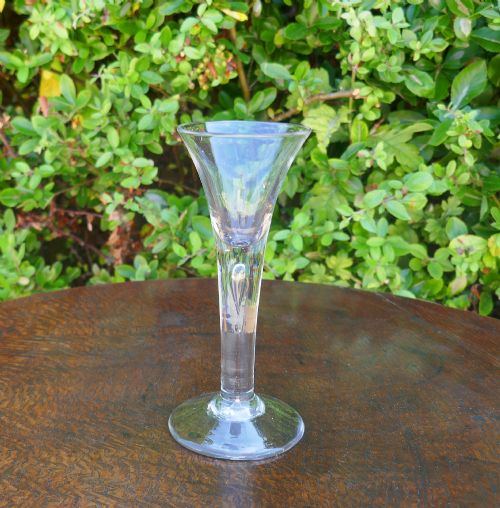
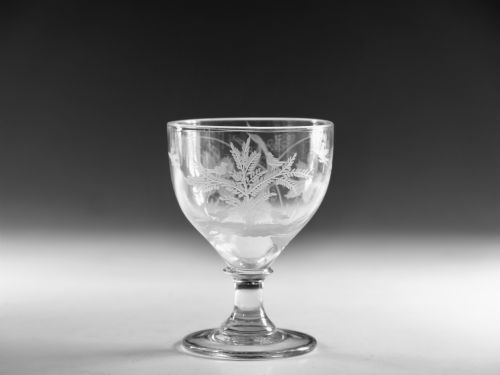
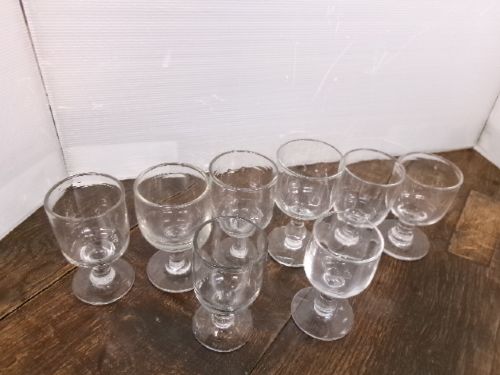
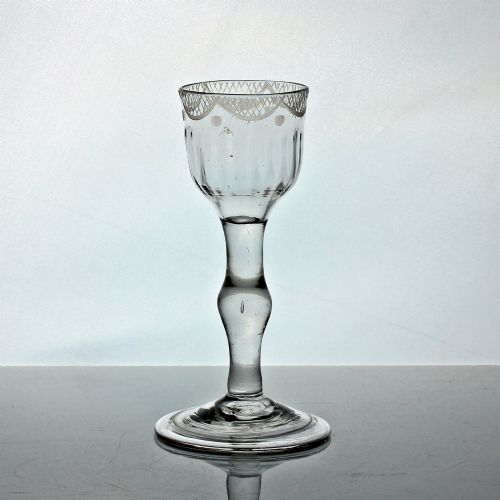
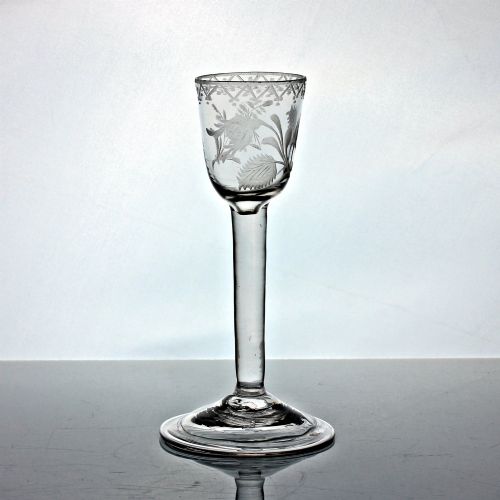
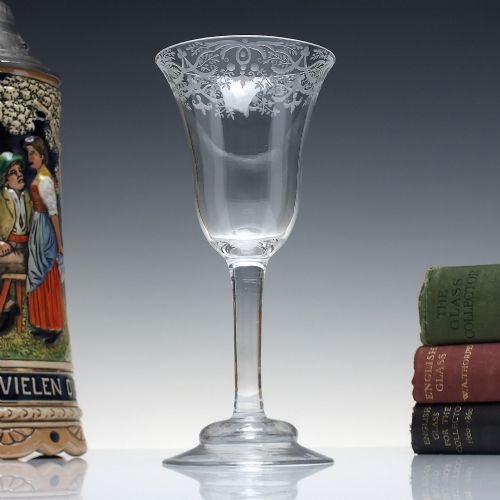
When you search for clear stem glass goblets, you encounter drinking vessels that span the eighteenth and nineteenth centuries, including robust rummers, slender wine glasses, and ceremonial goblets.
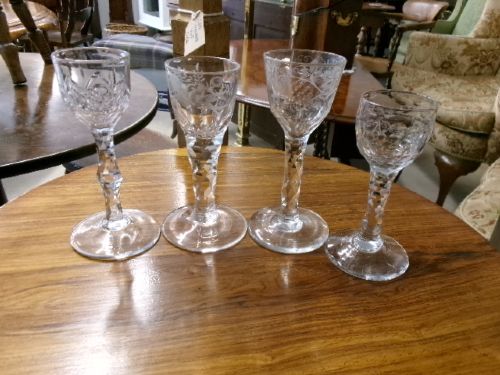
The pieces on this page are dominated by Georgian and Victorian examples, featuring heavy baluster stems, twisted threads, and engraved bowls designed for wine, ale, and spirits.
Form follows function across these eras, moving from early balustroid and plain stems to faceted drinking glasses, celery vases, and elaborately decorated hock glasses.
How clear stem glass goblets were made
Maker operations relied heavily on lead glass, flint glass, and clear lead crystal, which provided the heavy refractive quality necessary for deep cutting and brilliant clarity.
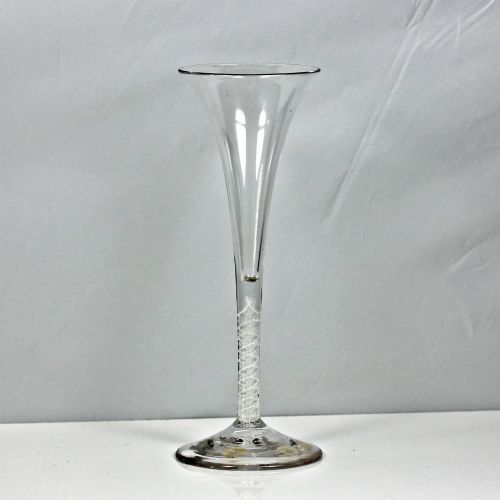
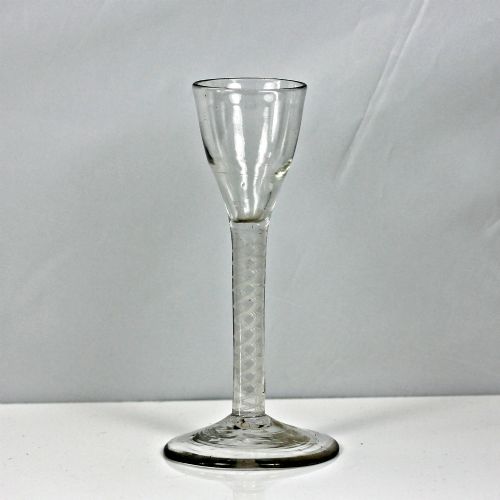
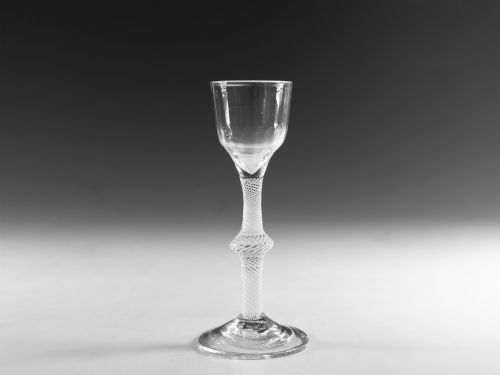
Stems were formed using specialised techniques, capturing air bubbles, drawing out opaque twists, or shaping heavy balusters and annular knops by hand.
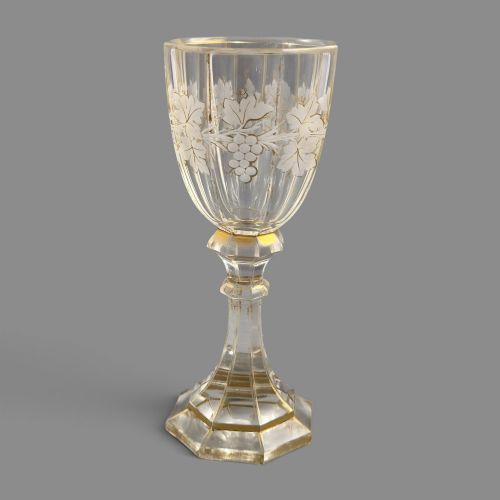
Surface ornamentation involved wheel engraving, white enamel painting, gilding, and moulding to create pan top, ogee, and trumpet bowls.
Some early drinking stems harbour accidental trapped air bubbles, transformed by eighteenth-century glassmakers into charming optical highlights.
What varies in quality in clear stem glass goblets
Distinctions in quality rest upon the dexterity of the glassmaker, visible in the symmetry of a twist, the weight of a pedestal foot, and the balance of the stem.
The crispness of wheel engraving and the purity of the lead crystal separate standard production from masterwork pieces like armorial marriage goblets or rococo stems.
Moser Bohemian·Theresienthal crystal
The Clear Stem Glass Goblets Glossary
- Baluster stem
- A heavy, turned stem shape resembling an architectural baluster. It defines many early eighteenth-century drinking vessels.
- Opaque twist
- A stem containing threads of white enamel glass twisted within the clear metal. Makers produced single and double series variations.
- Rummer
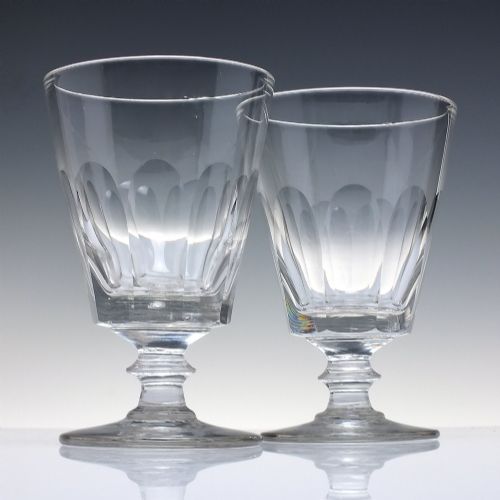
- A large, heavy drinking glass popular in the Georgian and Victorian periods. These pieces typically sat on a short stem or directly on a footed base.
- Ogee bowl
- A bell-shaped bowl with an S-profile curving outward at the rim. This form appears frequently on eighteenth-century wine and ale glasses.
- Annular knop
- A ring-like projection encircling the stem of a glass. Multiple knops provide both grip and decorative articulation.
Clear Stem Glass Goblets: Frequently Asked Questions
What is a rummer used for?
Rummers served as robust drinking vessels for ale, punch, and wine during the Georgian and Victorian eras. Their generous bowls and sturdy feet made them practical for everyday tavern and dining table use.
Over time, these larger glasses evolved into heavier display pieces, though collectors still prize them for their satisfying weight and historical utility.
How do I date an 18th-century wine glass?
Dating relies on observing the evolution of bowl shapes, stem formations, and foot styles. Early pieces often feature heavy baluster stems and folded feet, while later decades introduced air twists and faceted cutting.
Matching the metal composition, such as heavy lead glass, alongside specific engraving styles helps narrow the decade of production.
What are air twists and opaque twists?
Twists are decorative optical effects trapped inside the glass stem during manufacturing. Air twists formed by drawing out elongated bubbles, while opaque twists incorporated white enamel rods.
Both techniques demanded high skill from the glasshouse workers to maintain uniform spirals down the length of the stem.
How should I care for antique glass goblets?
Antique goblets require gentle hand washing in lukewarm water with mild detergent. Avoid sudden temperature changes to protect the historic lead glass from thermal shock.
Store them securely on flat surfaces, ensuring the delicate rims and wide foot bases do not rub against neighbouring pieces.