


Ruby Cranberry Glassware
Ruby cranberry glassware brings rich, warm tones to a room through hand-blown jugs, decanters and wine glasses shaped during the Victorian and Edwardian eras.
Ruby Cranberry Glassware
Ruby cranberry glassware encompasses a vibrant range of Victorian and Edwardian domestic items, from sets of wine glasses and decanters to decorative vases, jugs, and lidded biscuit jars. Buyers searching for ruby cranberry glassware look for distinctive rich red and pink hues that catch the light, often enhanced by clear glass handles, bases, or overlays.
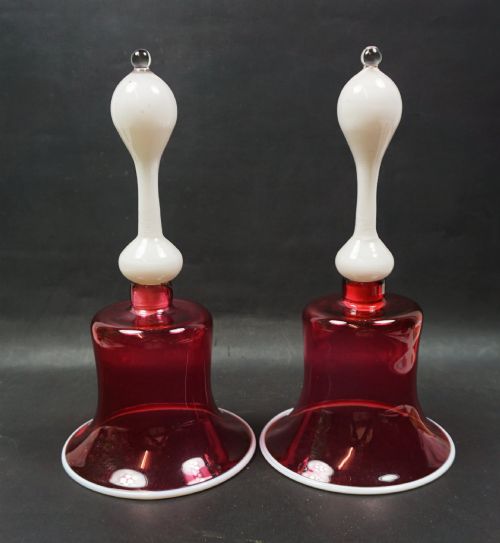
The pieces appearing on this page span the mid-nineteenth to the early twentieth century, taking forms such as paired hand bells, tazzas, epergnes, and matched sets of drinkware. English and Bohemian workshops dominate the selection, offering both simple utilitarian items and highly decorated decorative glassware.
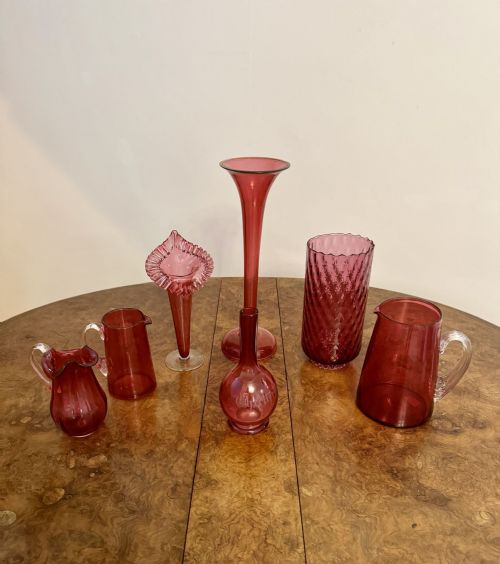
Sets of wine glasses and matched carafes feature frequently alongside individual statement pieces like enamelled vases and preserve bowls. The visual impact relies entirely on the depth of the coloured glass, whether presented in a plain translucent tone or layered over clear crystal.
Materials and methods of manufacture
The characteristic colour of ruby cranberry glassware is achieved by adding gold chloride to the molten glass batch during production. Artisans shaped these pieces using traditional hand-blowing techniques, evident in the slightly irregular pontil marks and fluid contours of nineteenth-century stemware and jugs.
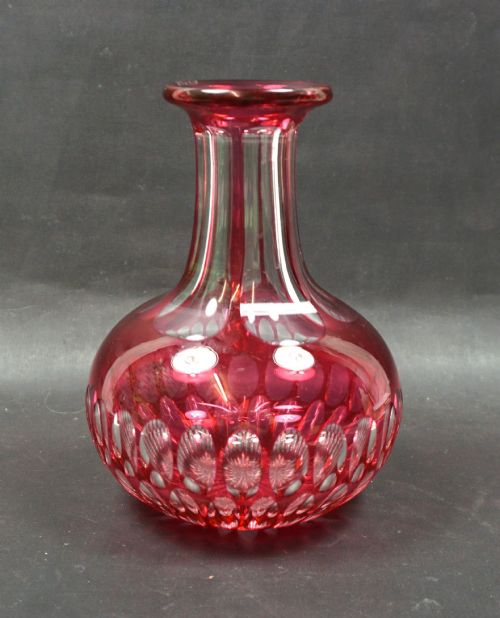
Overlay techniques created striking contrast by fusing a layer of ruby glass over clear crystal before cutting away portions of the outer layer to reveal the clear glass beneath. Additional decoration involved hand-applied enamel painting, particularly white silhouettes associated with Mary Gregory styles, as well as delicate surface engraving.
Mounts and hardware incorporate silver plate to form functional items such as lidded biscuit jars and preserve bowls. Contrast is further introduced through milk glass handles and clear glass rims that frame the saturated red bodies.
Listings feature Victorian and Edwardian pieces, incorporating materials such as cranberry glass, ruby glass, clear crystal, milk glass, and silver plate.
Distinctions in quality and execution
Quality in ruby cranberry glassware rests on the depth and evenness of the colour throughout the body of the piece. Superior examples display a rich, uniform tone without muddy patches or excessive bubbles trapped within the metal during the blowing process.
The precision of the cutting and engraving distinguishes finer items from standard production wares. Crisp facets on overlaid crystal and finely detailed hand-painted enamel figures elevate decorative vases and jars above simpler utilitarian drinkware.
Completeness and matched integrity heavily influence the standing of sets, particularly wine glasses and decanters where uniformity in height, colour saturation, and rim thickness matters. Intact original pairings, such as matched hand bells or twin preserve bowls, demonstrate higher original craftsmanship.
The Ruby Cranberry Glassware Glossary
- Cranberry glass
- A transparent pinkish-red glass coloured by the addition of gold chloride to the molten batch. It forms the foundation of Victorian tableware and decorative items.
- Ruby glass
- A deep red glass often used interchangeably with cranberry hues or utilised in overlaid pieces for sharp contrast against clear crystal.
- Mary Gregory
- A style of decorative glass featuring white enamel silhouettes of children, often depicted in natural settings amongst foliage on cranberry grounds.
- Tazza
- An ornamental pedestal plate or shallow bowl raised on a central stem, frequently produced in matching ruby glass for display.
- Epergne
- A large, multi-armed tabletop centrepiece featuring detachable trumpets or baskets used for holding flowers or sweetmeats.
Ruby Cranberry Glassware: Frequently Asked Questions
What is cranberry glass?
Cranberry glass is a distinctive transparent red or pink glassware produced by introducing gold into the glass melt. It became immensely popular during the Victorian period for decorative tableware and drinkware.
Artisans shaped the molten material into wine glasses, jugs, and vases, often combining the signature pink hue with clear glass handles or silver plate mounts.
How do I date antique cranberry glass?
Dating relies on observing manufacturing techniques, forms, and stylistic markers recorded across nineteenth and early twentieth-century pieces. Hand-blown items with polished pontil marks typically point to the Victorian era.
Later Edwardian pieces often show more standardised forms, while specific decorative details like white enamel Mary Gregory scenes or heavy crystal overlays help narrow down the decade of production.
Are these glass sets complete?
Many listings feature matched groups, such as sets of six or fifteen wine glasses, as well as paired table items like hand bells and lily vases. Checking the specific description confirms whether a group remains wholly uniform.
Slight variations in tone can occur in hand-blown pieces from the nineteenth century, reflecting the artisanal methods of the period.
How should I display ruby glassware?
Ruby cranberry glassware thrives in natural light, which illuminates the gold-infused pink and red tones. Placing decanters, vases, and tazzas near windows or on glass shelves maximises their visual depth.
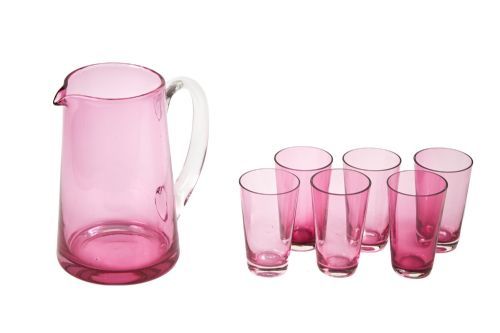
Mixing forms, such as pairing a large pitcher with smaller tumblers or wine glasses, creates an authentic nineteenth-century tabletop display.