
Vintage Red Area Rug
A vintage red area rug brings depth and warmth to a room through hand-knotted wool and time-tested tribal designs.
Vintage Red Area Rug
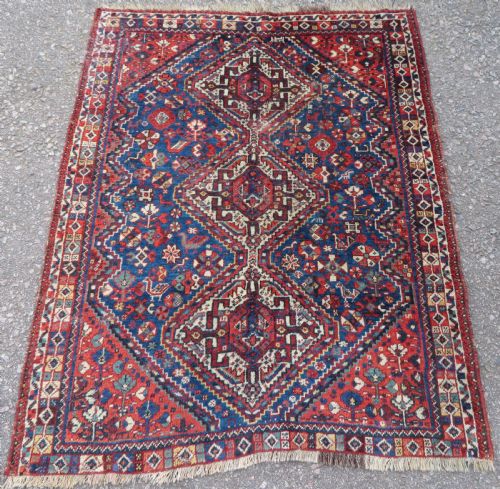
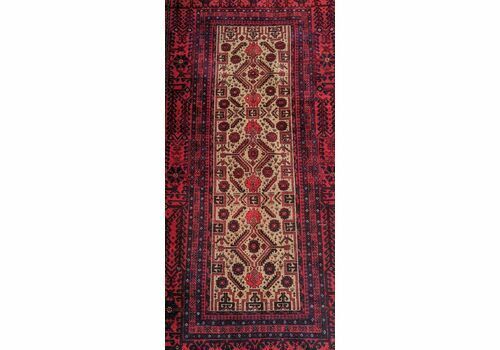
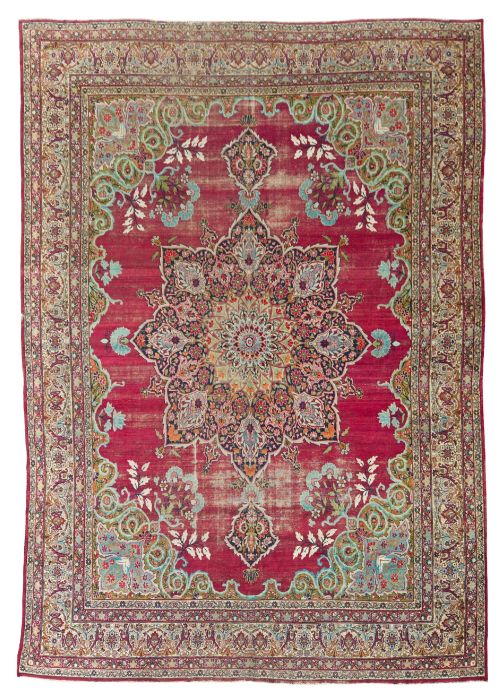
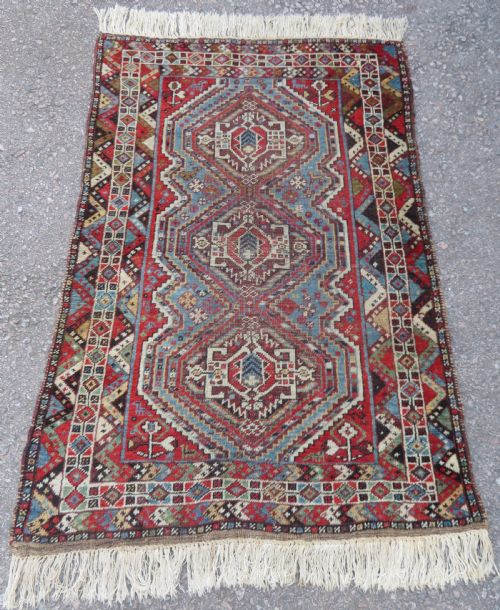
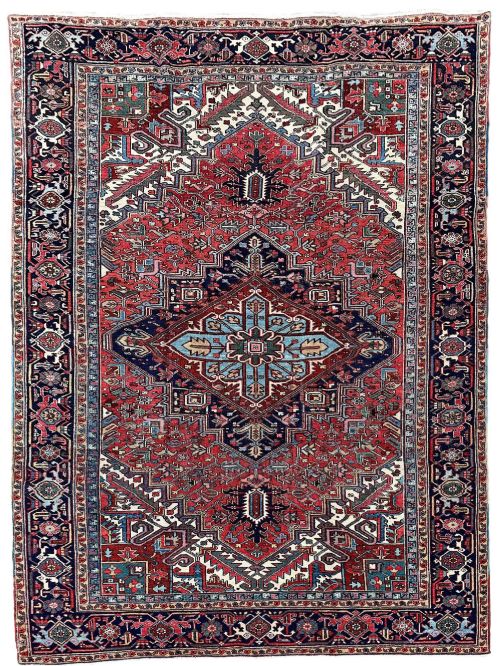
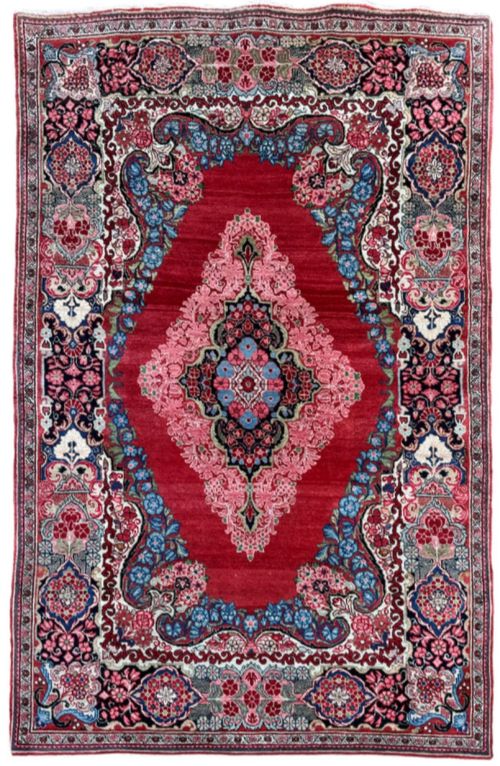
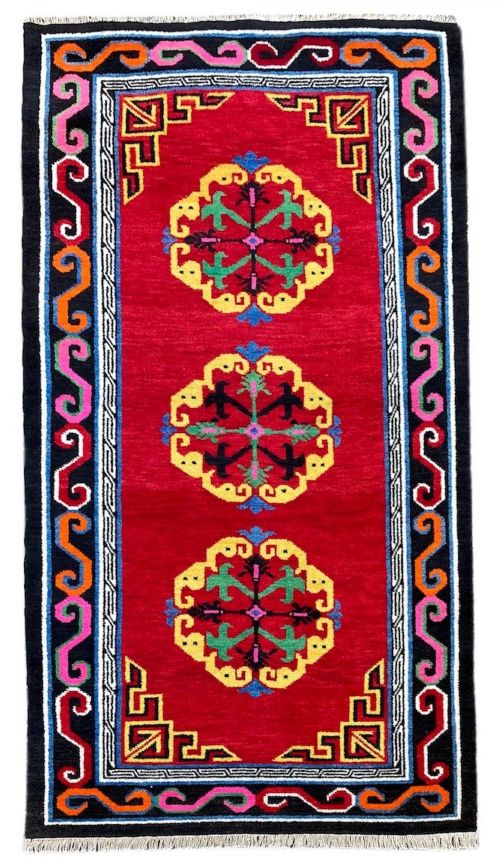
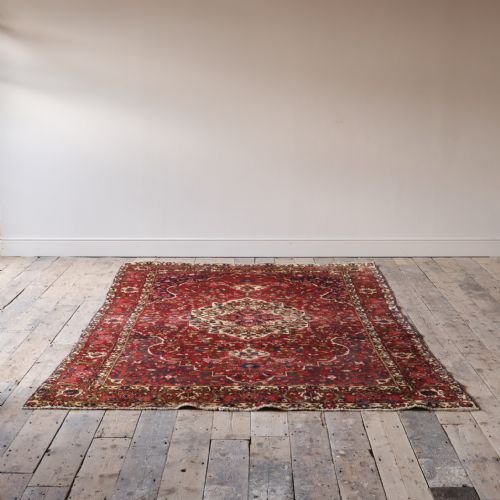
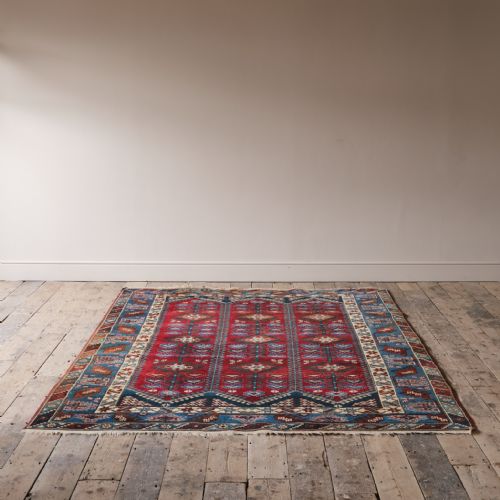
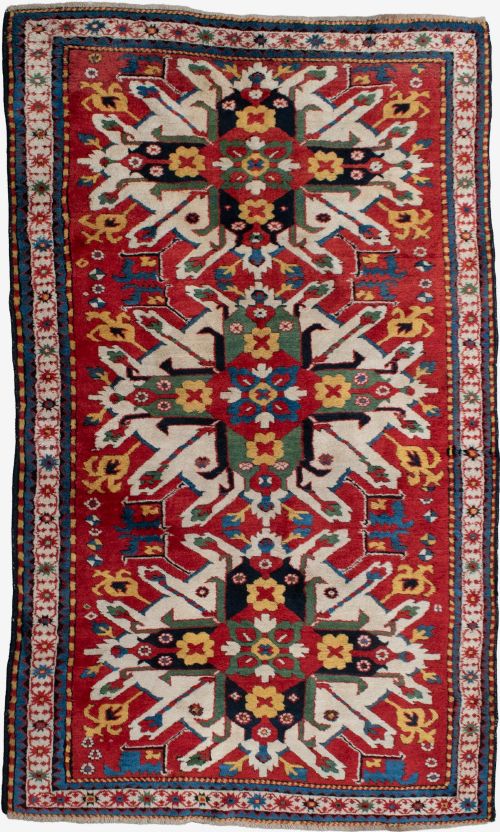
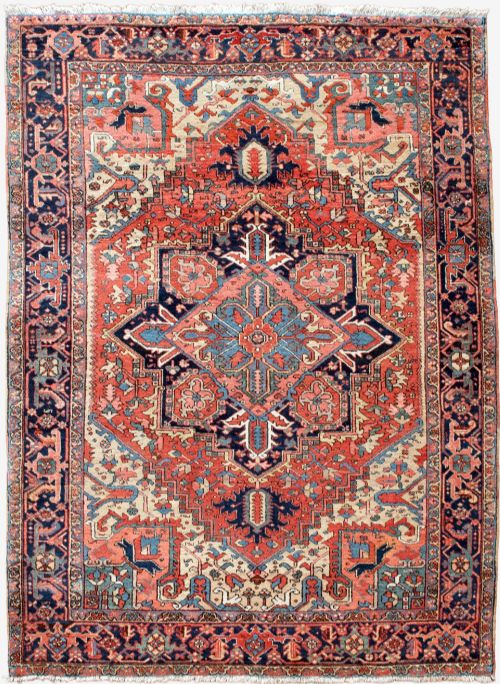
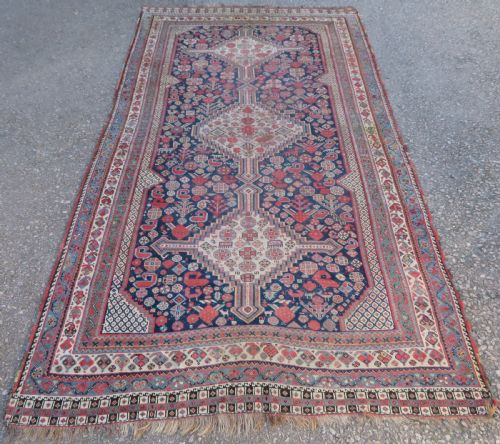
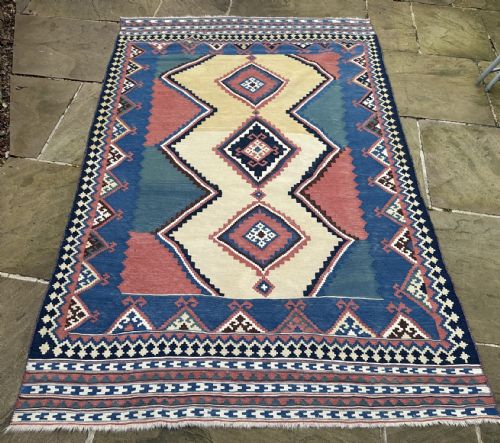
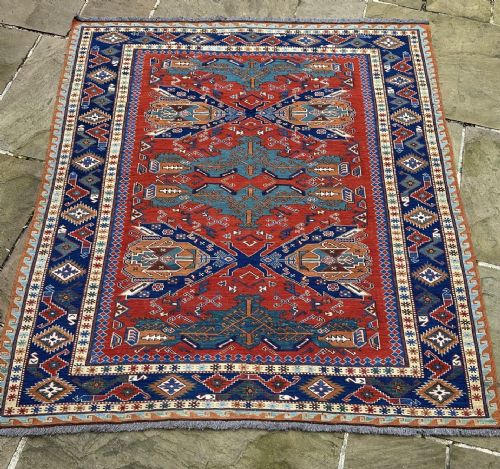
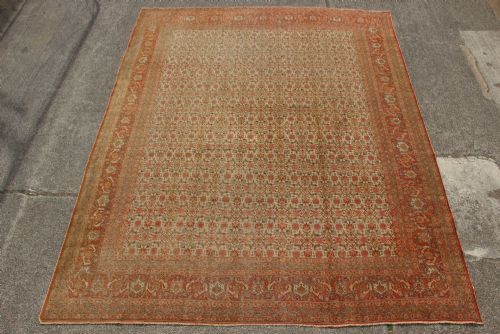
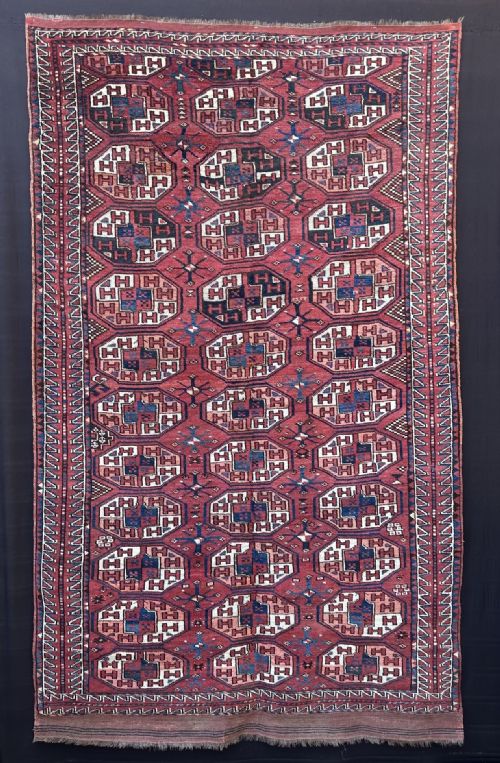
A vintage red area rug encompasses hand-woven carpets and floor coverings originating primarily from Persian, Caucasian, Turkmen, and Anatolian traditions. These textiles span periods from the nineteenth century through the early decades of the twentieth century, including village and tribal workshops.
Buyers will most frequently encounter Persian traditional, Heriz, Kazak, and Afshar forms within these listings. They appear as rectangular area rugs, runners, and large carpets suitable for anchoring domestic spaces with deep red tones.
How they were made
Weavers utilised natural dyes and hand-spun wool, cotton, and occasionally silk highlights to construct these rugs. The materials provide structural resilience while absorbing colour in varied, organic ways.
The construction relies on manual knotting techniques applied to a foundation of wool or cotton warp and weft threads. This labour-intensive method creates dense piles designed for decades of daily foot traffic.
Some nineteenth century weavers left asymmetrical borders, proving that human hands guided every single knot.
What varies in quality
Quality rests in the precision of the knot density and the crispness of the tribal geometry. Superior examples display tightly packed foundations that hold complex motifs with sharp definition.
The vibrancy and complexity of the natural dye palette also dictate standard. Rugs exhibiting subtle colour variations from hand-spun wool demonstrate greater depth than uniform chemical alternatives.
The Vintage Red Area Rug Glossary
- Warp
- The stationary longitudinal threads stretched on a loom before weaving begins. These form the structural skeleton of the rug.
- Weft
- The horizontal threads passed through the warp threads to secure the knots in place. They contribute to the handle and firmness of the textile.
- Pile
- The upright cut or looped ends of yarn that form the usable surface of the rug. Its height influences the softness underfoot.
- Natural Dyes
- Colourants derived from plant, insect, and mineral sources prior to the widespread adoption of synthetic aniline dyes. They age with distinct patination.
- Knot Density
- The number of individual knots per unit area on the reverse of the rug. Higher counts usually indicate finer weaving skill.
Vintage Red Area Rug: Frequently Asked Questions
How do I clean a vintage wool rug?
Gentle surface sweeping and professional hand washing preserve the delicate natural dyes and wool pile. Avoid harsh chemical cleaners that strip the original fibres of their natural oils.
Allow the rug to dry flat in a shaded area to prevent shrinkage or distortion of the cotton and wool foundation.
Are these rugs suitable for heavy traffic?
Hand-spun wool and dense construction make these carpets remarkably durable for daily domestic use. Traditional village and tribal weaves withstand regular walking while maintaining their structural integrity.
Placing an appropriate underlay beneath the rug prevents slipping and reduces friction against hard flooring.
How do I identify a tribal rug?
Tribal carpets typically display geometric medallions, hooked polygons, and stylised animal or plant motifs. These designs are memorised and woven by nomadic or village makers rather than drawn from formal paper cartoons.
The wool often feels heavier and the colour palette relies on deep reds, indigos, and ivories sourced from local plants.