
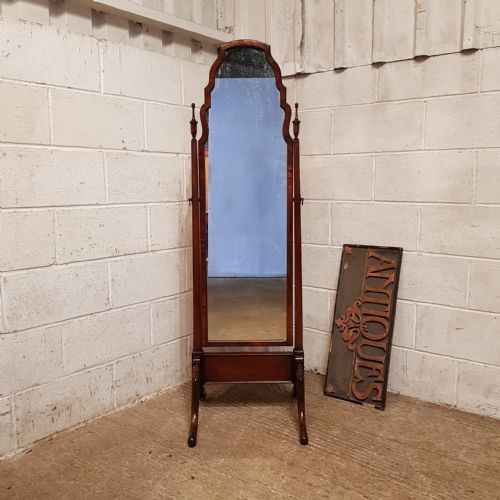


Vintage Psyche Mirror
These vintage psyche mirrors are freestanding and dressing table glasses that let you check your full attire, bringing practical elegance to any bedroom.
Vintage Psyche Mirror
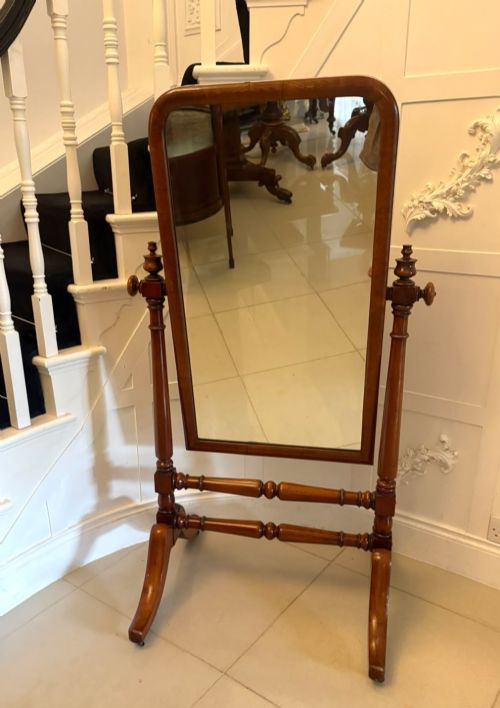
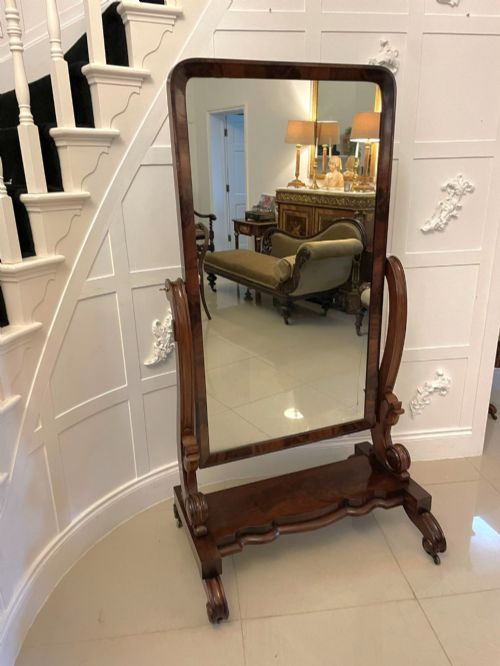
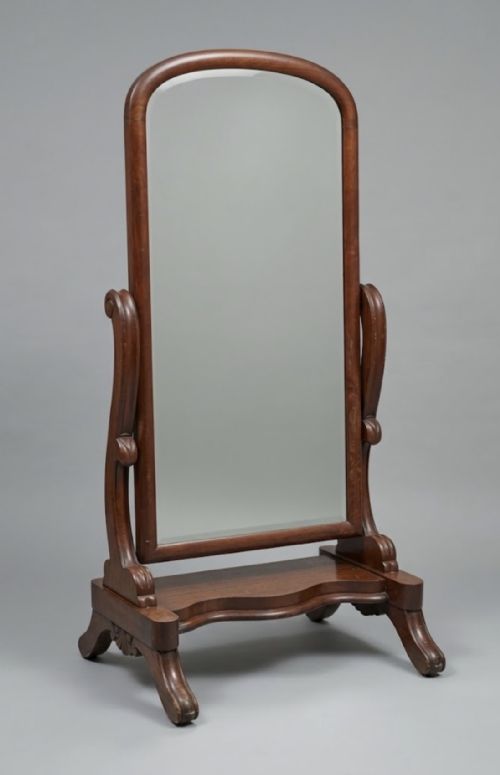
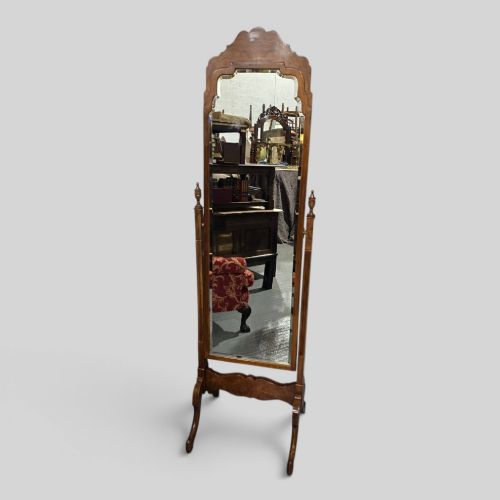
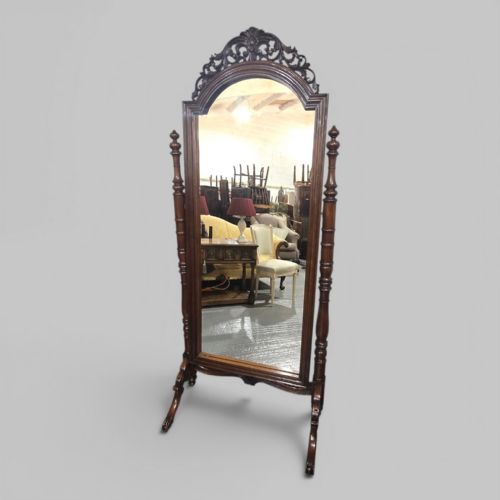
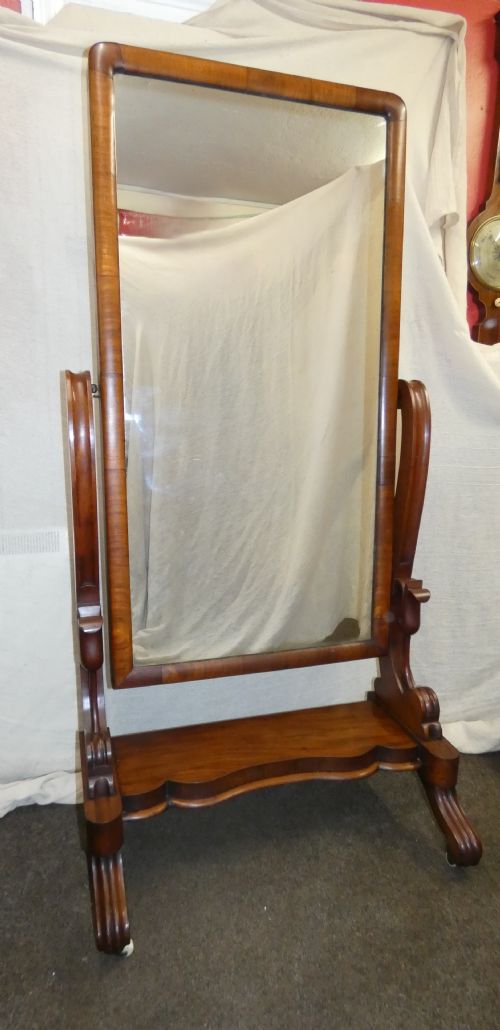
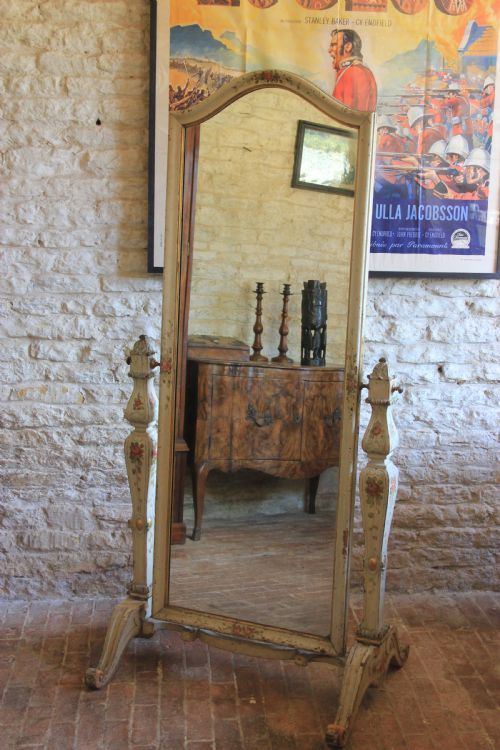
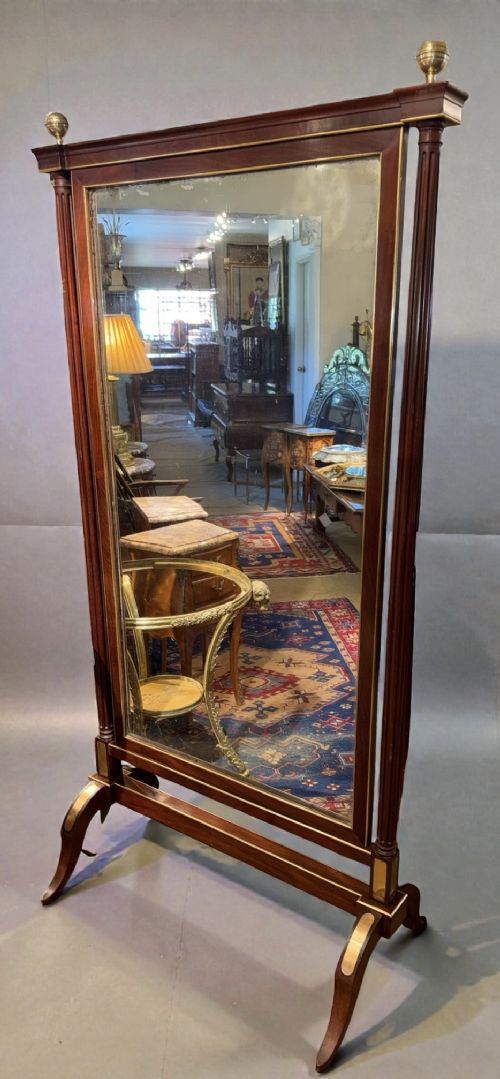
A vintage psyche mirror is a freestanding or dressing table glass designed to tilt within a frame, allowing the user to view their entire outfit at once. These pieces appear in forms such as cheval mirrors, dressing mirrors, and dressing tables equipped with adjustable plates.
The selection ranges from tall floor-standing examples supported by saber legs and castors to compact table models featuring marble tops and swing frames. Most pieces date from the nineteenth and twentieth centuries, spanning periods like the Regency, Victorian, and Edwardian eras.
Makers utilised various regional aesthetics, drawing on French Chateau, Louis XVI, and Italian Country styles alongside traditional British cabinet-making traditions. Buyers encounter mahogany most frequently, alongside burr walnut, painted timber, and brass fittings.
How they were made
Cabinet-makers constructed the frames primarily from solid mahogany or walnut, often selecting figured veneers such as flame mahogany or burr walnut for the main panels. These timbers were joined using traditional methods to support the weight of the swinging glass.
Hardware played a crucial structural and decorative role, with brass pivots, sabots, and castors allowing the mirror frame to tilt smoothly while protecting the floor and legs. Some larger Victorian examples incorporated marble tops into their base structures for added stability and weight.
Listings feature mahogany and walnut timbers predominantly, alongside brass hardware, marble tops, and glass across Victorian and Regency periods.
What varies in quality
The choice of timber grain defines the visual appeal, with highly figured flame mahogany and burr walnut commanding attention over plain planks. Superior examples feature carefully matched veneers that wrap harmoniously around the upright posts and base.
Engineering of the pivot mechanism determines daily usability, as well-fitted brass hardware holds the mirror plate firmly at any desired angle without slipping. The refinement of the turning on the upright frames and the elegance of the supporting legs further separate standard utility pieces from finer commissions.
The Vintage Psyche Mirror Glossary
- Cheval mirror
- A large freestanding mirror supported on four legs that allows the user to see their full reflection. The glass hangs on pivots within a vertical frame.
- Swing mirror
- A smaller mirror plate mounted on pivots between two upright posts, allowing the glass to tilt. These often sit atop a dressing table or chest of drawers.
- Sabot
- A metal sleeve, usually made of brass, fitted to the foot of a furniture leg. It protects the timber and often incorporates a castor.
- Flame mahogany
- A veneer cut from the fork of the mahogany tree where the branch meets the trunk. It creates a distinctive, fiery pattern of wood grain.
Vintage Psyche Mirror: Frequently Asked Questions
What is a psyche mirror?
A psyche mirror is an adjustable dressing glass that pivots within a frame, designed to provide a full-length view for checking attire.
These pieces range from tall floor-standing cheval mirrors to smaller swing mirrors placed upon dressing tables.
Where should I place a cheval mirror?
Freestanding cheval mirrors work well in bedrooms, dressing rooms, or hallways where natural light helps reflect brightness into the space.
Ensure the floor is level so the heavy frame and pivot mechanisms operate without straining the upright supports.
How do I date a mahogany mirror?
Dating relies on observing the timber selection, leg styles, and hardware details such as brass sabots and castors.
Victorian and Regency examples often feature turned uprights and sabre legs, while later twentieth-century interpretations adopt simpler walnut or mahogany profiles.
Can these mirrors be tilted safely?
Original brass pivot screws and side fixings allow the glass to tilt to the desired angle when properly adjusted.
Checking that the supporting frame remains stable ensures the mirror holds its position without slipping during use.