



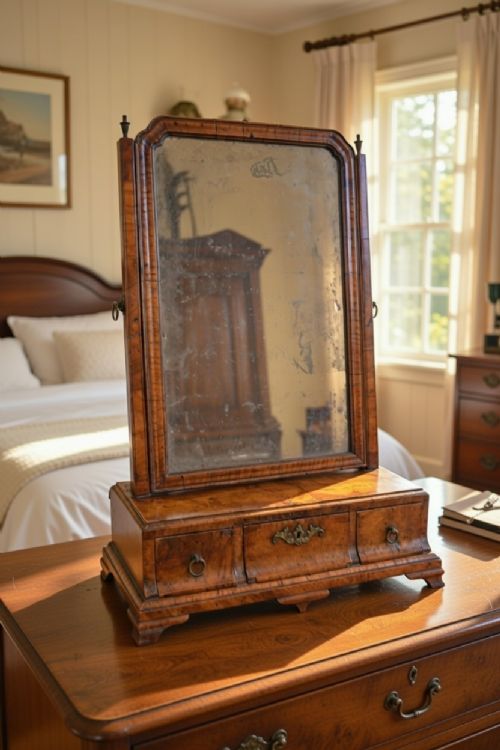

Burr Walnut Standing Mirror
A burr walnut standing mirror offers rich, swirling grain patterns framed in timber, bringing warmth and depth to a room.
Burr Walnut Standing Mirror
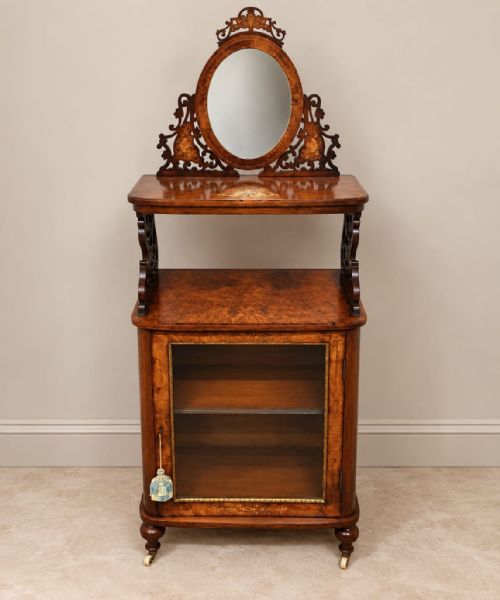
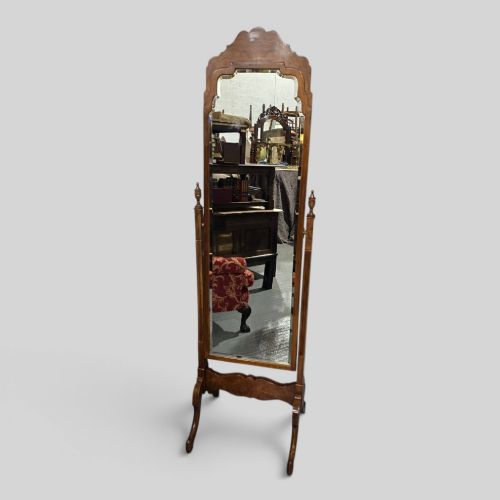
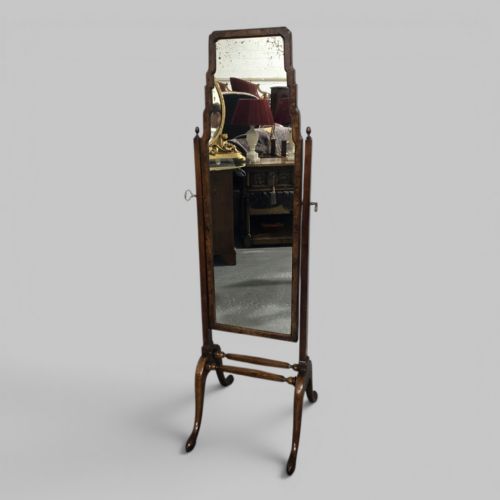
A burr walnut standing mirror typically appears as a cheval mirror on a floor-standing frame, designed to reflect light and show the full figure. These large pieces trace their origins through the Victorian era into the early twentieth century, reflecting shifting tastes in domestic furniture. Buyers seeking a burr walnut standing mirror will also encounter related forms such as dressing mirrors and vanity glasses.
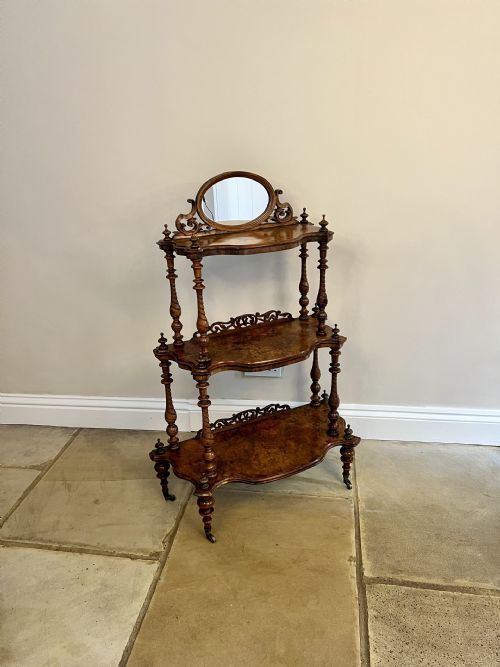
The materials and styles span several distinct periods, most notably the Queen Anne revival of the nineteen-twenties alongside Victorian pieces and the later Art Deco examples. Walnut veneer with pronounced burr figuring provides the dominant visual characteristic, often accompanied by matching side cabinets, whatnots, and credenzas in the broader record. Each surviving example demonstrates how makers utilised rich timber veneers to create striking focal points in bedrooms and dressing rooms.
How they were made
Makers applied thin veneers of burr walnut to solid secondary timbers, cutting the wood to reveal complex swirling grain patterns across the frame. Brass fittings and hardware secured the pivoting mirror plates, allowing the glass to tilt smoothly within its upright supports.
Surviving pieces combine traditional cabinetmaking techniques with decorative elements like marquetry inlay or carved crestings. The mirror glass itself sits securely within rebated wooden mouldings, backed by panelled timber to protect the reflective silvering.
Listings feature walnut, burr walnut, and brass across Victorian, Art Deco, and Queen Anne styles.
What varies in quality
The selection of the burr walnut veneer dictates much of the visual appeal, with tighter and more symmetrical grain patterns commanding greater attention. The crispness of carved details and the weight of the brass pivots reveal the level of care taken during construction.
Proportion and stability set finer examples apart from simpler utilitarian pieces, ensuring the upright frame supports the heavy glass securely. Original mirror glass with gentle age speckling also distinguishes pieces that retain their authentic early surfaces.
The Burr Walnut Standing Mirror Glossary
- Burr walnut
- A figured wood grain obtained from the wart-like growths on walnut trees, prized for its intricate patterns and rich colour. Cabinetmakers sliced this wood into thin veneers to wrap prominent surfaces.
- Cheval mirror
- A full-length floor-standing mirror mounted in a frame that allows it to swing or tilt. This tall form became popular for dressing rooms during the nineteenth and twentieth centuries.
- Marquetry
- The art of applying decorative pieces of veneer to a structure to form intricate patterns or pictures. Craftsmen used contrasting woods to create detailed borders and motifs.
- Credenza
- A low sideboard or cabinet featuring mirrored backs in several Victorian examples. These heavy storage pieces share the characteristic burr walnut finish found on standing mirrors.
Burr Walnut Standing Mirror: Frequently Asked Questions
Where should I place a standing mirror?
A burr walnut standing mirror works best in a bedroom, dressing room, or large hallway where it can catch natural light and reflect the surrounding space. Positioning the piece opposite a window helps brighten darker corners while showcasing the figured timber frame.
Because cheval mirrors are tall and freestanding, ensure they stand on a level floor away from high-traffic areas where they might be bumped. The pivoting mechanism allows you to adjust the angle of the glass to suit the room layout.
How do I care for burr walnut timber?
Maintain the finish of a burr walnut standing mirror by dusting regularly with a soft, dry cloth and avoiding direct sunlight that can fade the wood. Keep the furniture away from radiators and damp spots to prevent the veneer from lifting or cracking.
Apply a traditional beeswax polish occasionally to nourish the walnut and maintain its warm lustre. Avoid modern silicone sprays, which build up a greasy residue on antique surfaces over time.
What is the difference between a cheval mirror and a dressing mirror?
A cheval mirror stands directly on the floor and provides a full-length reflection of the entire figure. These taller frames require substantial floor space and feature sturdy upright supports with pivoting side arms.
A dressing mirror is smaller and sits on top of a table, chest of drawers, or vanity. These pieces focus on upper-body reflection and often incorporate small drawers in their base stands.
How can I tell the period of a mirror?
Examine the construction methods, timber choices, and hardware styles to determine whether a piece originates from the Victorian era, the nineteen-twenties revival, or later periods. Victorian examples often display heavier carvings and rich ormolu mounts, while nineteen-twenties Queen Anne revival pieces feature softer cabriole lines and lighter proportions.
Look at the backboards, screw types, and mirror silvering for signs of age. Hand-cut screws and aged bevels on the glass point toward earlier manufacture, whereas later Art Deco pieces display geometric simplicity.