
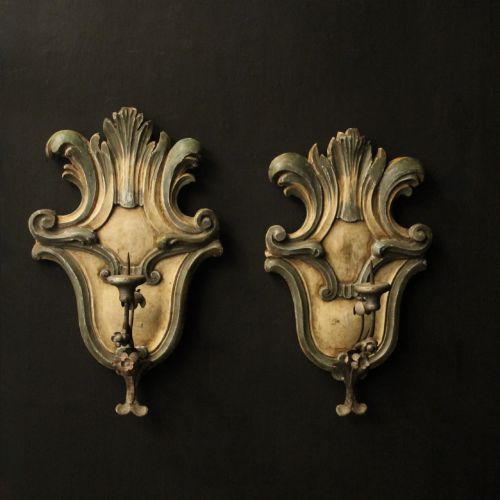
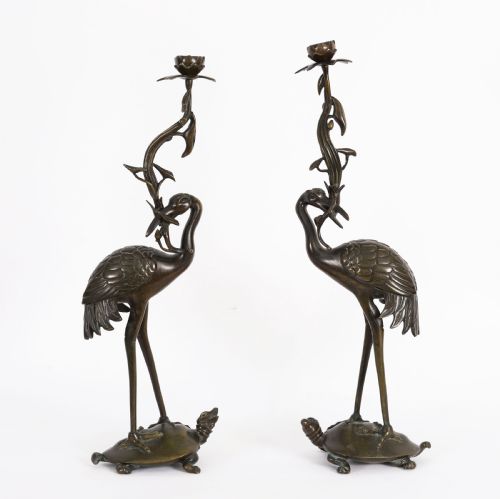


Vintage Pricket Candle Holder
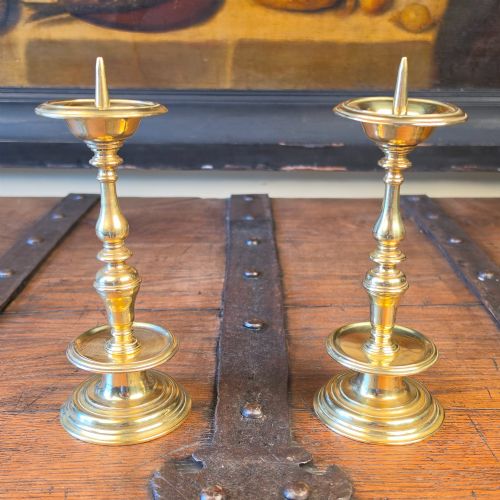
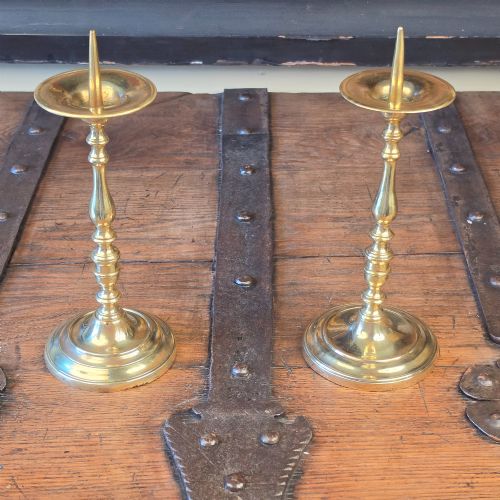
These vintage pricket candle holder examples use a sharp metal spike to secure large candles, bringing steady altar illumination into domestic rooms.
Vintage Pricket Candle Holder
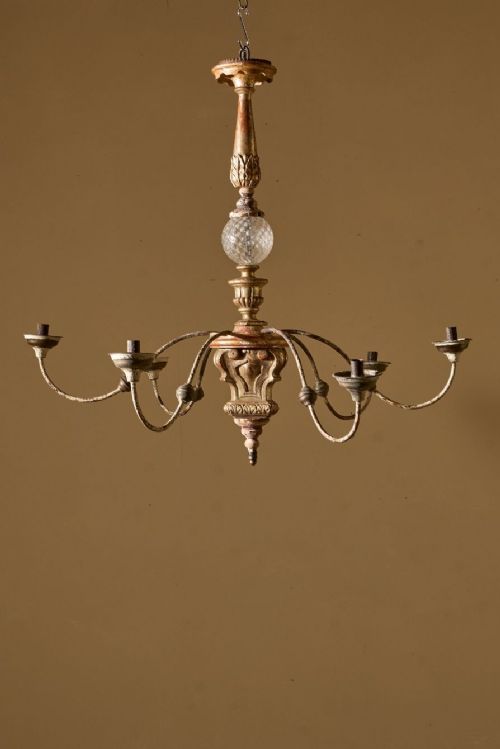
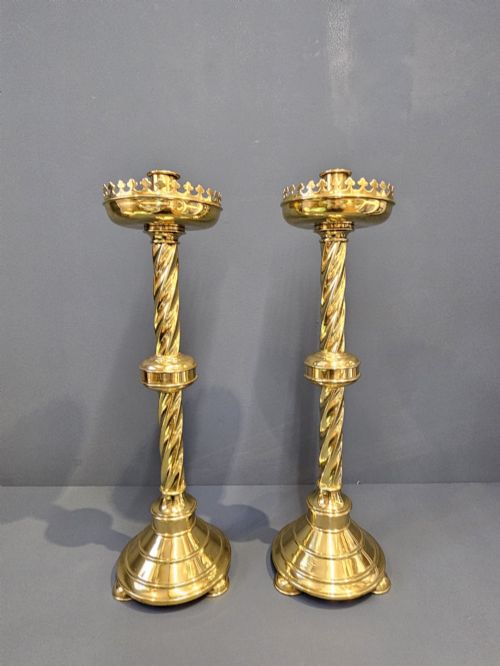
A vintage pricket candle holder relies on an upright spike rather than a socket to hold wax candles in place. These pieces span table candlesticks, wall sconces, large floor stands and chandeliers.
Most items you encounter date from the nineteenth and twentieth centuries, drawing on earlier Gothic Revival, Baroque and Amsterdam School styles. They emerge from ecclesiastical settings and continental domestic interiors.
Forms range from modest carved wooden sticks to monumental church standards cast in heavy bronze or brass. Pairs dominate the selection, alongside occasional single floor torchères and wall fixtures.
How materials and methods shape each piece
Foundry cast metals provide the substance for the heavy brass, bronze and iron examples. Founders poured molten metal into intricate moulds before finishing surfaces with patination or polish.
Carved timber pieces utilise oak, treen or softwoods shaped with chisels and gouges. Artisans often applied gesso layers over the wood base to receive fine gilding or paint finishes.
Listings span centuries from the seventeenth to the twentieth, featuring brass, wrought iron, giltwood, carved oak and bronze.
What separates standard pieces from the finest
The weight and gauge of the metal dictate the structural integrity of cast brass and bronze pieces. Substantial wall thickness and crisp chasing on decorative motifs distinguish superior foundry work from simpler production.
Carved wooden examples rely on the depth of relief and the precision of hand-tooling. Original gilding surfaces that retain their warmth without heavy over-painting separate well-preserved items from compromised ones.
The Vintage Pricket Candle Holder Glossary
- Pricket
- A sharp metal spike projecting upwards from the drip pan to secure the base of a candle. This spike prevents the candle from wobbling during burning.
- Torchère
- A tall ornamental stand or candlestick designed to support a light source. These pieces often stand on floors or mount directly onto walls.
- Giltwood
- Timber that has been coated with a thin layer of gold leaf or gold powder. This finish adds reflective brilliance to church and salon furnishings.
- Amsterdam School
- An architectural and design movement from the early twentieth century characterised by expressive brickwork and organic metal forms. Works in this style display heavy brass and copper construction.
- Gesso
- A plaster mixture applied as a smooth surface preparation for painting or gilding on wood. It allows artisans to carve intricate details before applying metallic leaf.
Vintage Pricket Candle Holder: Frequently Asked Questions
How do I secure a candle on a pricket?
You gently press the base of a thick candle directly down onto the sharp metal spike until the wax holds firm. The spike anchors the candle upright without needing a traditional hollow socket.
For modern wax candles that lack a pre-drilled base hole, warming the bottom slightly helps the spike penetrate straight into the centre.
Where were these candle holders originally used?
Many large pricket stands originated in churches and cathedrals for ceremonial altar lighting. Smaller versions served in grand domestic rooms, dining halls and chapels.
Over time, ecclesiastical pieces transitioned into secular homes as decorative lighting and architectural accents.
How do I clean patinated brass safely?
You should dust brass surfaces gently with a soft, dry cloth to remove surface grit. Avoid harsh chemical polishes that strip away historical patination and age depth.
Preserving the natural dark or mellow tones maintains the visual integrity and character of older metalwork.
What is the difference between a candlestick and a torchère?
A standard candlestick sits on a table or altar surface at a modest height. A torchère functions as a much taller floor standing or wall mounted candle holder.
Floor torchères often feature heavier bases to support substantial church candles or multi-branch fixtures safely.
How can I tell the period of a wooden holder?
You examine the tool marks, timber shrinkage and construction joints visible on the underside or back. Hand-carved details and layered gesso grounds point towards older traditional craftsmanship.
Comparing the stylistic motifs, such as Baroque curves or Art Deco lines, helps narrow down the probable decade of manufacture.