




Vintage Potboard Server
A vintage potboard server offers a robust lower shelf for display, anchoring rustic kitchens and dining rooms with utilitarian charm.
Vintage Potboard Server
A vintage potboard server is fundamentally a heavy-duty base for storing and displaying kitchenware, grounded by a low open timber shelf known as a potboard. When searching for a vintage potboard server, buyers frequently encounter sturdy oak and painted timber forms that trace their lineage back through centuries of domestic utility.
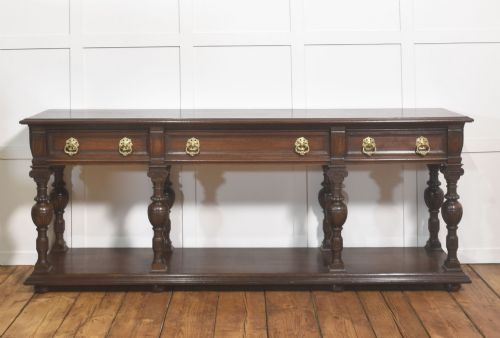
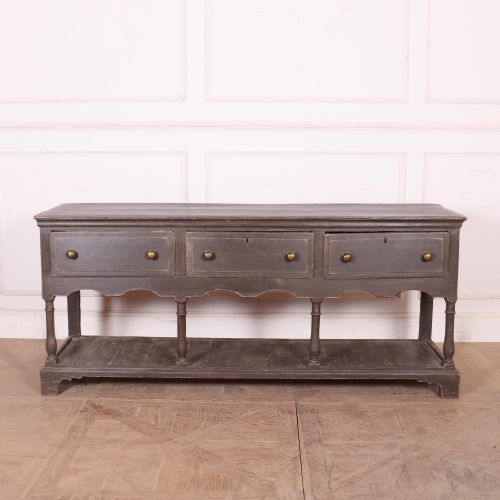
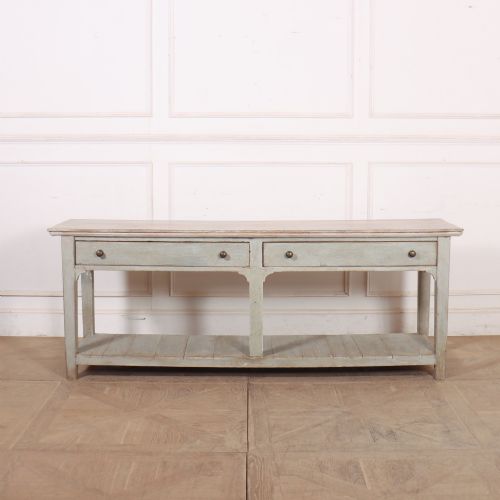
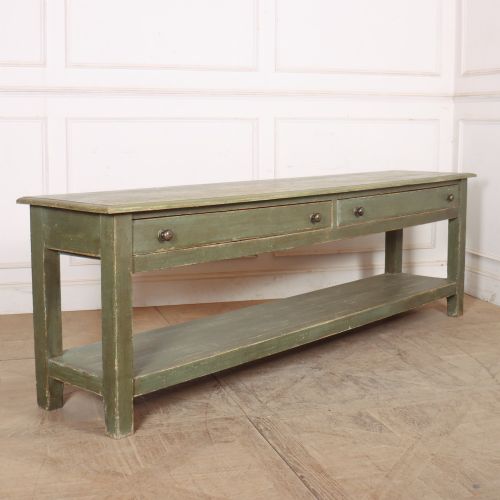
The pieces appearing on this page span several centuries and styles, ranging from 18th century English painted examples to carved Jacobean revival pieces from the early 20th century. Alongside traditional dresser bases and serving tables, buyers will also find French country console tables and oak hall tables that share the characteristic low shelf.
Originating largely from English and French country houses, these servers combine surface workspace with accessible lower storage. The form varies from long serving tables to compact console formats, accommodating diverse domestic interiors without losing its foundational rustic identity.
Materials and construction
The construction of these servers relies heavily on solid oak, pine, and painted timber, chosen for structural endurance and daily domestic use. Artisans utilised traditional joinery methods to build heavy framework, supporting the characteristic low potboard shelves that stabilise the entire piece.
Surface treatments vary from natural waxed oak and bleached timbers to painted finishes that show decades of wear. Detail work includes hand carving on friezes and panels, alongside modest brass hardware on drawers, keeping the focus squarely on the structural timber.
Several pieces show faint grease marks on the lower potboard where heavy dripping pans rested centuries ago.
Assessing quality in construction and finish
Quality in these servers rests upon the integrity of the timber framing and the proportion of the lower potboard to the upper surface. Pieces exhibiting dense, well-figured oak or genuine period paint finishes demonstrate superior craftsmanship compared to later revival items.
The handling of carved elements and the preservation of original surfaces distinguish finer examples from standard utility furniture. A well-proportioned base with tight joinery and honest patination commands attention through structural honesty rather than decorative excess.
The Vintage Potboard Server Glossary
- Potboard
- The low, open shelf fixed near the floorboards of a dresser base or serving table. It was originally designed to hold heavy earthenware pots and pans off damp floors.
- Dresser Base
- A low rectangular cabinet featuring drawers or cupboards beneath a flat top, designed for food preparation and storage. It forms the primary body of many potboard servers.
- Jacobean Style
- A heavy, formal design revival popular in the later periods, characterised by geometric mouldings and dark oak timbers. It often appears on early 20th century reproductions of 17th century furniture.
- Bleached Oak
- Timber that has been chemically or naturally lightened to remove dark tones and reveal the grain. This finish softens the visual weight of heavy period furniture.
- Console Table
- A long, narrow table designed to stand against a wall, frequently adopted into this category when fitted with a lower potboard shelf.
Vintage Potboard Server: Frequently Asked Questions
What is a potboard server used for?
These pieces provide a durable surface for food preparation or serving, while the lower shelf holds everyday kitchenware.
In modern homes, they function well as sideboards in dining rooms or as practical storage units in large kitchens.
How do I tell an 18th century piece from a 1920s revival?
Older pieces exhibit hand-cut joinery, pegged joints, and deep patination accumulated through generations of domestic use.
Revival pieces from the early 20th century often feature machine-cut elements and stylised Jacobean carving that mimics earlier centuries.
Are painted finishes original?
Many English and French country pieces feature historic painted surfaces that have softened and worn over decades of service.
Distinguishing between period paint and later decorative applications requires close inspection of crackle, wear patterns, and underlying timber.
How do I care for antique oak?
Solid oak benefits from occasional applications of natural beeswax to nourish the dry timber and protect the surface.
Avoid placing these servers near direct heat sources or excessive moisture to preserve the stability of the joints and potboard.