
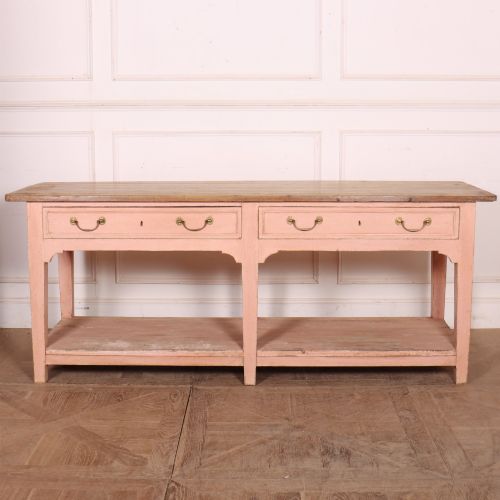
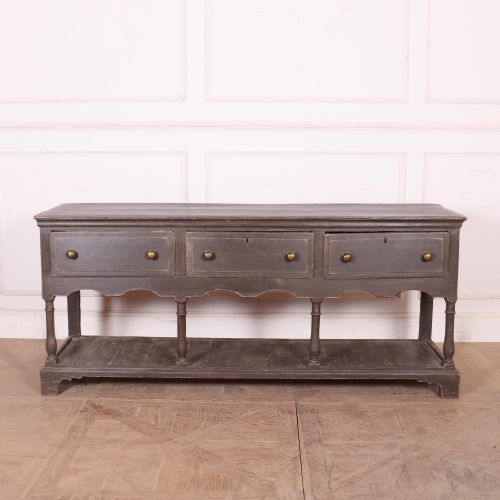
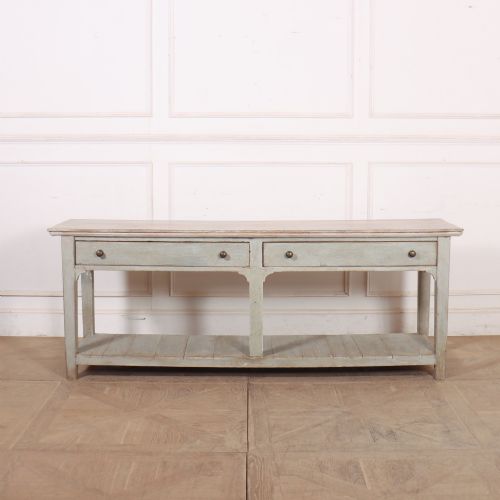


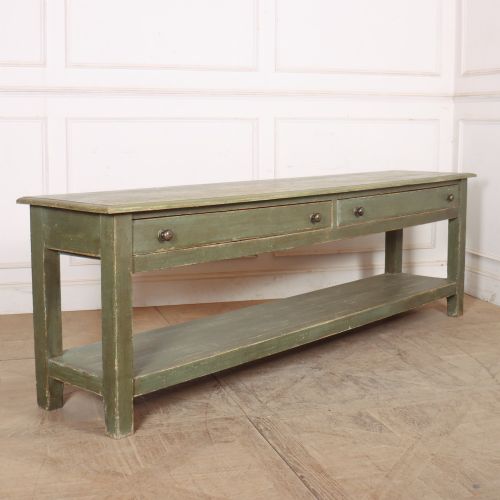


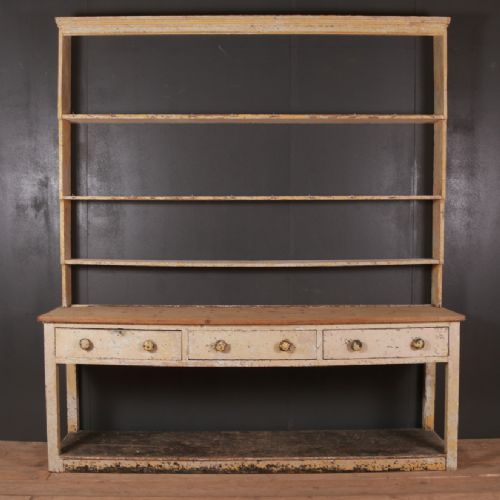
Painted Potboard Dresser
A painted potboard dresser brings robust rustic character and open lower shelving to a room, offering practical surface space alongside traditional display.
Painted Potboard Dresser
A painted potboard dresser typically presents as a low dresser base or serving table with an open lower shelf known as a potboard. The examples seen here range from eighteenth-century origins through the nineteenth century, including years such as 1880 and 1890.
The forms span English country and rustic farmhouse styles, often described as dresser bases, serving tables, or kitchen dressers. Scottish farmhouse variants also appear among the English country house pieces.
Buyers will most frequently meet nineteenth-century painted potboard dresser bases and large serving tables on this page. These sturdy pieces serve well in kitchens and dining rooms for both storage and preparation.
How they were made
Construction relies primarily on pine and timber, shaped into substantial frames with painted finishes that show layers of historic colour and wear. Metal and brass hardware appear on drawers and fittings where appropriate.
Joinery reflects traditional country workshop methods intended for heavy everyday domestic use. Surfaces carry paint finishes applied over decades of use in farmhouse and country house settings.
Listings span the eighteenth and nineteenth centuries, featuring pine construction and painted timber finishes in English country and rustic farmhouse styles.
What varies in quality
Quality rests in the integrity of the timber framing and the character of the painted surface rather than crisp factory execution. Pieces with untouched historic paintwork carry greater appeal than those with later decorative overpainting.
Proportions also distinguish the range, from narrow servers to large country house serving tables and base units. The balance between the top surface and the lower potboard defines the visual weight of each piece.
The Painted Potboard Dresser Glossary
- Potboard
- An open lower shelf built into the base of a dresser or serving table, traditionally used for cooling pots and pans. This defining feature sits just above the floor.
- Dresser Base
- The lower portion of a kitchen dresser, functioning as a standalone sideboard or serving table without the upper plate rack. These provide a flat working top above drawers and cupboards.
- Serving Table
- A large side table used in dining rooms for presenting food, sharing structural similarities with dresser bases. They often feature generous proportions and robust timber legs.
- Pine
- A softwood commonly utilised in British country furniture for its accessibility and strength. It takes paint finishes readily and forms the primary material for these rural pieces.
Painted Potboard Dresser: Frequently Asked Questions
What is a potboard dresser?
A potboard dresser is a form of kitchen or dining furniture featuring a flat top surface for serving and an open bottom shelf near the floor. These pieces originated in country houses and farmhouses for daily culinary tasks.
They combine drawer storage at table height with lower display space. The open lower shelf distinguished them from standard enclosed cupboards.
How do I date a painted dresser?
Dating relies on construction methods, timber choice, and the wear patterns visible in the painted finish. Eighteenth-century pieces typically show hand-planed surfaces and older joinery techniques compared to later nineteenth-century examples.
The presence of original paint layers helps establish age. Hardware types and timber shrinkage also provide clues to the period of manufacture.
Where should I place a potboard dresser?
These pieces suit kitchens, dining rooms, and large hallways where their surface and lower shelf can be utilised. They function well as sideboards for serving meals or as storage units for everyday crockery.
The open potboard allows for the display of baskets, large bowls, or heavy cookware. Their rustic presence anchors country-style interiors effectively.
Are these dressers made of pine?
Pine is the predominant timber found in these country house and farmhouse pieces. Carpenters utilised it extensively for regional furniture due to its availability and sturdy nature.
The soft wood accepts painted finishes well. Over time, the pine underneath shows through worn painted areas to create an authentic aged appearance.