

Vintage Platinum Solitaire
Vintage platinum solitaire rings unite durable white metal settings with single, striking centre stones from the early decades of the twentieth century.
Vintage Platinum Solitaire
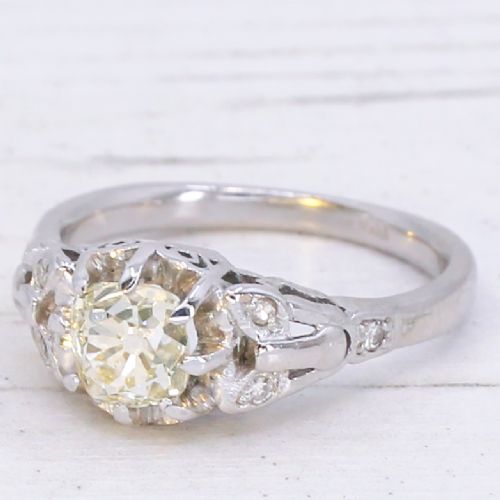
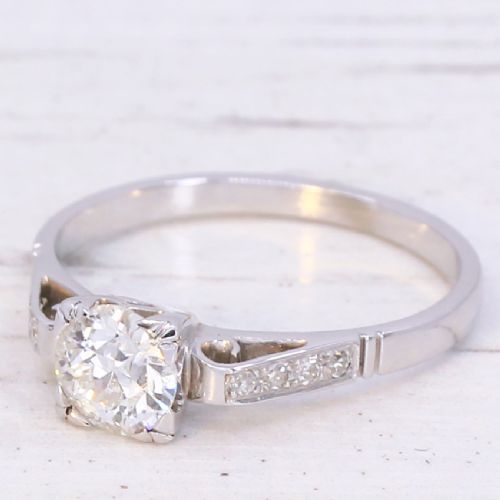
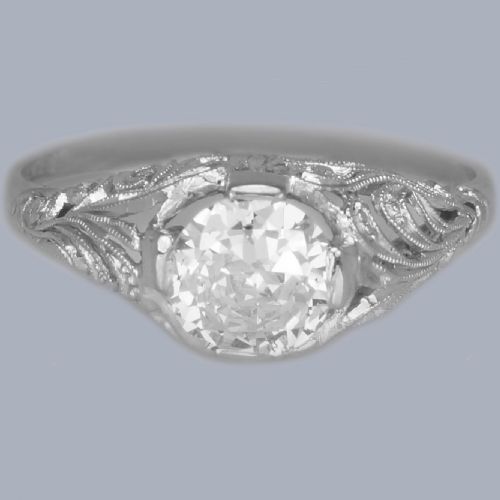
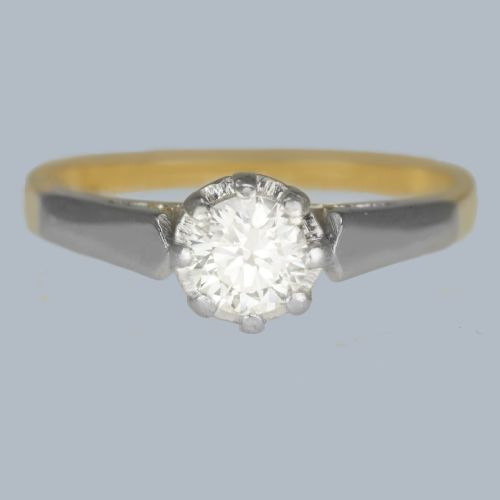
A vintage platinum solitaire brings together a single central gemstone, most often a diamond, mounted securely within a white metal band. Buyers searching for a vintage platinum solitaire encounter pieces originating predominantly from the Edwardian era through the mid-century decades, spanning the 1910s to the 1960s.
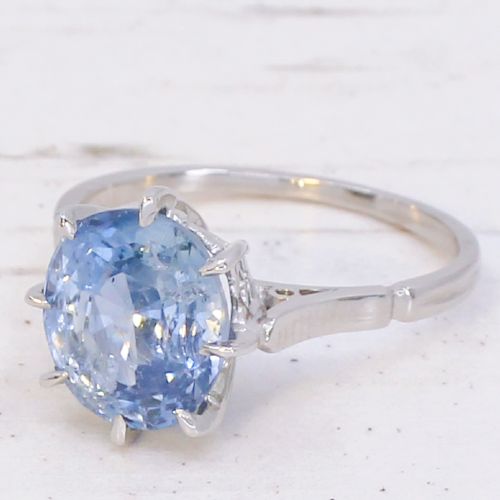
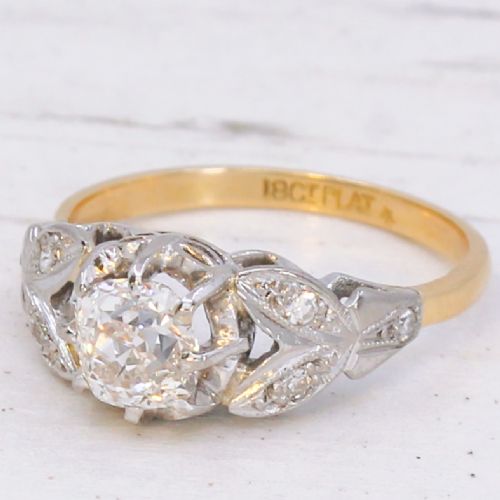
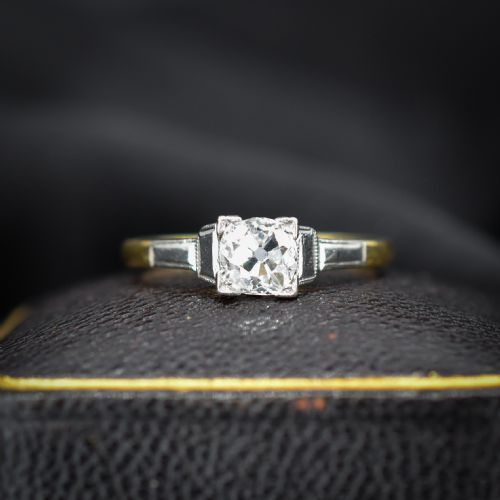
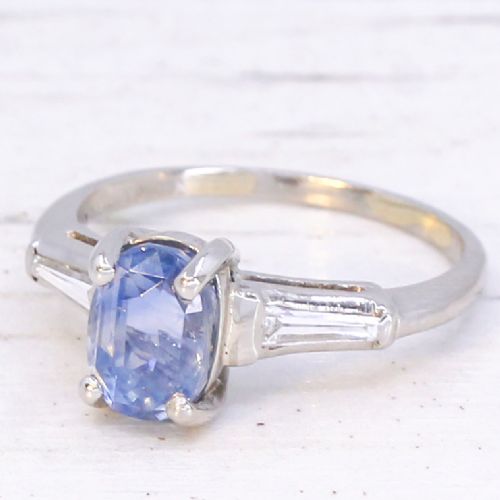
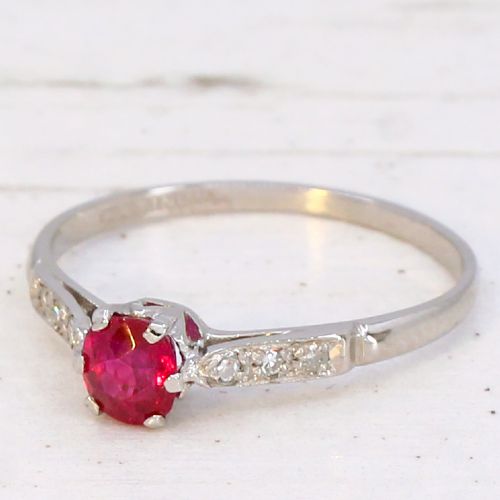
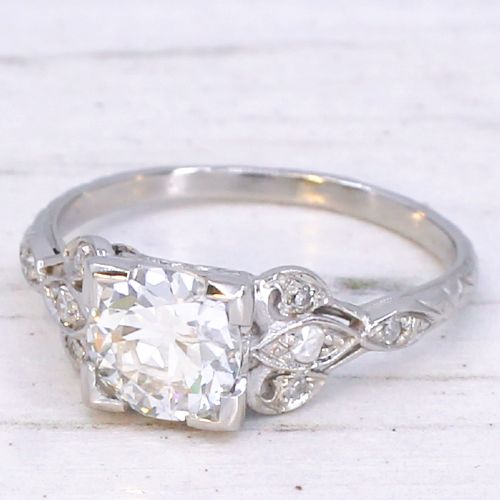
Engagement rings dominate the selection, alongside occasional pendants, earrings, and dress rings featuring sapphires, rubies, or pearls alongside diamonds. The most frequent iteration is the Art Deco ring from the 1920s or 1930s, displaying geometric precision or soft foliate shoulders.
The aesthetic bridges late nineteenth-century ornate traditions and mid-century minimalism, utilising platinum for its strength and bright finish. Pieces from the 1940s and 1950s introduce transitional cuts and heavier yellow or white gold combinations, maintaining the single-stone focus characteristic of the category.
Materials and Technique
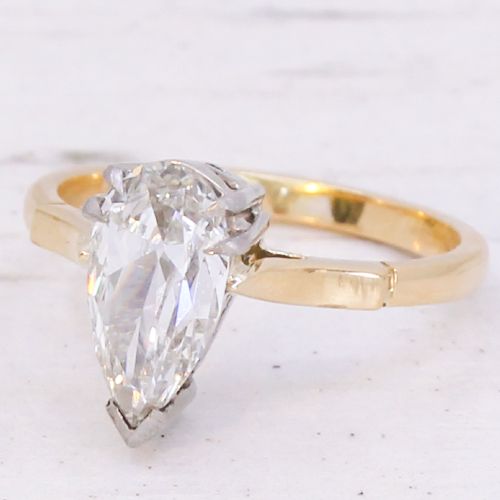
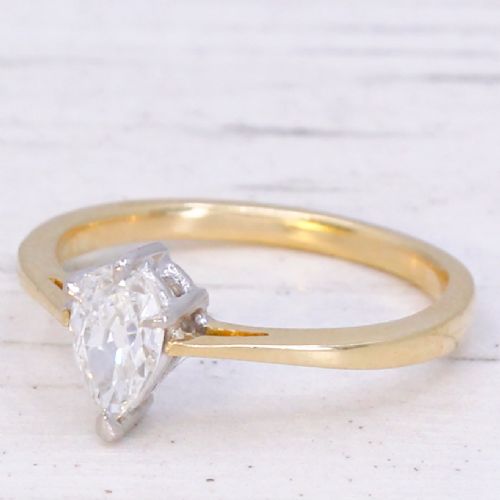
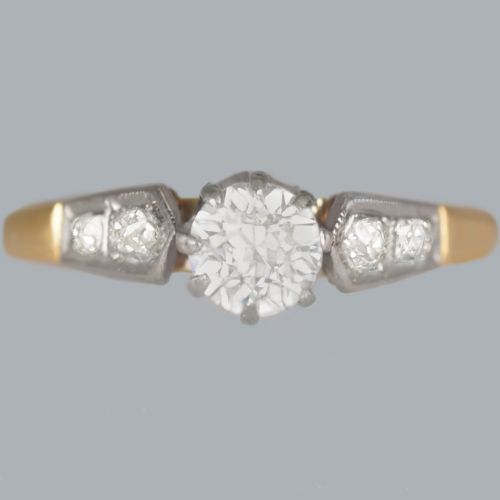
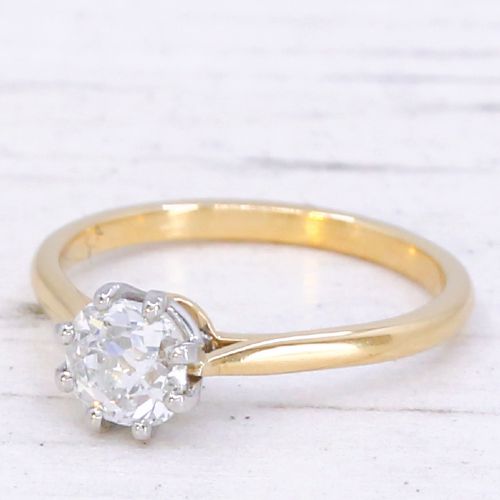
Platinum serves as the primary structural metal, valued for its ability to hold delicate claw settings and intricate pierced galleries without bending. Jewellers frequently combined platinum heads with 18ct yellow or white gold shanks, particularly during periods of platinum rationing or shifting workshop preferences.
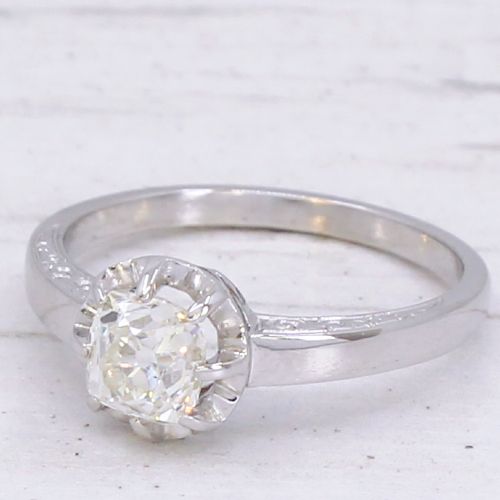
Centres stones feature hand-faceted old European cuts, old mine cuts, and transitional cuts shaped by individual lapidaries before modern laser standardisation. Gemstones are secured using precise millegrain edges, bead settings, or minimalist platinum claws designed to maximise light entry.
Vintage Platinum Solitaire Retail Price Guide 2026
Typical asking prices for vintage platinum solitaire among the pieces listed under this phrase on Sellingantiques today, from the lower quarter to the upper quarter. They describe what is for sale here now, not the wider market.
The inventory combines engagement rings, dress rings, pendants, and earrings representing distinct stylistic shifts from Art Deco to mid-century designs.
Factors of Quality
The calibre of a piece rests heavily on the optical liveliness and hand-cut proportions of the central diamond or unheated sapphire. Stones shaped by early twentieth-century cutters display distinct facet patterns that interact uniquely with candlelight or daylight.
Structural integrity and the preservation of original metalwork distinguish superior examples. Wear around the delicate millegrain borders or thinning beneath the setting reveals the history of past use and the skill of the original bench jeweller.
The Vintage Platinum Solitaire Glossary
- Solitaire
- A jewellery setting featuring a single central gemstone mounted alone on a band. This design focuses attention entirely on the optical properties of the primary stone.
- Millegrain
- A decorative technique involving a row of tiny raised metal beads along the edge of a setting. This textured border was widely utilised during the Edwardian and Art Deco periods.
- Transitional Cut
- A diamond faceting style bridging old cut stones and modern brilliant cuts, dating roughly from the 1930s to the 1950s. These stones possess smaller tables and slightly larger culets than contemporary brilliant cuts.
- Unheated
- A gemstone that has not undergone thermal enhancement to improve its natural colour or clarity. Such untreated stones command high regard among collectors.
Vintage Platinum Solitaire: Frequently Asked Questions
What is an old cut diamond?
An old cut diamond is a gemstone shaped by hand during the late nineteenth or early twentieth century. These stones display distinct facet arrangements designed under candlelight.
They feature smaller tabletops and deeper pavilions compared to modern brilliant cuts, producing a softer, warmer gleam.
How do I care for platinum settings?
Platinum is a durable and dense metal that resists wear better than gold. Regular cleaning with warm soapy water and a soft brush maintains its bright finish.
Periodic checks by a professional jeweller ensure the delicate claws holding the centre stone remain secure.
Are these rings suitable for daily wear?
Most vintage rings from this era were constructed as robust engagement pieces meant for everyday use. Platinum provides a strong foundation for daily activities.
However, very delicate antique settings or softer accent gems like pearls require mindful handling to prevent damage.
How can I tell an Art Deco ring apart?
Art Deco rings dating from the 1920s and 1930s showcase strong geometric motifs and architectural symmetry. They frequently incorporate platinum alongside square or baguette accent stones.
Earlier Edwardian pieces tend to display lighter, garland-style filigree work, whereas mid-century examples favour simpler, streamlined curves.