



Transitional Cut Diamond Ring
When you search for a transitional cut diamond ring, you seek a fascinating bridge between old-world charm and modern brilliance.
Transitional Cut Diamond Ring
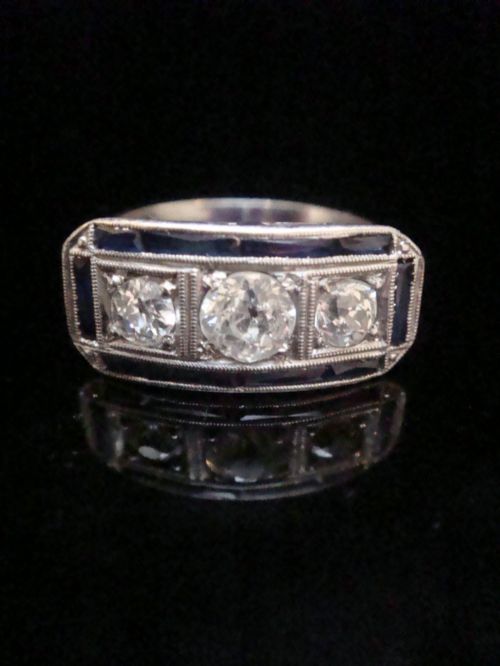
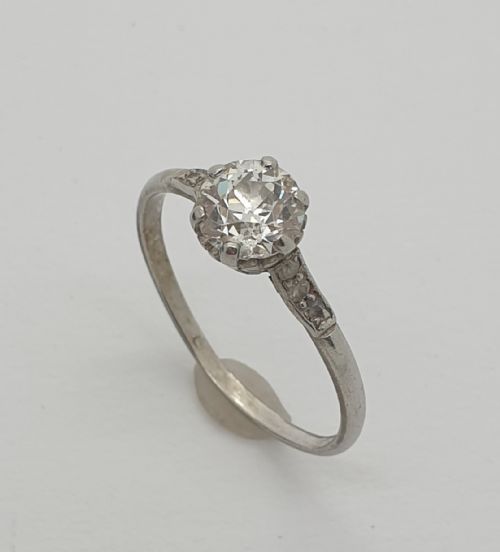
A transitional cut diamond ring bridges the older European stone shapes and the fully standardised brilliant cuts that arrived later in the twentieth century. These pieces appear most frequently from the Art Deco and Mid-Century periods, taking forms such as solitaires, clusters, and multi-stone settings.
Makers set these stones in platinum, 18ct gold, and 18ct white gold, often accompanied by calibre-cut sapphires or rubies. The physical designs span geometric plaques, domed bombe mounts, and streamlined engagement rings that highlight the unique facet pattern of the central gem.
Materials and construction methods
Goldsmiths utilised durable platinum and yellow or white gold to construct secure settings that held the stones while keeping metal weight minimal. Jewelers shaped the platinum into sharp geometric lines typical of the Art Deco aesthetic or smooth, curved mid-century profiles.
The defining element is the diamond itself, featuring a smaller table and a slightly larger culet than a modern round brilliant, which creates a distinct pattern of light reflection. Artisans integrated these gems alongside calibré sapphires and smaller accent diamonds using precise bezel, prong, and millegrain techniques.
Transitional Cut Diamond Ring Retail Price Guide 2026
Typical asking prices for transitional cut diamond ring among the pieces listed under this phrase on Sellingantiques today, from the lower quarter to the upper quarter. They describe what is for sale here now, not the wider market.
Listings feature pieces spanning the Edwardian era through the 1960s, constructed predominantly in platinum and 18ct gold.
Distinctions in quality and execution
The harmony between the central stone's cut parameters and the surrounding metalwork dictates the overall quality of the piece. Stones that retain a balanced depth and open culet provide the specific optical charm associated with this era.
Superior examples demonstrate meticulous hand-finishing in the platinum or gold settings, where millegrain work remains crisp and structural metal supports the stones securely without dominating the design.
The Transitional Cut Diamond Ring Glossary
- Transitional cut
- A diamond facet arrangement bridging old mine or old European cuts and modern round brilliants, typically featuring a slightly smaller table and a small open culet.
- Millegrain
- A decorative technique involving a row of tiny metal beads along the edges of a setting, frequently seen in platinum mounting work.
- Bombe
- A ring style characterised by a rounded, domed profile that swells outward from the finger to display pavé or solitaire stones.
- Toi et Moi
- A ring design featuring two main stones positioned side by side, translating from French as you and me.
- Plaque ring
- A style featuring a flat, wide top surface covered in geometric patterns and small pavé-set diamonds.
Transitional Cut Diamond Ring: Frequently Asked Questions
What is a transitional cut diamond?
A transitional cut diamond is a stone cut roughly between the 1920s and 1950s that possesses characteristics of both antique and modern diamond cutting styles.
These stones usually feature a smaller table, a slightly larger culet, and broader facets that produce a softer, deeper pattern of light return compared to modern brilliant cuts.
How do I care for my ring?
Caring for a vintage ring involves gentle cleaning with warm water, mild soap, and a soft brush to remove everyday oils and debris from beneath the settings.
Avoid wearing the piece during heavy manual tasks, and have a professional jeweler periodically inspect the platinum or gold prongs to ensure the stones remain secure.
Are these rings suitable for daily wear?
These rings were built for everyday wear using durable metals like platinum and 18ct gold, making them robust enough for daily life.
However, because of their age and delicate decorative details like millegrain, taking them off during rigorous physical activity helps preserve their original condition.