
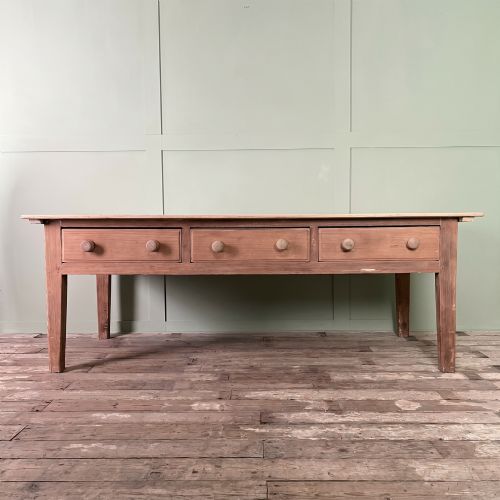
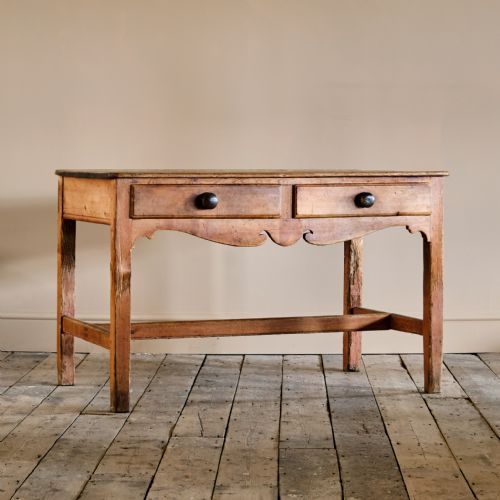
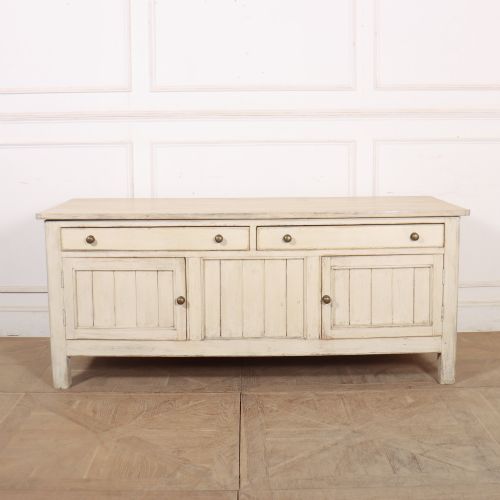
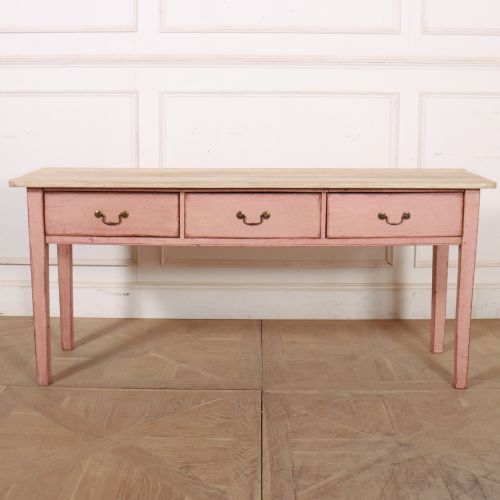
Vintage Pine Server
A vintage pine server brings honest utility and warmth to a room, offering sturdy timber surfaces and practical storage born from domestic work.
Vintage Pine Server
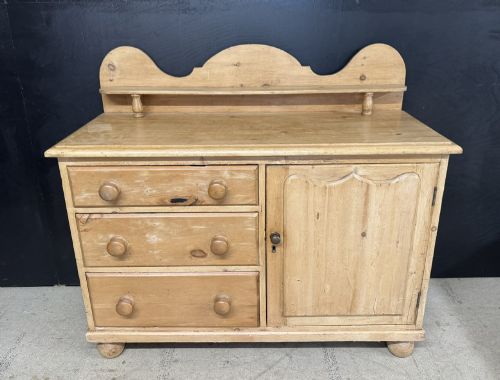
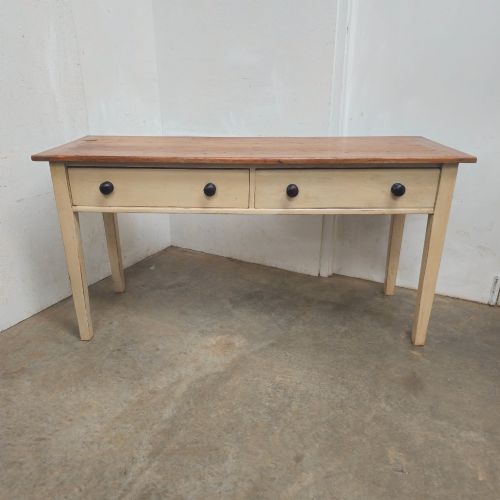
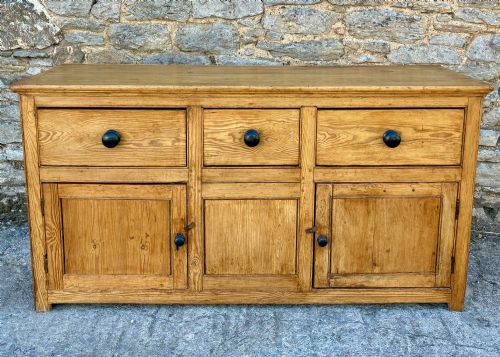
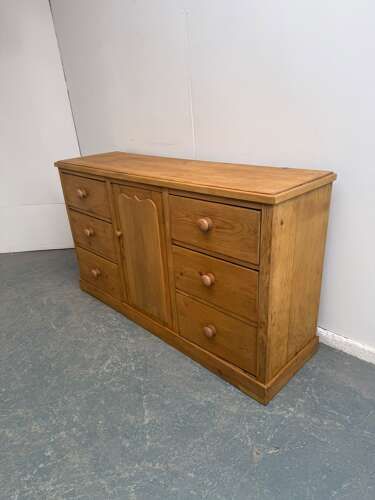
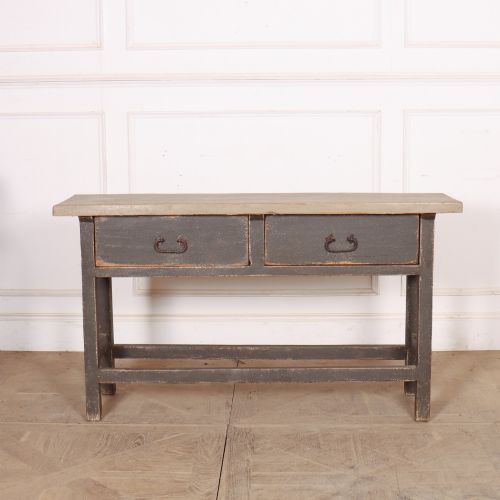
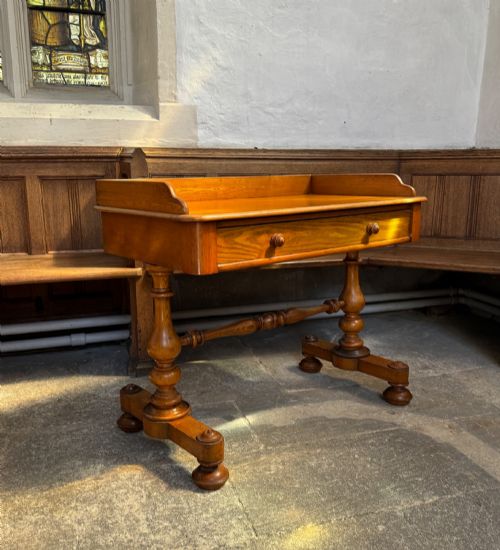
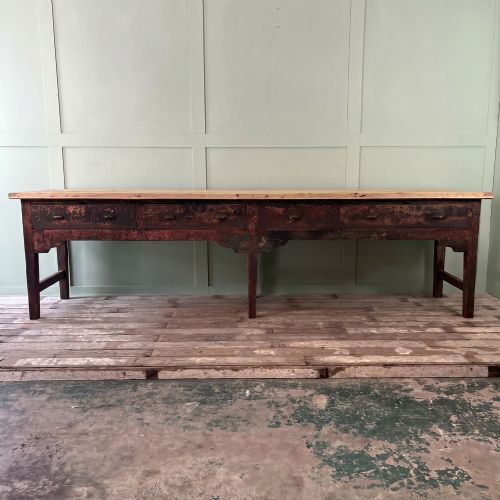
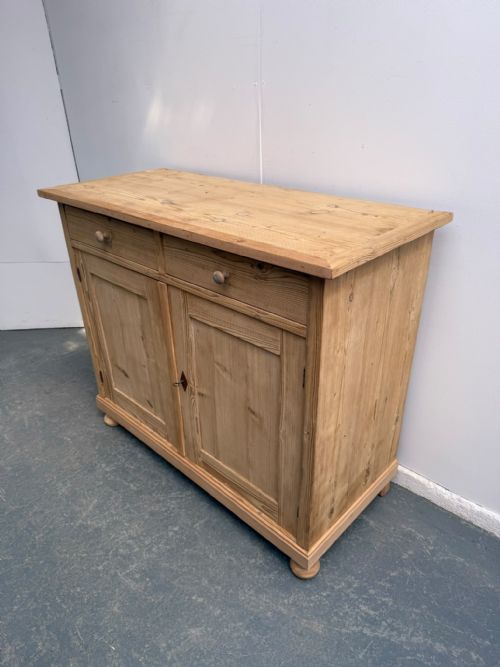
When you search for a vintage pine server, you are looking at practical furniture designed for domestic storage and food preparation, rooted in traditional kitchen and dining spaces. These pieces commonly take the form of dresser bases, serving tables, and console tables originating from the eighteenth and nineteenth centuries.
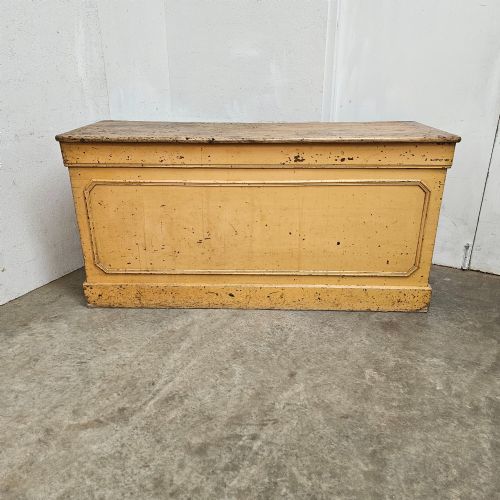
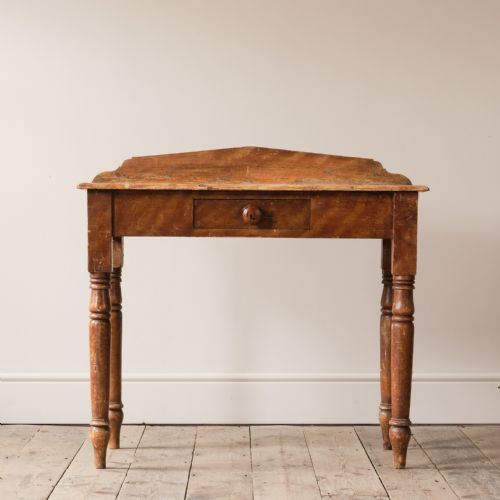
You will encounter items finished in waxed natural timber or retaining layers of original paint. Their origins range from modest country houses to rural dairies and French shops.
Materials and construction
Makers relied primarily on pine, often combined with secondary hardwoods such as oak or sycamore for structural stability and heavy prep surfaces. Pitch pine and standard pine provide the main body of these utilitarian forms.
Hardware elements like brass and iron appear on drawer pulls, handles, and hinges, offering functional durability alongside the timber construction. Surfaces frequently received a protective coat of wax or finishes of applied paint.
Joinery techniques prioritize strength and daily utility, binding dense country timbers into enduring frameworks designed to bear weight and resist heavy use.
Several dairy prep tables carry the subtle stains of centuries-old milk spills, proving they earned their keep long before entering a home.
Judging quality and character
The distinction between ordinary and exceptional pieces rests in the integrity of the original surfaces and the honesty of the timber. Original paint finishes that have weathered naturally carry greater character than later, unsympathetic redecorations.
Proportion and structural balance separate simpler utilitarian work from finer cabinetmaking. Pieces retaining their original brass or iron hardware and uncompromised joints hold a more coherent historical presence in a room.
The Vintage Pine Server Glossary
- Dresser base
- A low sideboard or cupboard unit, typically fitted with drawers and occasionally a lower potboard shelf. These items served as the foundational lower section of a larger kitchen dresser.
- Potboard
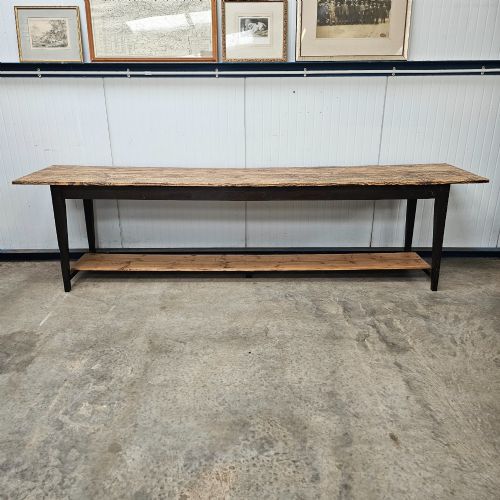
- An open slatted lower shelf beneath a table or dresser base, traditionally used for storing pots and pans. This feature elevates the utility of country furniture.
- Pitch pine
- A durable, resinous timber derived from pine species, known for its distinct grain pattern and structural strength. Makers selected this material for hard-wearing surfaces like washstands and prep tables.
- Chiffonier
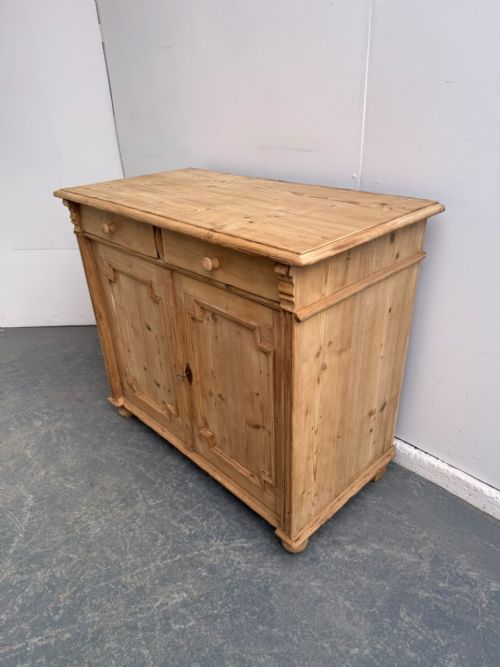
- A compact sideboard or low cabinet equipped with drawers and lower doors, designed for holding dining china or linens. The form gained popularity during the nineteenth century.
Vintage Pine Server: Frequently Asked Questions
How do I use a pine server today?
These pieces function well in dining rooms or kitchens for holding tableware, serving food, or displaying decorative objects.
Their practical drawers and cupboards provide useful everyday storage while adding traditional character to an interior.
Are painted finishes original?
Many servers retain early or original painted surfaces that show authentic wear from decades of domestic use.
Examining the layers of paint helps determine whether the finish dates to the period of manufacture or represents a later application.
How do I care for waxed pine?
Waxed timber surfaces require occasional re-waxing to maintain their protective finish and prevent the wood from drying out.
Keep these pieces away from direct heat sources and wipe spills promptly with a soft, dry cloth.
How do I date an antique pine server?
Dating relies on construction methods, hardware types, and the distinct stylistic markers of periods such as the Georgian and Victorian eras.
Tool marks and timber selection also offer clues to whether a piece originates from the eighteenth or nineteenth century.