


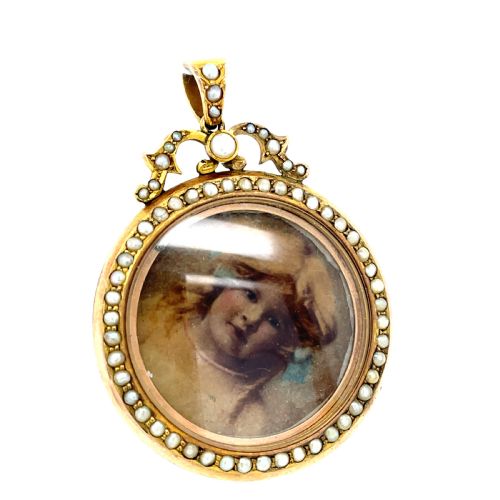
Vintage Picture Locket
These vintage picture locket pieces are hinged metal and gold pendants designed to hold photographs, spanning Victorian to mid-century eras for daily wear.
Vintage Picture Locket
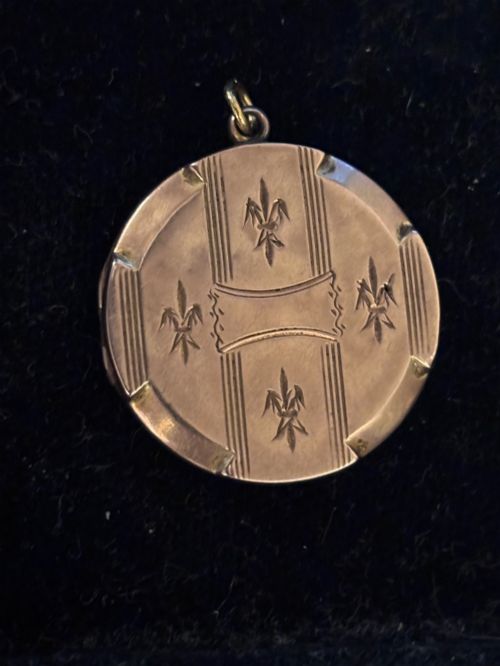
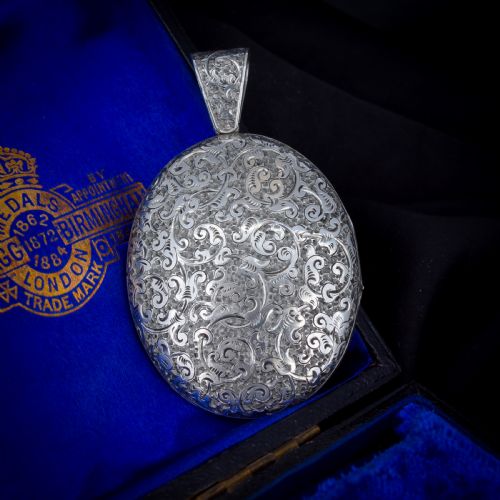
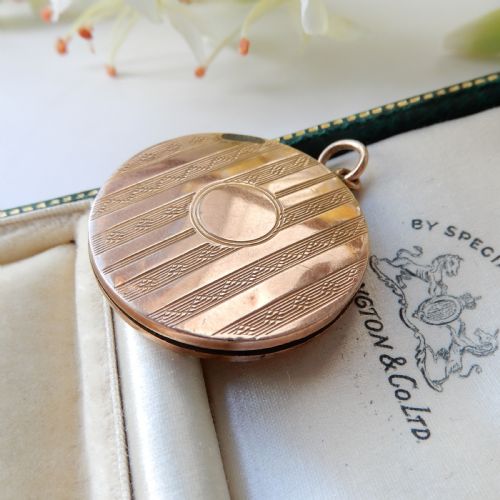
A vintage picture locket takes several physical forms, appearing most frequently as round, oval, or book-shaped pendants that open to reveal internal photo frames. The selection on this page ranges from compact Victorian silver designs to substantial mid-century gold pieces.
The chronological scope spans the nineteenth century through the mid-twentieth century, encompassing Victorian, Edwardian, and later decades. Buyers encounter both British examples with engraved floral motifs and French pieces featuring detailed sunburst or gemstone settings.
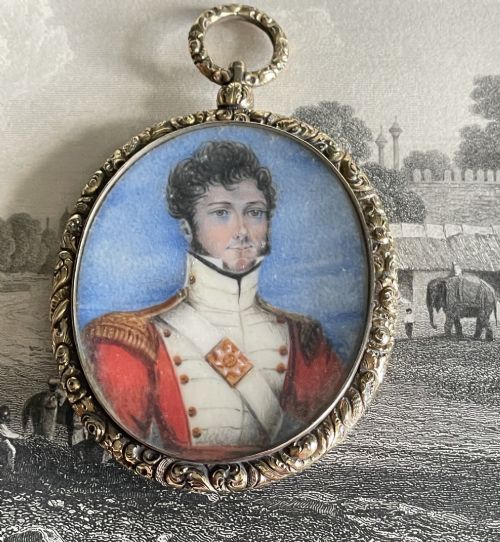
Object types include simple lockets, combined pendant-lockets, and portrait miniatures housed in precious metals. Many retain their original glass covers and interior rims designed to secure tiny family photographs.
Materials and construction methods
Metals form the primary structural body, utilising 9ct gold, 18ct gold, yellow gold, sterling silver, rolled gold, and gilt metal. Back and front construction techniques apply thin gold sheets over a base metal core in certain pieces to provide durability without excessive weight.
Surface decoration relies heavily on hand engraving, filigree wirework, and repoussé techniques to create floral baskets, swallows, and geometric patterns. Gemstones such as turquoise and pearls are flush-set or mounted in bezels on select French and Edwardian items.
Several pieces incorporate secret compartments designed to hold tiny hidden messages alongside miniature photographs.
Distinctions in construction and metalwork
Quality diverges between solid precious metals like 18ct yellow gold and base metals with thin gold plating or gilt layers. The precision of the hinge mechanism and the tightness of the snap closure also distinguish superior examples.
The crispness of hand-engraved details, such as floral baskets and swallow birds, separates finely executed pieces from simpler mass-produced items. The presence of intact interior glass frames and original bezels preserves the structural integrity of the photo compartment.
The Vintage Picture Locket Glossary
- Back and front
- A construction method where the exterior sheets are made of precious gold while the internal components utilise base metal.
- Filigree
- An intricate metalwork technique using fine twisted wires soldered together in openwork patterns.
- Repoussé
- A metalworking method where the design is hammered into relief from the reverse side.
- Bezel
- A collar of metal that holds a glass cover or gemstone securely in place against the locket frame.
Vintage Picture Locket: Frequently Asked Questions
How do I open an old locket?
Most pieces feature a small thumbnail notch or a side hinge mechanism that releases the cover when gently pried.
Exercise caution with vintage hinges to avoid bending the metal frame or cracking the internal glass.
Can I put modern photos inside?
You can insert contemporary photographs by trimming them carefully to match the internal dimensions of the bezel or frame.
Utilise a thin card template to measure the exact aperture before cutting your picture.
What is back and front gold?
This terminology indicates that the front and back plates consist of solid gold, while the interior parts use base metal.
This technique provided the appearance of a solid gold piece at a more accessible cost during the nineteenth and twentieth centuries.
How do I clean silver lockets?
Use a soft microfiber cloth to remove surface dust and minor tarnishing without disturbing engraved details.
Avoid liquid chemical dips, particularly if the piece contains glass inserts or delicate paper photographs.