





Round Gold Locket
A round gold locket is a circular hinged pendant designed to hold miniature portraits or locks of hair close to the heart.
Round Gold Locket
When you search for a round gold locket, you encounter circular hinged pendants designed to hold small photographs, portraits, or locks of hair. These pieces serve as intimate personal mementos that have remained popular across multiple eras of jewellery design.
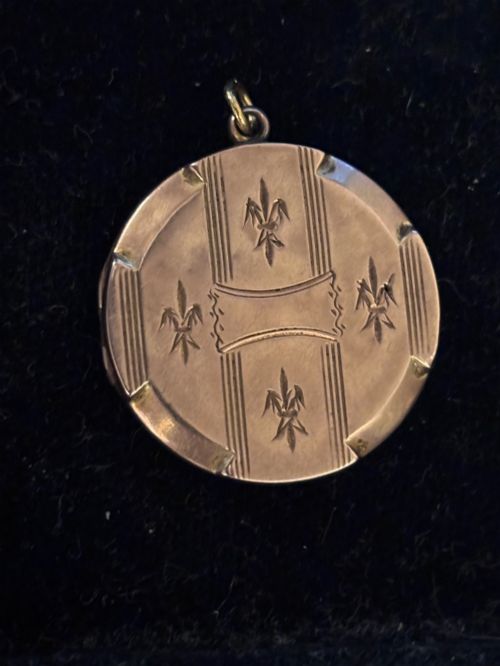
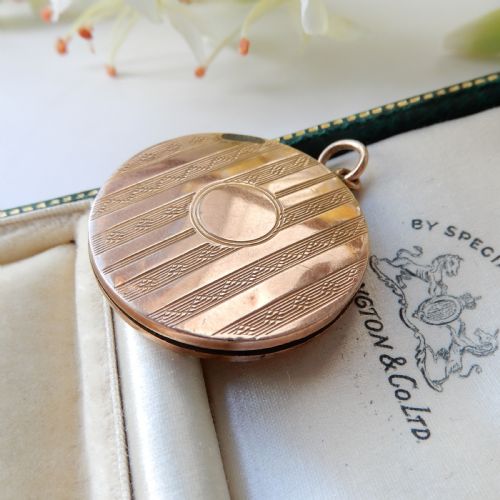
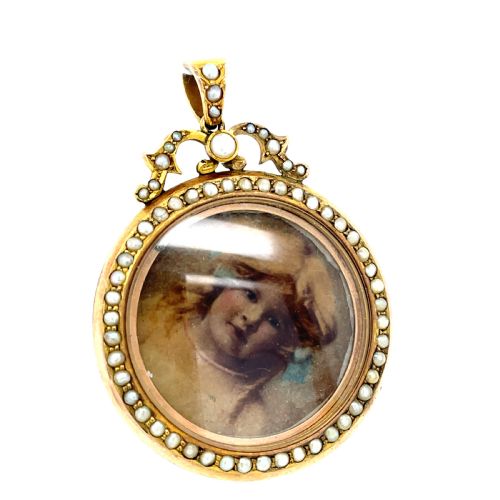
Forms range from plain polished casings to heavily decorated pendants featuring engine-turned patterns, floral engravings, seed pearls, and pictorial motifs such as baskets of flowers and swallows. Certain examples even mimic the appearance of pocket watches.
How they were made
Makers utilised various gold standards, most notably nine-carat yellow gold and fifteen-carat yellow gold, alongside gold back and front construction where precious metal sheets enclose a base metal core for durability. Rolled gold and gold on silver techniques also appear frequently in the historical record.
Surface decoration relied heavily on manual skill, employing engine-turned geometric detailing, hand engraving of floral and avian subjects, and the setting of seed pearls or glass crystals. Hinges and screw mechanisms were carefully engineered to secure the internal photograph frames.
One Victorian example doubles as a tiny timepiece casing, mimicking the look of a pocket watch.
What varies in quality
The standard of a round gold locket depends heavily on the weight of the metal and the complexity of its construction. Solid gold variants and heavy gold back and front pieces demonstrate superior longevity compared to lighter rolled alternatives.
Artistic execution in the hand engraving and the precision of engine-turned surface patterns separate standard production from finer workshop output. Intricate decorative elements like applied seed pearls or specialised glass tops also indicate a higher grade of manufacture.
Chester Assay Office
The Round Gold Locket Glossary
- Gold Back and Front
- A method of construction where the exterior surfaces are made of solid gold fused to a base metal interior layer for structural strength.
- Engine-Turned
- A decorative technique involving precise geometric patterns carved mechanically into the metal surface by a lathe.
- Pools of Light
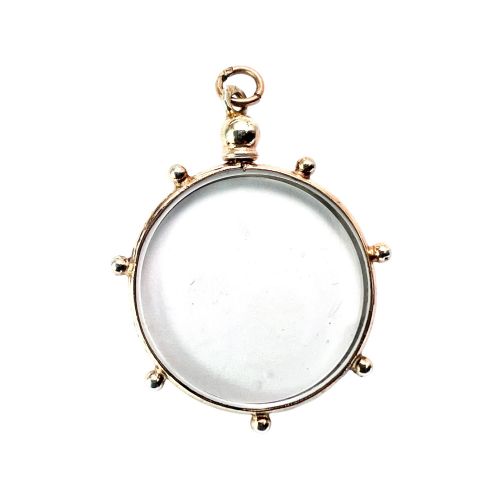
- A style of jewellery featuring unblemished rock crystal spheres held within metal mountings, sometimes incorporated into locket designs.
- Seed Pearl
- Very small natural pearls often utilised in Victorian and Edwardian jewellery to embellish floral or geometric motifs.
- Screw Locket
- A locket variety that secures its contents or glass panels using a threaded screw mechanism rather than a standard snap hinge.
Round Gold Locket: Frequently Asked Questions
What is a round gold locket used for?
These pendants were traditionally worn on chains around the neck to keep likenesses of family members, deceased loved ones, or romantic partners physically close. People often stored miniature photographs, painted portraits, or woven locks of hair inside the hinged compartments.
Over generations, they transitioned from deeply sentimental mourning and remembrance jewellery into fashionable accessories. Today, wearers continue to utilise them to hold modern photographs or small personal tokens.
How do I date a round gold locket?
Dating relies on examining the construction style, decorative motifs, hallmarks, and materials present in the piece. Victorian examples often feature deep hand engraving and floral subjects, whilst Edwardian versions frequently showcase lighter openwork designs or seed pearls.
Pieces from the mid-twentieth century typically exhibit simpler geometric forms or plain polished gold surfaces without the elaborate chased detailing found in nineteenth-century counterparts.
What does gold back and front mean?
Gold back and front refers to a manufacturing technique where thin sheets of solid gold form the visible exterior surfaces of the locket. These plates are bonded to a stronger base metal core underneath to provide structural rigidity and reduce overall weight.
This method allowed makers to produce robust, affordable jewellery that maintained the rich appearance of solid gold on both sides while remaining comfortable to wear on a chain.
Can I put a modern photo inside?
Most antique lockets can accommodate modern photographs provided you trim the paper carefully to fit the circular interior frame. Many period pieces retain their original inner bezels and clear glass or celluloid covers to hold the image securely in place.
Take care when opening older hinges and snap closures, as decades of use can make the mechanisms delicate. A gentle touch ensures the internal retaining ring or bezel lifts out safely without straining the gold.