


Silver Filigree Pendant
These silver filigree pendant pieces combine delicate metalwork with period charm, offering wearable history for the discerning collector.
Silver Filigree Pendant
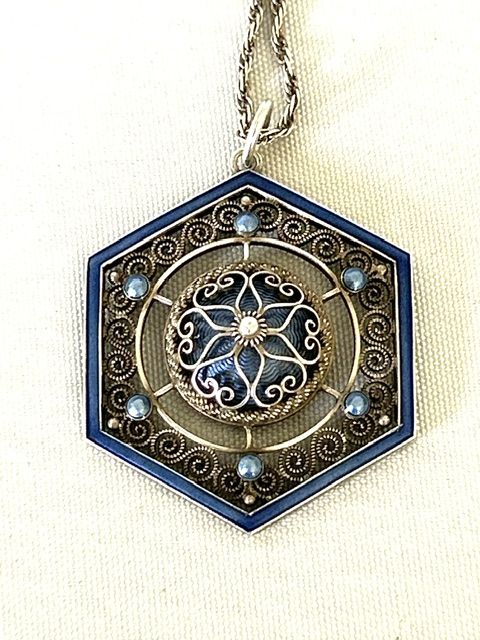
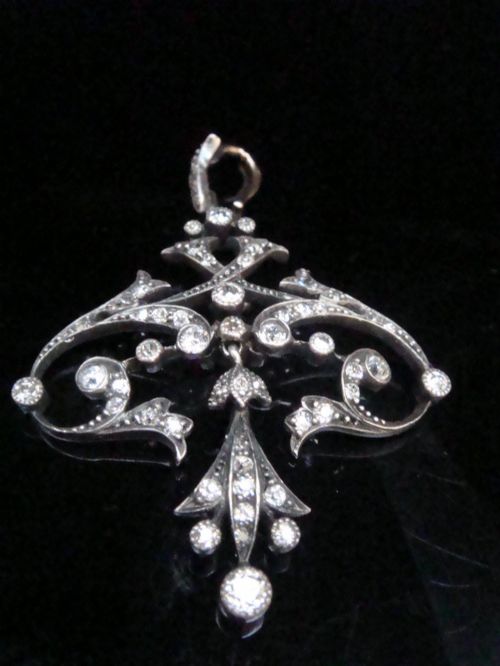
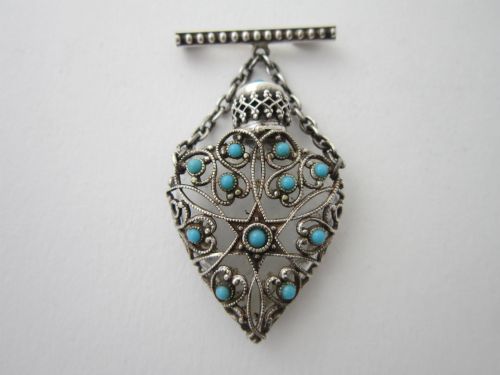
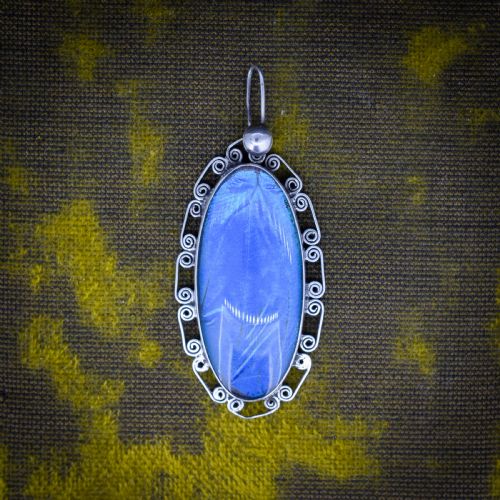
A silver filigree pendant brings intricate wirework and historic design straight to your neckline, often drawing on Victorian, Edwardian or Art Deco sensibilities. You will frequently encounter styles incorporating turquoise, paste or diamond accents alongside traditional silver work.
The selection ranges from European silver creations to Central Asian tribal forms, reflecting diverse cultural aesthetics. Pieces span from the mid-nineteenth century through the 1930s, showing a steady evolution in craftsmanship and decorative motifs.
Materials and construction methods
Maker techniques rely heavily on fine silver wire manipulated into openwork patterns, sometimes paired with continental silver or sterling grades. Artisans solder these delicate threads onto supportive frames to create lightweight yet visually dense ornamentation.
Many examples integrate gemstones such as turquoise, emerald paste and diamond alongside glass and enamel elements. Platinum and gold highlights appear in specific Edwardian and Art Deco pieces to frame central stones securely.
Some pieces double as secret lockets or perfume bottles, hiding personal treasures and scents inside surprisingly tiny spaces.
Assessing quality and execution
Quality rests in the precision and tightness of the wirework, where finer soldering and more complex scrolls distinguish superior examples. The uniformity of the filigree pattern and the security of stone settings reveal the maker's skill level.
The choice of supplementary materials, from genuine diamonds to glass paste, dictates the piece's inherent character and visual weight. Preservation of the original silver patina and structural integrity further separates exceptional items from standard production.
Marius Hammer
The Silver Filigree Pendant Glossary
- Filigree
- Ornamental work consisting of fine wire, usually of silver, formed into delicate tracery. This technique defines the airy, lace-like appearance characteristic of these pieces.
- Lavaliere
- A pendant necklace featuring a central drop stone or ornament suspended below the main chain attachment. Edwardian versions frequently utilise this flowing drop format.
- Asyk
- A traditional heart-shaped or cordiform pendant originating from Central Asian nomadic groups. These tribal objects often display distinctive silver workmanship and cultural motifs.
- Paste
- Hand-cut lead glass used to imitate gemstones in historic jewellery. Austro-Hungarian and Victorian pieces regularly employ paste for vibrant colour without relying exclusively on natural stones.
Silver Filigree Pendant: Frequently Asked Questions
How do I clean my silver filigree pendant?
Gentle dusting with a soft brush is the safest method to remove debris from intricate wire channels without damaging delicate solder joints.
Avoid harsh chemical dips because they can strip away desirable aged patinas and harm softer stones like turquoise or pearl.
What periods do these pendants span?
The pieces available range from mid-nineteenth century examples through Victorian, Edwardian and Art Deco eras up to the 1930s.
Each period introduces distinct stylistic traits, moving from ornate revival designs toward geometric modernist lines.
Can I wear a silver filigree pendant daily?
While the silver wire is surprisingly resilient, the openwork nature means they require mindful wearing to prevent snagging on clothing.
Storing the pendant separately from other jewellery prevents the delicate filigree from bending or catching under pressure.
How do I distinguish Edwardian from Victorian pieces?
Victorian examples often favour heavier emotional symbolism, deeper gemstones and robust silver or continental mountings.
Edwardian designs typically embrace lighter platinum settings, delicate diamond arrangements and airy Arts and Crafts motifs.