
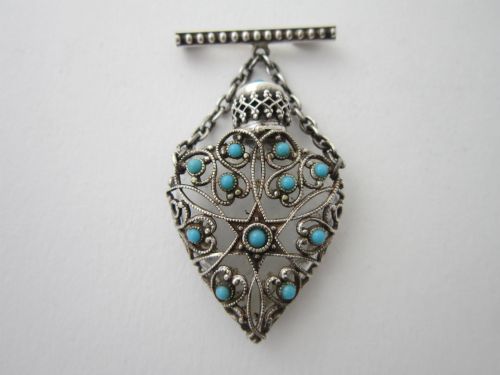
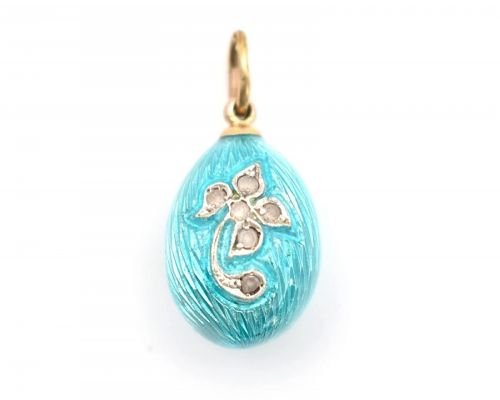


Silver Turquoise Pendant
A silver turquoise pendant brings together vibrant robin-egg stones and polished metal, offering a striking piece of historic jewellery to wear every day.
Silver Turquoise Pendant
A silver turquoise pendant combines the cool lustre of silver with the distinctive bright blue of turquoise, often found in historic forms ranging from drop necklaces to elaborate brooches. When searching for a silver turquoise pendant, buyers encounter diverse designs spanning the Victorian era through the Arts and Crafts movement and Art Deco periods.
The selection includes delicate filigree work, vibrant enamel accents, and matrix stones paired with pearls or diamonds. Many pieces function as versatile items, working as both pendants and brooches depending on the mounting.
Origins stretch from British workshops to Continental makers, encompassing French interpretations in Ottoman styles and Russian egg pendants. The most frequent discoveries belong to the Arts and Crafts and Victorian traditions, where hand-wrought silver settings frame the turquoise stones.
Factors That Influence Quality
The standard of workmanship separates standard production items from exceptional artist-made jewellery, particularly in how cleanly the silver is hand-finished and how securely the stones are set. Superior examples display thoughtful integration of supplementary materials, such as matched pearls, well-fired enamel, or finely cut diamonds.
Provenance and maker attribution elevate certain pieces significantly, especially signed works or items associated with known workshops and designers. The quality of the turquoise itself, regarding colour saturation and matrix stability, also dictates the overall merit of the jewellery.
Listings feature silver turquoise pendants spanning from the nineteenth century through the 1950s, incorporating styles from Victorian revival to Art Deco.
Gaskins·Henry Matthews·Dorrie Nossiter·Liberty and Co
The Silver Turquoise Pendant Glossary
- Cabochon
- A gemstone shaped and polished with a smooth, rounded surface rather than faceted. This cut is standard for turquoise to highlight its natural colour and matrix.
- Filigree
- Delicate jewellery-making technique using fine twisted silver wire soldered together in openwork patterns. It creates a lace-like effect frequently seen in antique pendants.
- Matrix
- The host rock material remaining within or embedded on the turquoise stone, creating dark web-like patterns across the blue surface.
- Parure
- A matched set of jewellery designed to be worn together, which can include necklaces, earrings, brooches, and rings. Complete sets in silver and turquoise remain particularly scarce.
- Guilloché
- An ornamental engraving technique where a precise mechanical pattern is etched into a metal surface beneath translucent enamel. It appears frequently on compacts and decorative pendants from the early twentieth century.
Silver Turquoise Pendant: Frequently Asked Questions
How do I care for antique turquoise?
Turquoise is a relatively soft and porous gemstone that absorbs oils, cosmetics, and water easily. Clean your pendant gently with a soft, dry cloth and avoid harsh chemical dips or ultrasonic cleaners.
Store the piece away from direct sunlight and other jewellery to prevent scratching the stones and tarnishing the surrounding silver setting.
Can I wear my pendant every day?
While these pieces were built for wear, antique settings require some mindfulness during daily activities. Remove the jewellery before swimming, exercising, or applying lotions to protect both the turquoise and any delicate enamel.
Inspect the bail and chain regularly to ensure the suspension points remain secure.
How do I date a silver pendant?
Dating relies on stylistic clues, hallmarks, and the specific combination of materials used in the construction. Arts and Crafts pieces typically feature hand-beaten silver and organic motifs, while Victorian examples often incorporate seed pearls and heavier gold-and-silver backings.
Assay marks and maker stamps stamped on the metal provide the most precise chronological indicators.
What is the difference between a pendant and a brooch?
A pendant is designed to suspend from a chain or cord around the neck, whereas a brooch fastens directly to garments using a pin and catch mechanism. Many historical pieces were made as brooch pendants, featuring both a hidden loop and a pin so the owner could wear them either way.