
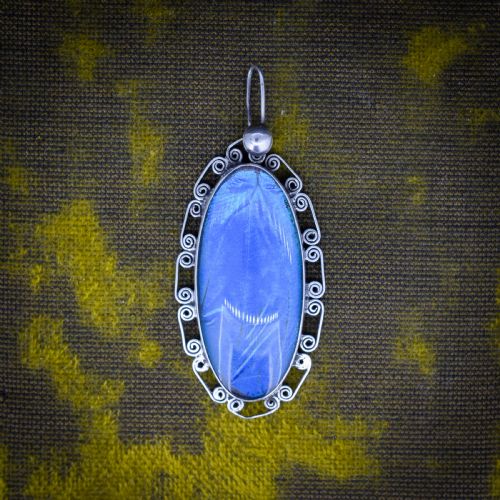


Filigree Pendant Necklace
A filigree pendant necklace brings together intricate metal wirework and suspended gems, spanning Victorian to Mid-Century designs.
Filigree Pendant Necklace
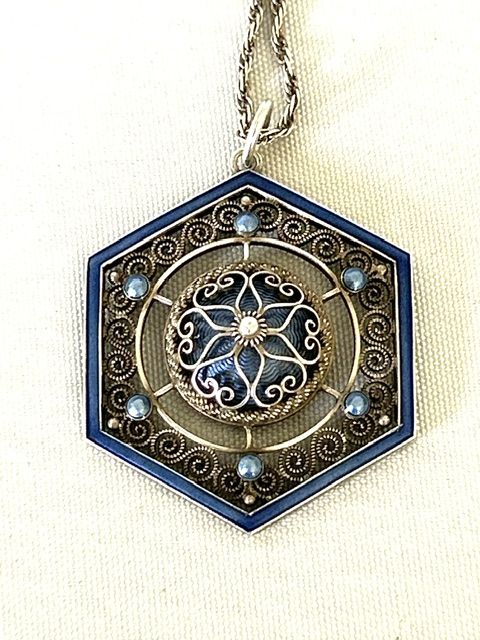
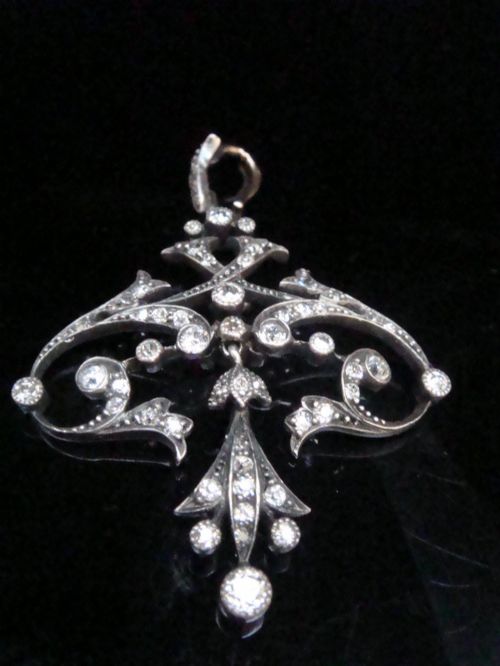
A filigree pendant necklace involves delicate metal wire twisted and soldered into openwork patterns, suspended on a matching chain. These pieces range from Victorian locket designs and Edwardian lavalieres to Art Deco geometric arrangements.
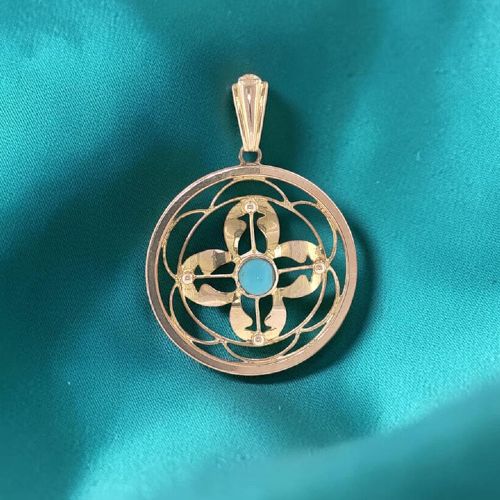
The selections span multiple eras, including Victorian, Edwardian, Art Deco, and Mid-Century periods. Buyers frequently encounter silver and gold constructions set with turquoise, seed pearls, amethyst, and diamonds.
Materials and construction
Craftsmen utilised sterling silver, 9ct gold, 18ct gold, and platinum as the primary foundations for these pendants. Fine wires of precious metal were shaped by hand to create airy scrollwork and intricate latticework.
Gemstones such as turquoise, seed pearls, amethyst, and diamonds were then integrated into the metal frames. Enamelwork and butterfly wings also appear in specific pieces, secured within metal borders.
Listings feature periods from the 1800s through the 1950s, utilising silver, gold, platinum, and various gemstones.
Assessing quality in filigree jewellery
Quality rests in the precision of the wirework and the security of the soldered joints. Superior examples display consistent symmetry and tight connections without excess solder visible on the surface.
The grade of the incorporated gemstones and the purity of the precious metal further distinguish standard items from exceptional ones. Heavier gauge wire and well-matched stones elevate the overall construction.
Marius Hammer·Carl Bucherer
The Filigree Pendant Necklace Glossary
- Filigree
- Delicate jewellery ornamentation made from fine gold or silver wire twisted into open, lace-like patterns.
- Lavalier
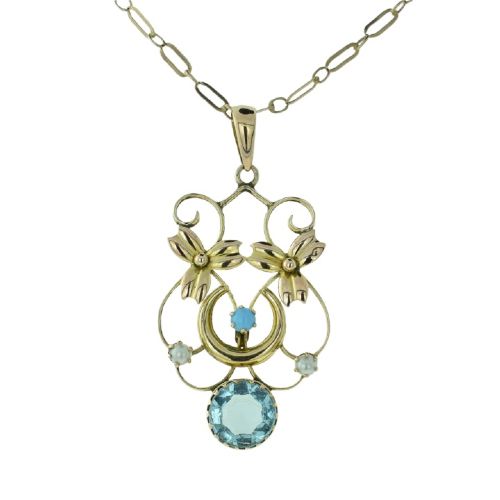
- A pendant necklace featuring a central gemstone with a smaller stone dangling below it, popular during the Edwardian era.
- Guilloche
- An ornamental pattern produced on a metal surface by a mechanical engine, frequently layered with translucent enamel.
- Cordiform
- Heart-shaped, a term often used to describe specific traditional tribal pendants.
- Solitaire
- A piece of jewellery featuring a single mounted gemstone without accompanying side stones.
Filigree Pendant Necklace: Frequently Asked Questions
How do I date a filigree pendant necklace?
Dating relies on the prevailing design characteristics of periods such as Victorian, Edwardian, or Art Deco. Hallmarks and material choices also help establish the approximate decade of production.
Examination of the chain style and clasp mechanism offers further clues to the manufacturing era.
What metals are used in these necklaces?
Makers utilised sterling silver, 9ct gold, 14ct gold, 18ct gold, and platinum for the pendant bodies and chains. Silver was particularly common in Victorian and Arts and Crafts examples.
Platinum and white gold gained prominence during the Edwardian and Art Deco periods.
How should I clean silver filigree jewellery?
Gentle cleaning with a soft brush and warm soapy water preserves the delicate wirework. Harsh chemical dips can damage embedded pearls or softer stones like turquoise.
Storing the necklace in a dry, lined box prevents unnecessary tarnish and structural stress.
What is an Edwardian lavalier?
An Edwardian lavalier is a specific pendant style featuring a main drop stone suspended on a fine chain, often enhanced with seed pearls and diamonds. These pieces reflect the lighter, graceful aesthetics of the early twentieth century.
They frequently incorporate platinum or white gold alongside delicate millegrain detailing.