



Vintage Pictorial Rug
A vintage pictorial rug brings storytelling into a room through woven depictions of people, animals, and historical figures.
Vintage Pictorial Rug
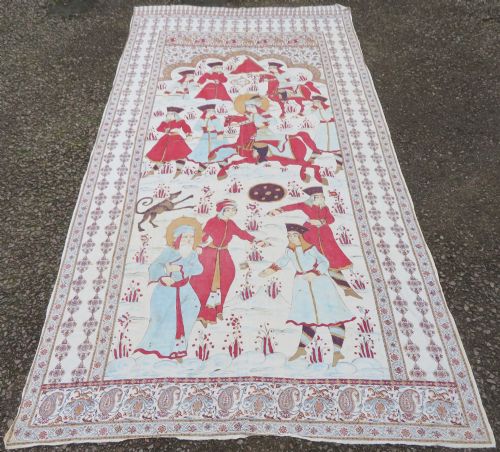
A vintage pictorial rug is a floor covering or wall hanging that departs from purely geometric or floral motifs to tell a visual story. When you search for a vintage pictorial rug, you encounter handwoven textiles featuring narrative scenes, portraits, and figures of animals. These pieces originate primarily from Persian and Afghan weaving traditions.
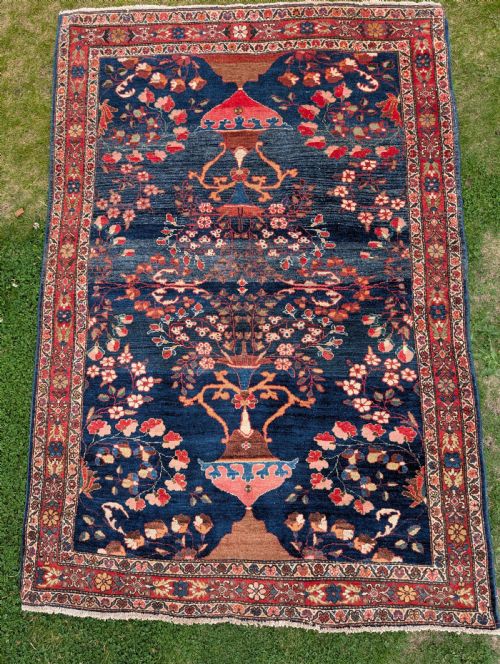
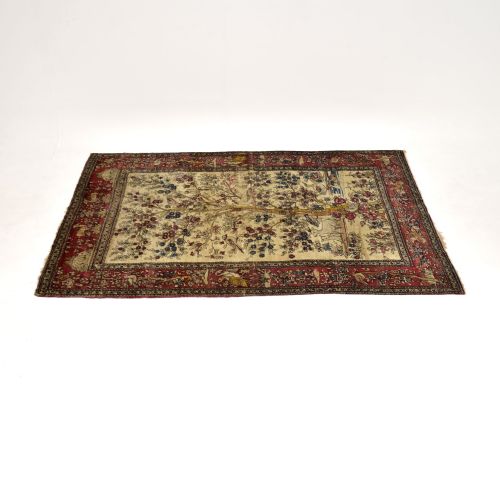
The selections available here span from the late nineteenth century into the 1930s. You will frequently find works from centres such as Kashan, Isfahan, and Kirman, alongside tribal pieces from Baluch and Afghan weavers. They serve as both functional textiles and artistic focal points in an interior.
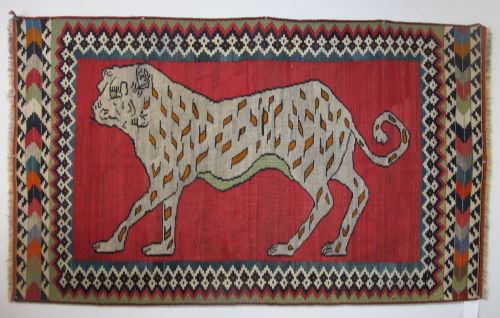
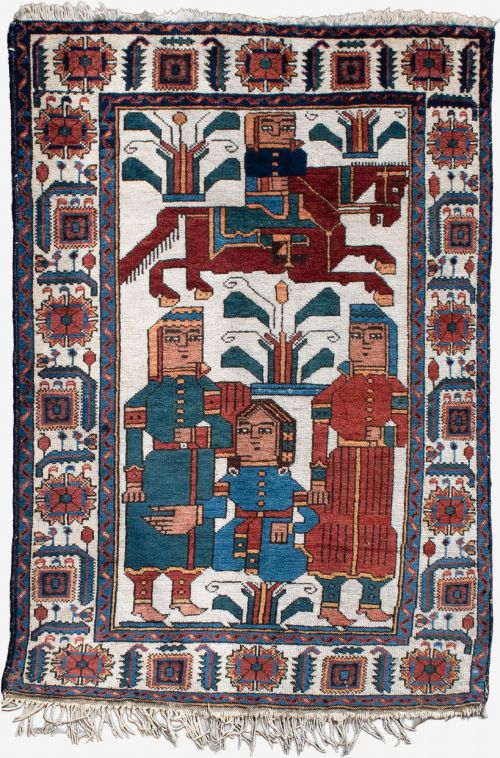
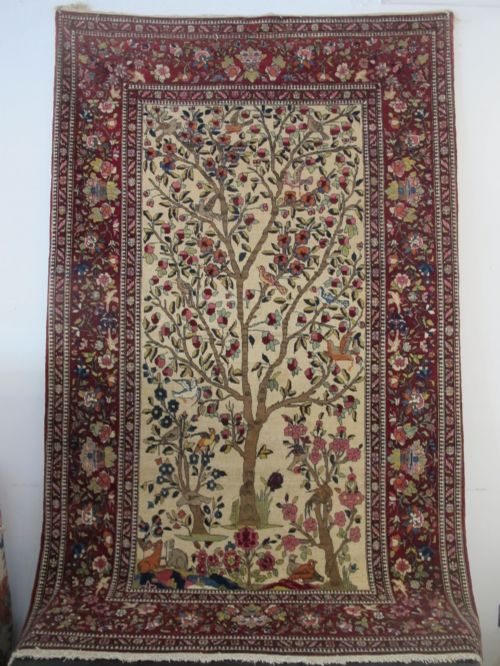
Makers utilised traditional hand-knotting techniques to render recognisable human and animal forms within the pile. Some examples depict specific historical personages like Ahmad Shah Qajar, while others portray lions, riders, or communal gatherings. Each piece reflects the aesthetic priorities of its specific weaving region and decade.
How they were made
Weavers constructed these textiles predominantly from wool and cotton, employing hand-knotting techniques on vertical looms. Natural dyes provided the foundational palette for the intricate designs, yielding stable colours that matured over decades of light and use. Silk also appears in specific examples, adding distinct lustre to targeted areas of the composition.
Vintage Pictorial Rug Retail Price Guide 2026
Typical asking prices for vintage pictorial rug among the pieces listed under this phrase on Sellingantiques today, from the lower quarter to the upper quarter. They describe what is for sale here now, not the wider market.
Object forms on this page range from standard area rugs and carpets down to compact mats and specialised prayer formats.
What varies in quality
Quality in these textiles rests upon the precision of the figurative drawing and the density of the knotting. Finer execution allows complex facial expressions and animal anatomies to remain legible across the field. Workshops in centres like Kashan and Isfahan achieved high resolution through tight foundations and deliberate colour placement.
The integrity of the materials also dictates the standing of a piece. Well-sourced wool and durable cotton foundations ensure the rug retains its structural stability under foot traffic or when hung. The nuance of the natural dyes used for backgrounds and borders contributes further distinction to the overall execution.
Mohtasham Kashan·Ahmadi Isfahan
The Vintage Pictorial Rug Glossary
- Pile
- The upright yarn loops that form the soft surface of a rug. This nap is sheared to a uniform height after knotting to reveal the design.
- Kilim
- A flatwoven textile produced without a raised pile. These pieces rely on interlocking the warp and weft threads to create geometric patterns.
- Warp
- The stationary vertical threads stretched onto a loom before weaving begins. The knots of the pile are tied directly around these parallel strands.
- Weft
- The horizontal threads passed alternately over and under the warp threads to secure the rows of knots. They provide structural firmness to the textile body.
- Prayer rug
- A small format textile featuring a niche or arch design that indicates the direction of prayer. Weavers often incorporated mosque lamps or floral motifs within this architectural frame.
Vintage Pictorial Rug: Frequently Asked Questions
Where were pictorial rugs placed?
These rugs functioned primarily as decorative floor coverings in formal rooms or as wall hangings to display narrative scenes. Their pictorial designs made them conversation pieces within domestic interiors.
Smaller formats often served as mats or prayer rugs in private spaces. Their placement depended largely on the specific regional tradition and the scale of the composition.
How do I care for a wool rug?
Maintenance requires gentle vacuuming without a rotating brush bar to protect the delicate wool pile and foundation threads. Professional cleaning suited to antique textiles preserves the natural dyes and fibres.
Keeping the textile out of direct sunlight prevents premature fading of the coloured wool and cotton yarns. Rotating the rug periodically ensures even wear across the surface over time.
What distinguishes tribal from city rugs?
City rugs from workshops in centres like Isfahan or Kashan feature fine knotting, curved floral lines, and highly detailed pictorial portraits. They were produced under urban master weavers using refined materials.
Tribal pieces created by Baluch or Qashqai groups display geometric interpretations, bolder colour contrasts, and coarser wool foundations. These works reflect nomadic life and regional iconography rather than formal court aesthetics.
How do I date a vintage rug?
Dating relies on stylistic markers, structural analysis of the foundation, and the specific palette of the dyes. Pieces from the late nineteenth century often show distinct colour maturation compared to those from the 1920s and 1930s.
Signatures, dates woven into the border, or depictions of specific historical figures like Ahmad Shah Qajar provide direct chronological anchors. Comparing the knot density and wool preparation against known regional examples clarifies the period further.