



Vintage Pewter Pitcher
These vintage pewter pitcher pieces offer heavy metal gravity and historic utility, bringing honest historic metalwork straight to the modern table.
Vintage Pewter Pitcher
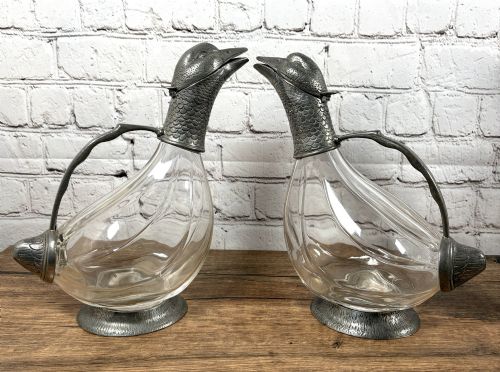
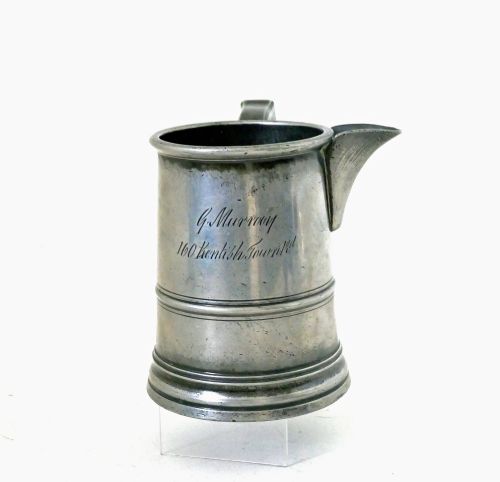
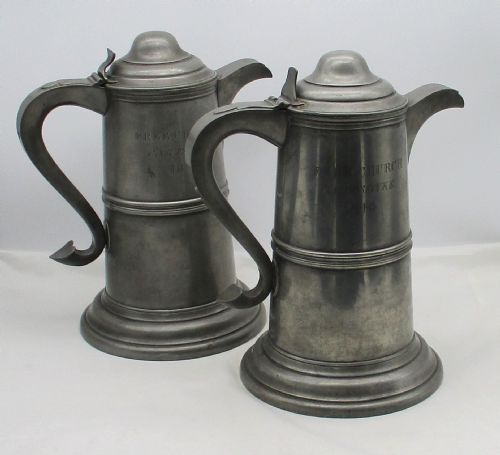
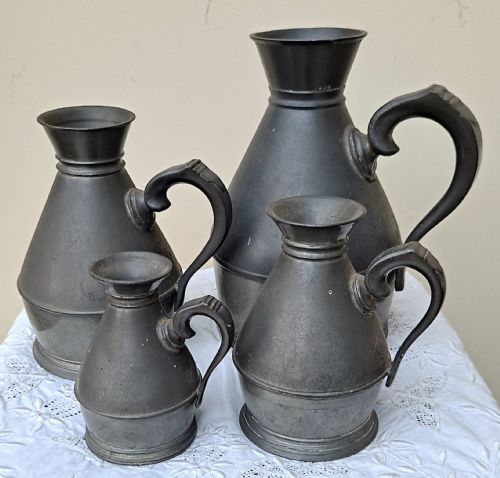
A vintage pewter pitcher encompasses heavy drinking vessels, ale jugs, flagons, and measures spanning from the eighteenth century through the Victorian era and into twentieth-century Arts and Crafts design. Buyers encounter sturdy English flat-lid flagons, Scottish tappit hens, Irish haystack measures, and sinuous Art Nouveau creations featuring enamel or green glass inserts.
The selection ranges from functional tavern equipment like spirit measures and quart flagons to decorative table pieces designed during the early twentieth century. Forms shift from simple lidless noggins and ale jugs to monumental German beer flagons and graceful Tudric designs.
Origins stretch across England, Scotland, Ireland, Jersey, Guernsey, Germany, and Austria, reflecting regional drinking customs and metalworking traditions. Pieces from the eighteenth and nineteenth centuries sit alongside twentieth-century iterations, showing a continuous evolution in beverage service.
Materials and construction methods
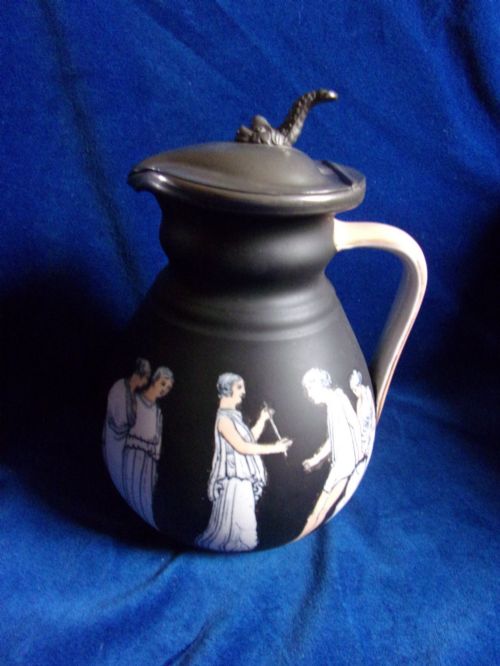
Makers shaped these vessels primarily from pewter, an alloy of tin combined with lead, copper, or antimony, which yields a soft lustre and substantial weight. Some twentieth-century examples incorporate silvered finishes, while related vessels on this page utilise white stoneware, salt glaze, enamel, or green glass.
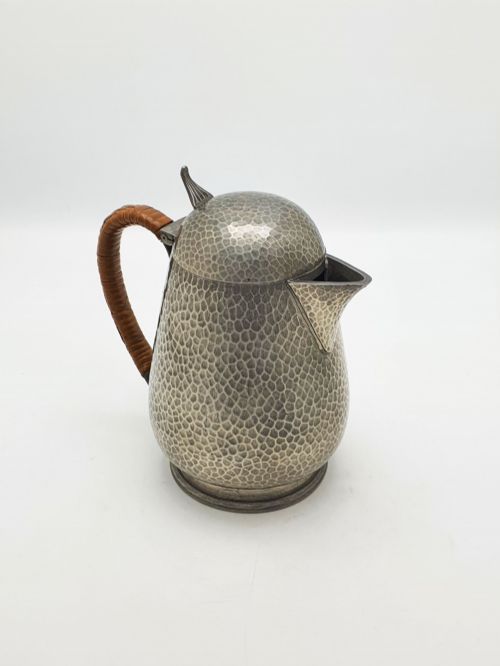
Construction techniques include casting, hammering, and soldering metal components together, often finished with engraved details, relief moulding, or applied crests. Handles frequently feature insulating materials like cane wrapped around metal cores, particularly in Arts and Crafts designs.
Vintage Pewter Pitcher Retail Price Guide 2026
Typical asking prices for vintage pewter pitcher among the pieces listed under this phrase on Sellingantiques today, from the lower quarter to the upper quarter. They describe what is for sale here now, not the wider market.
One German beer flagon arrives with hops decoration on a giant scale, ready for serious festive gatherings.
Distinctions in quality and execution
The standard of a vintage pewter pitcher rests on the crispness of its cast details, the structural integrity of its soldered joints, and the retention of original touchmarks or capacity stamps. Finer examples display balanced proportions, clean engraving such as named inscriptions, and well-fitted lids.
Artistic collaboration elevates specific pieces, particularly when prominent designers and firms create unified objects that integrate metalwork with glass or enamel elements. Simpler tavern measures rely entirely on honest utility, where heavy gauge metal and unpolished patination define the piece.
Archibald Knox·Liberty and Co·Charles Meigh·WMF·Royal Doulton
The Vintage Pewter Pitcher Glossary
- Flagon
- A large drinking vessel with a handle and usually a lid, designed for serving ale or wine. Early English examples often feature flat lids.
- Tappit Hen
- A traditional Scottish pewter measuring jug featuring a distinctive lid with a knob resembling a nesting hen. These vessels held specific liquid volumes like the Scots pint.
- Haystack measure
- An Irish style of pewter drinking measure characterised by its bulbous, tapering body resembling a stacked heap of hay. They typically appear in sets.
- Tudric
- The trade name used by Liberty and Co for their range of pewterware produced during the early twentieth century. Many of these pieces reflect Arts and Crafts aesthetics.
- Noggin
- A small historic measure of capacity used for spirits and small servings of liquor. These often lack lids and display simple cylindrical or slightly tapered bodies.
Vintage Pewter Pitcher: Frequently Asked Questions
What is a tappit hen?
A tappit hen is a traditional Scottish pewter drinking vessel with a distinctive lid and knob, built to hold specific historic liquid volumes.
These vessels served practical roles in taverns and households before becoming collectible display objects.
How do I clean antique pewter?
Antique pewter requires minimal intervention to preserve its historic surface patination and soft grey tone. Avoid harsh metal polishes that strip away age and character.
Gentle washing with warm soapy water and thorough drying is usually sufficient for maintenance.
What are Tudric pewter pieces?
Tudric is the trade name for pewter items retailed by Liberty and Co during the twentieth century. They often showcase Art Nouveau and Arts and Crafts styling.
These pieces frequently incorporate other materials like enamel, glass, or cane handles.
Are these pitchers safe for drinks?
Many historic pewter vessels contain lead or other alloy compositions that are unsuitable for modern acidic beverages. Older pieces serve best as decorative items or for dry display.
Twentieth-century iterations may use safer formulations, but testing is wise before consuming liquids from them.