

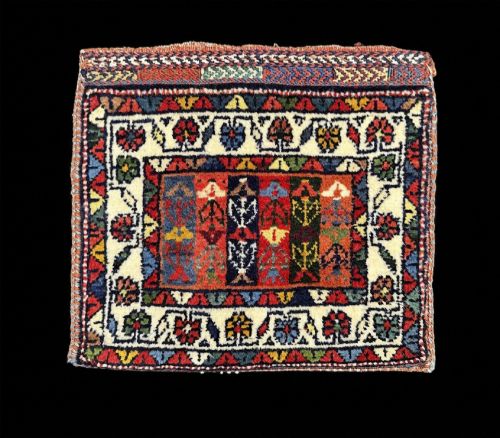
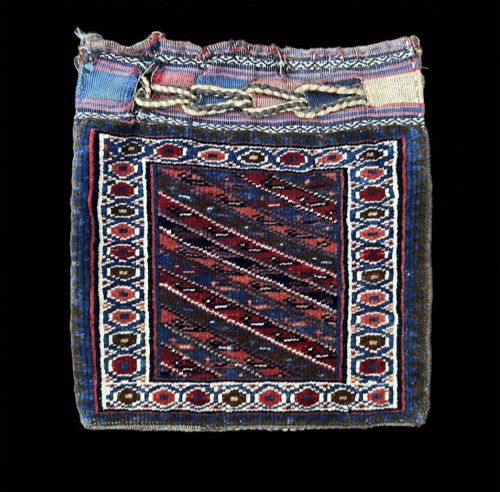

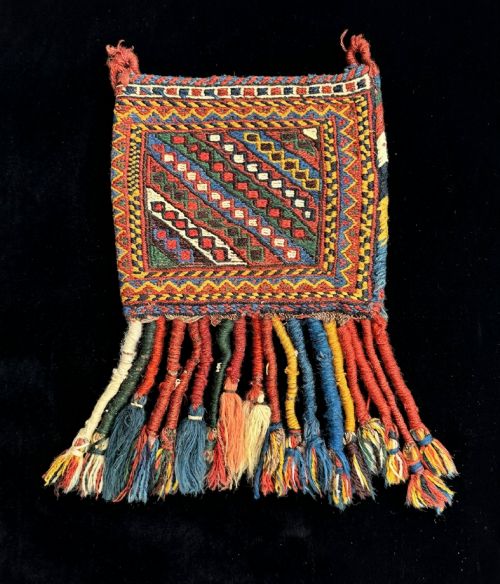
Vintage Persian Rug Bag
When you handle a vintage persian rug bag, you hold a functional piece of tribal weaving made for daily nomad life.
Vintage Persian Rug Bag
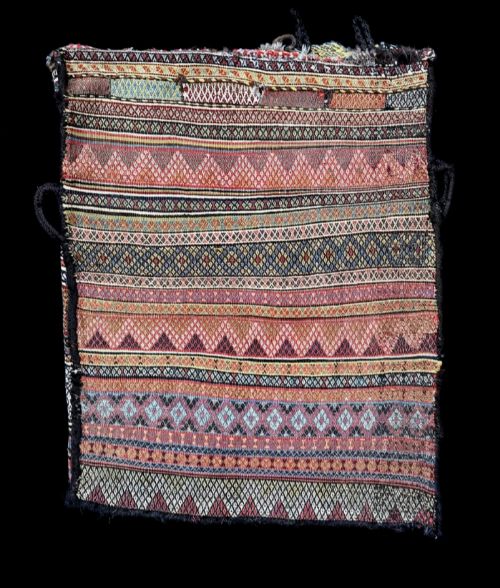
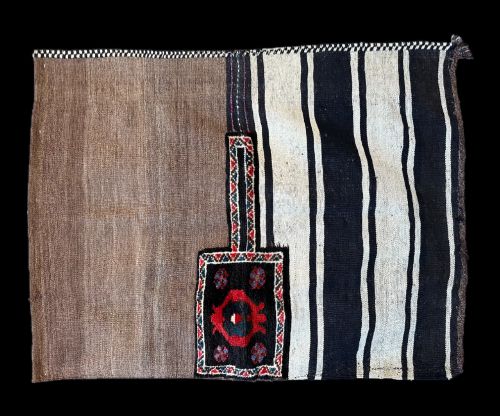
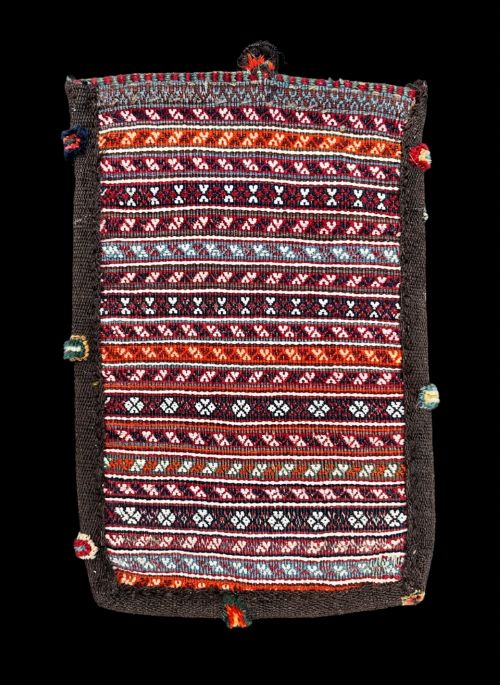
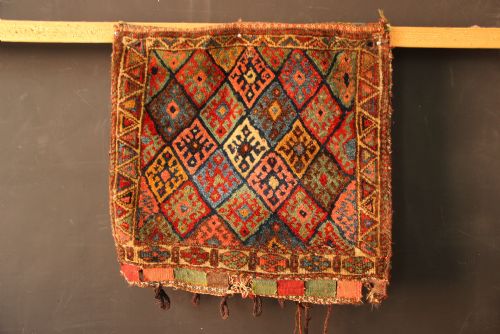
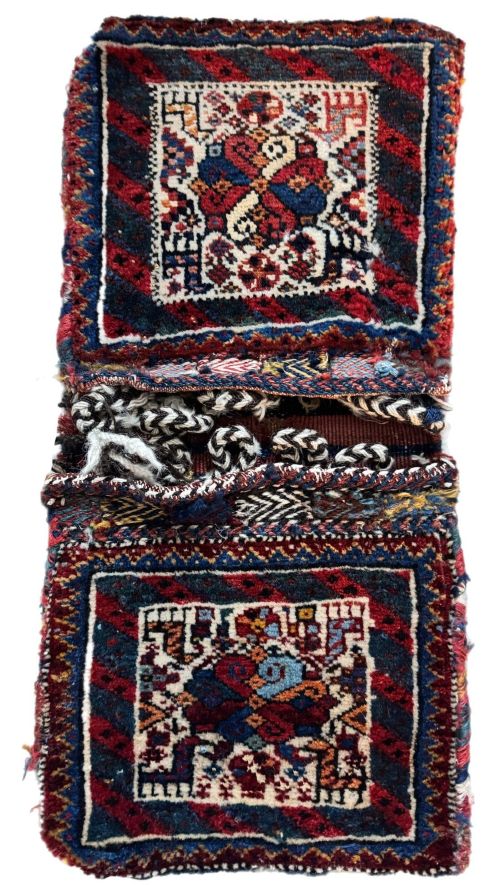
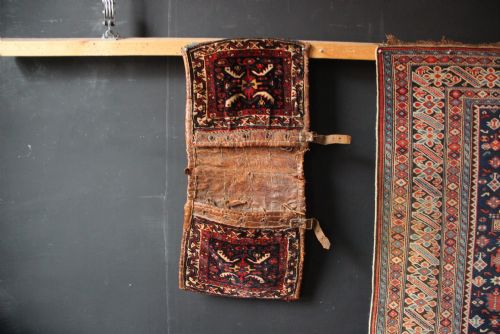
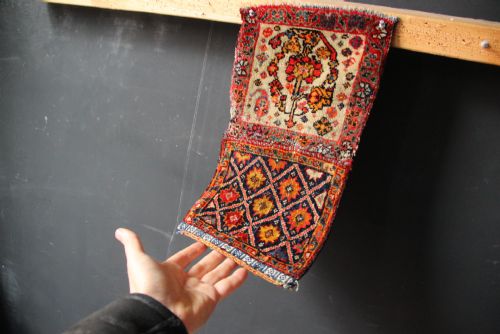
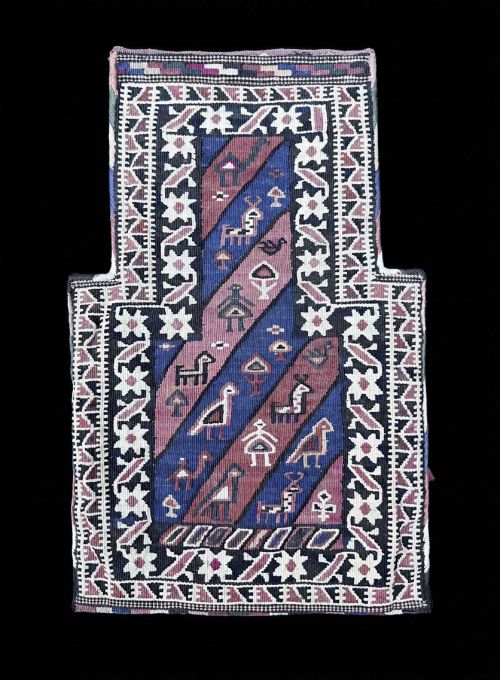
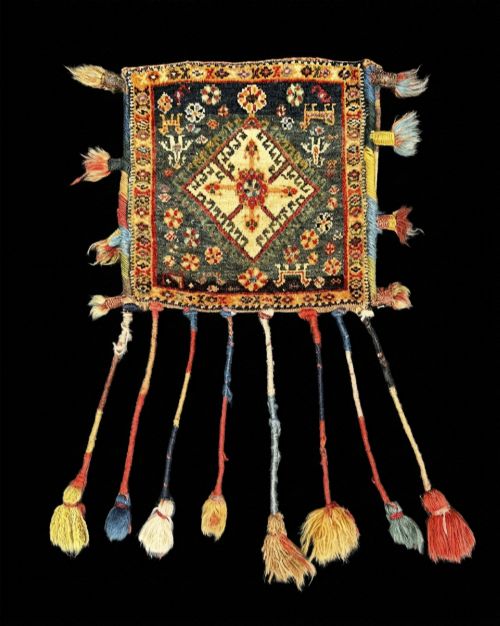
A vintage persian rug bag is a utilitarian textile created by tribal and nomadic groups across Persia, functioning as storage for wheat, salt, spoons, or personal items during seasonal migrations. These pieces include complete saddlebags, storage sacks known as chuvals, wheat sacks called tachehs, and smaller vanity bags or chantehs.
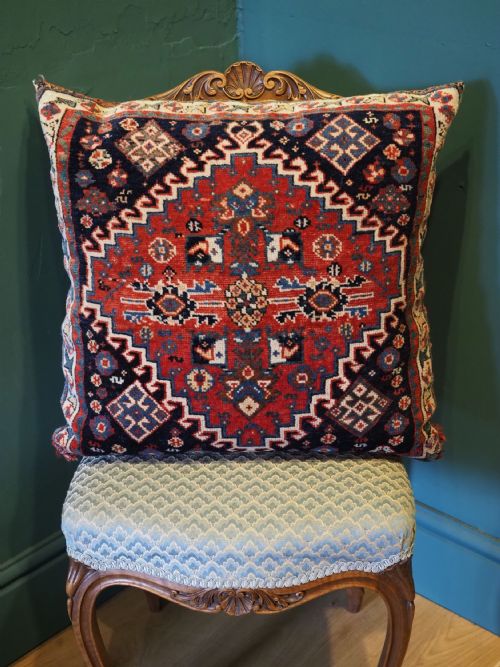
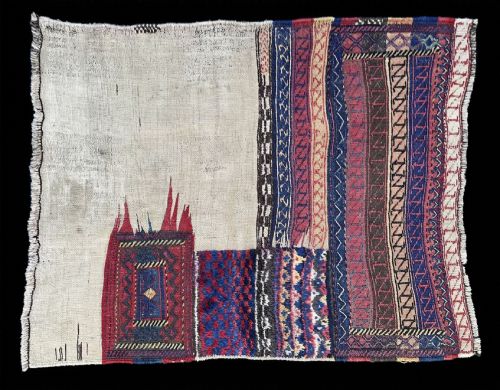
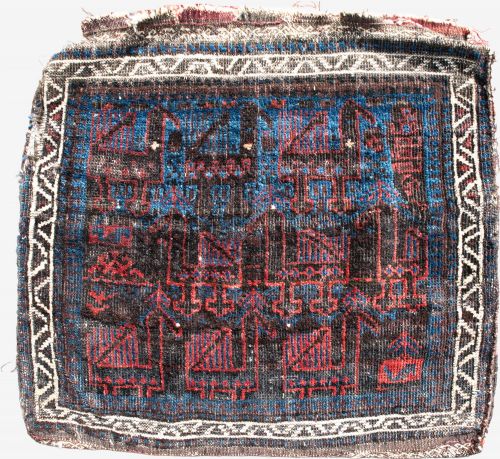
The objects originate from specific tribal confederacies and regions, most notably the Qashqa'i, Lori-Bakhtiari, Afshar, Baluch, Shahsavan, and Kurdish tribes. Buyers encounter various formats on this page, ranging from intact double saddlebags with original plain weave backs to single bag faces now adapted as cushions.
Materials and construction methods
Weavers constructed these textiles using hand-spun wool for the pile and foundation, frequently incorporating cotton, goat hair, and leather for added structural strength and durability. The rich coloration relies upon natural dyes and vegetable dyes, which produce deep, harmonious tones that age gracefully over time.
Techniques vary by tribe and function, encompassing warp-faced bands, supplementary weft-work, sumac weaving, and pile knots. Complete pieces retain original backs and closures, illustrating the robust construction necessary for nomadic transport and domestic storage.
Vintage Persian Rug Bag Retail Price Guide 2026
Typical asking prices for vintage persian rug bag among the pieces listed under this phrase on Sellingantiques today, from the lower quarter to the upper quarter. They describe what is for sale here now, not the wider market.
Listings span the mid-nineteenth century through the early twentieth century, featuring wool, cotton, goat hair, and leather.
Factors influencing quality
Quality rests in the fineness of the weave, the handling of the wool, and the depth of the dye work. Superior examples demonstrate lustrous, luminous wool and precise geometric or tribal iconography, such as boteh motifs and intricate banded designs.
The Vintage Persian Rug Bag Glossary
- Chuval
- A large storage bag used by nomadic tribes for bedding and household goods. These pieces form a major category of antique tribal weaving.
- Tacheh
- A traditional wheat sack or grain bag woven with flat-weave or pile techniques. They originate primarily from Lori-Bakhtiari and Kurdish makers.
- Khorjin
- The Persian term for a saddlebag, typically woven as a pair linked by a central web. They were slung over pack animals during migration.
- Chanteh
- A small vanity bag or personal pouch carried by tribal individuals. These miniature items often display exceptional detail in their weaving.
- Sumac
- A warp-wrapping technique that produces a durable, non-pile fabric with a smooth face and ribbed reverse. Shahsavan weavers frequently utilised this method.
Vintage Persian Rug Bag: Frequently Asked Questions
How were these bags used originally?
Nomadic tribes utilised these textiles for practical storage during seasonal migrations across Persia. They held grain, salt, spoons, clothing, and personal belongings inside tents or on the backs of pack animals.
Over decades, many surviving pieces have lost their original function through separation or wear, leading to their conversion into decorative cushions and wall hangings for modern interiors.
What is the difference between a bag face and a complete bag?
A complete bag retains both the decorated front and the plain weave back, sometimes including the original side closures and connecting webs. These offer a wholeness prized by textile historians and advanced collectors.
A bag face is simply the front panel of the original textile, detached from its reverse either through heavy wear or purposeful cutting for decorative use as a cushion or small mat.
How do I identify which tribe made a bag?
Tribal attribution relies upon a combination of structural traits, colour palettes, and specific geometric motifs. For instance, Qashqa'i pieces often feature rich madder reds and fine wool, while Afshar work frequently displays boteh patterns and distinct blue tones.
Familiarity with regional weaving centres like Fars, Kerman, and the Chahar Mahal valley helps narrow the geographic and cultural origin of each textile.
How should I care for a textile in my home?
Keep these wool and cotton items out of direct, strong sunlight to protect the natural vegetable dyes from fading. Gentle vacuuming without a beater bar removes dust safely from the pile.
If cleaning is necessary, consult a specialist in antique oriental rugs rather than attempting home washing, as improper moisture can damage the natural dyes and historical foundations.