

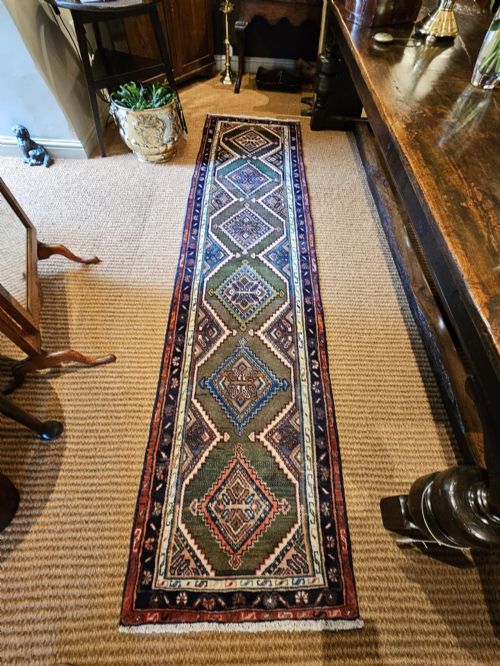
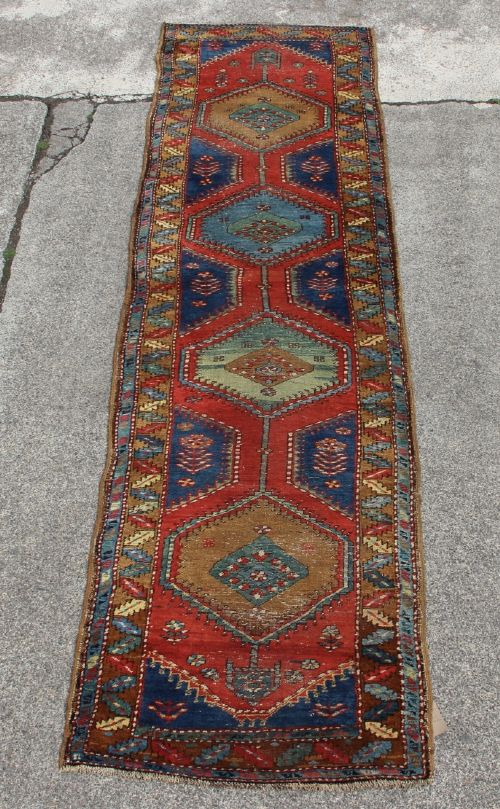


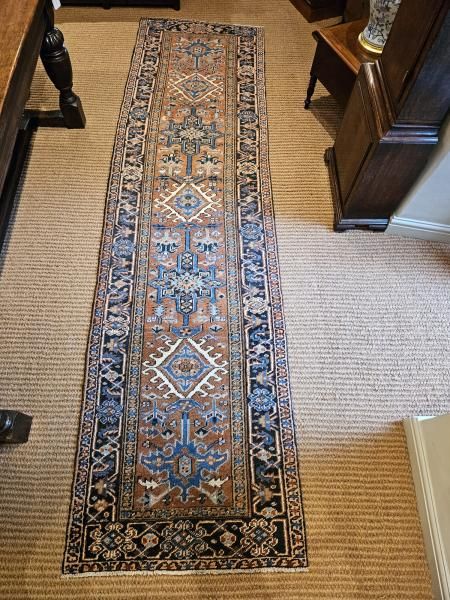
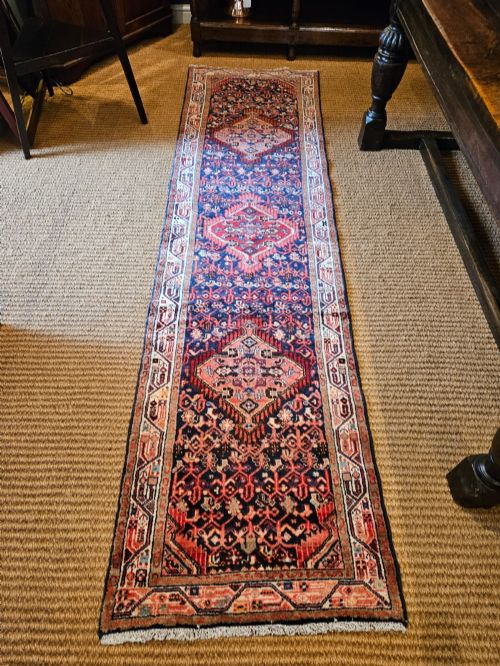
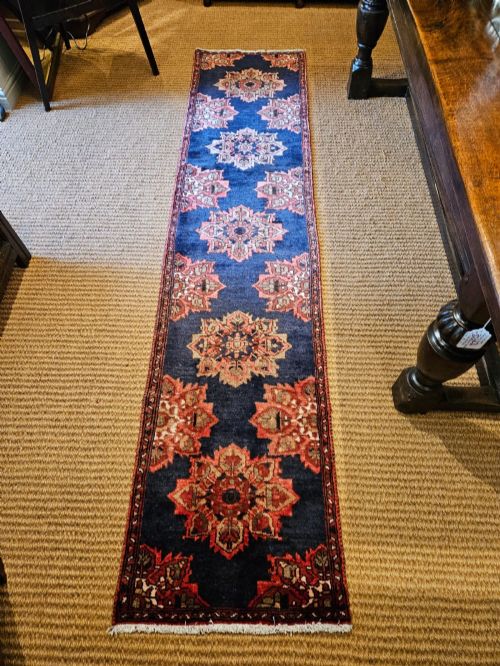
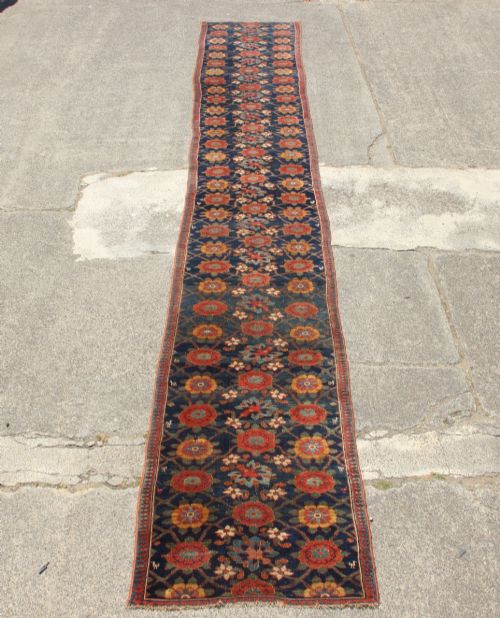
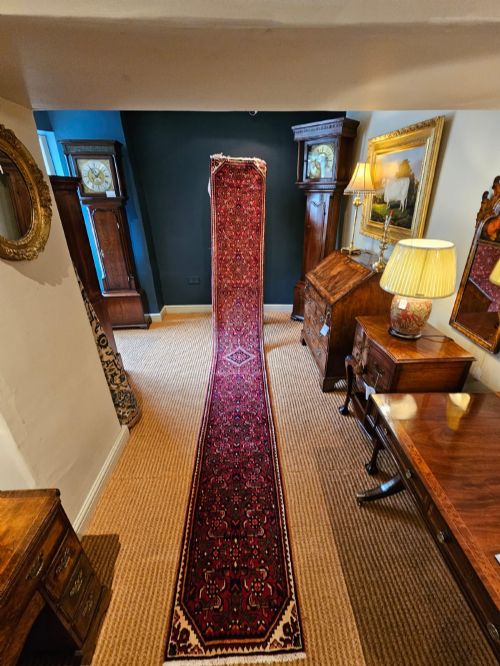
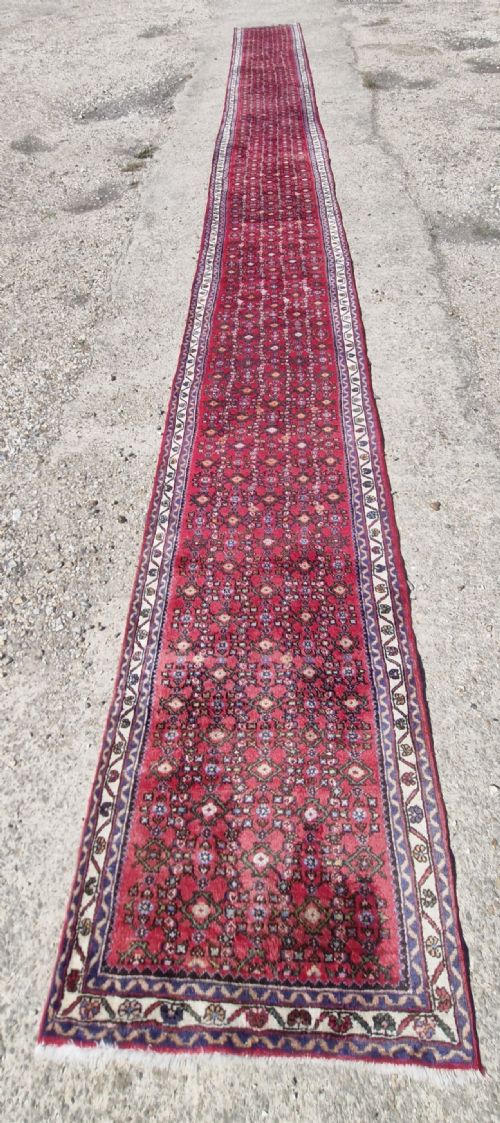

Vintage Persian Long Runner
A vintage persian long runner brings historical weight and pattern to a hallway, offering durable wool construction and regional tribal character.
Vintage Persian Long Runner
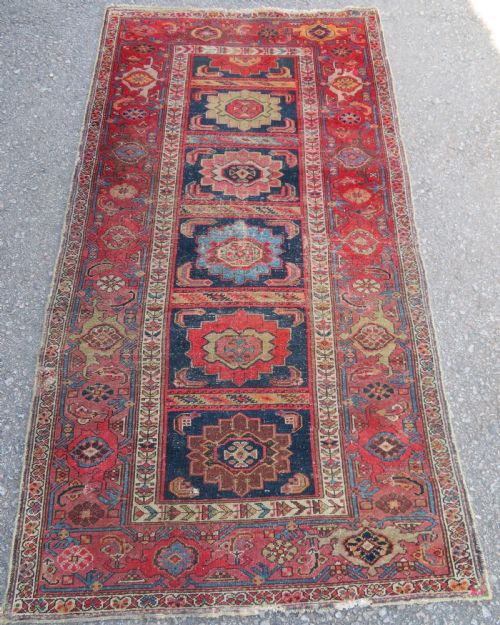
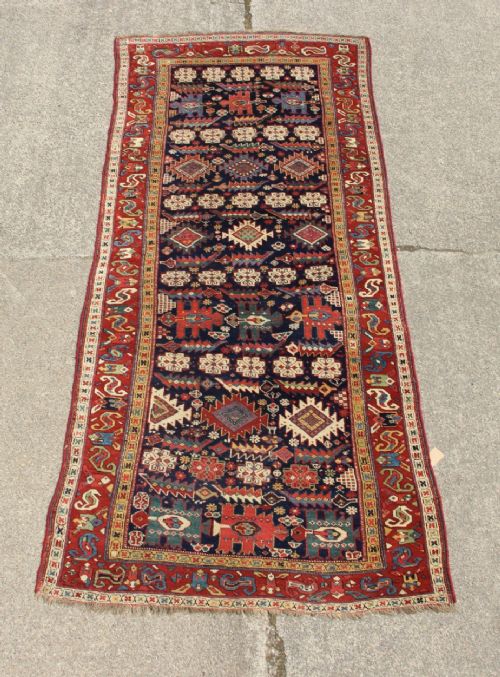
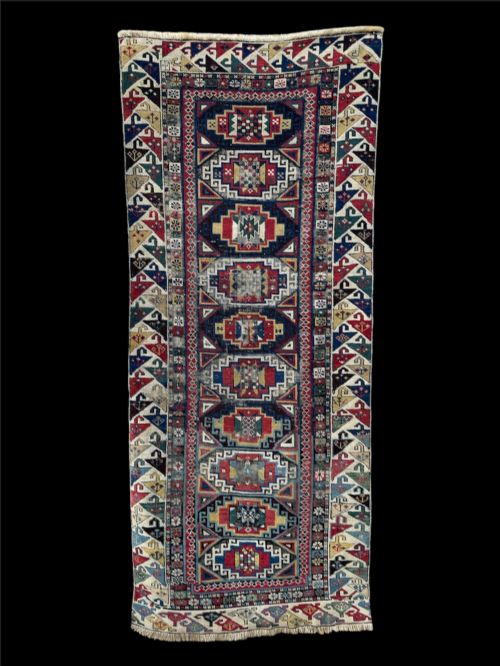
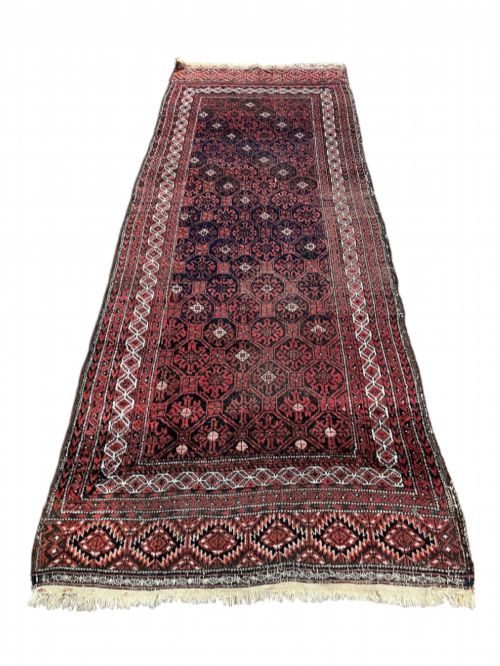
A vintage persian long runner comprises narrow, elongated floor coverings woven in regions such as Heriz, Hamadan, and Kurdish areas during periods spanning the late nineteenth century into the mid twentieth century. These pieces serve functional roles in corridors and landings, utilising traditional formats that span lengths from nine feet upwards to monumental proportions.
The selections encountered here typically manifest as tribal or village productions alongside geometric Heriz and Kurdish pieces dating from eighteen-ninety through nineteen-thirty. Buyers select these formats to anchor long architectural spaces with saturated indigo, olive green, and navy fields carrying time-worn motifs.
What varies in quality
Quality rests in the integrity of the hand-spun wool and the tightness of the knotting across the foundation. Denser knot counts preserve intricate tribal details and structural longevity through decades of use.
Proportion and balance define superior examples, where narrow formats maintain straight borders and harmonious colour saturation from end to end. Pieces retaining original selvedges and balanced fringe terminations represent higher tiers of craftsmanship.
Listings feature wool and hand-spun wool runners dated from the nineteenth century through nineteen-sixty.
The Vintage Persian Long Runner Glossary
- Runner
- A long, narrow carpet designed specifically for hallways, stairs, and corridors. These formats balance circulation spaces with substantial floor coverage.
- Kelleh
- A rug format that is longer than a standard scatter rug but wider than a typical corridor runner. These rectangular carpets often share tribal weaving characteristics.
- Heriz
- A region in northwest Persia known for bold geometric medallions and robust structural wool. Carpets from this origin utilise strong primary colours and durable cotton foundations.
- Mina khani
- A repeating botanical pattern composed of interconnected flowers and rosettes arranged in a continuous grid. This classic motif appears frequently on Kurdish and Persian tribal long rugs.
- Gabbeh
- A coarsely knotted, thick-pile tribal rug featuring open fields of colour with minimal geometric ornamentation. These pieces originate from nomadic weavers seeking heavy floor insulation.
Vintage Persian Long Runner: Frequently Asked Questions
Where should I place a long runner?
These narrow formats suit long hallways, stair landings, and gallery spaces where they soften floorboards and direct foot traffic.
Their elongated proportions bridge open rooms while protecting high-traffic wooden flooring from daily wear.
How do I care for antique wool runners?
Gentle, regular vacuuming without a rotating brush roll prevents dust accumulation within the wool pile.
Professional specialist cleaning handles deeper maintenance without disturbing the hand-spun fibres and natural dyes.
What is a tribal runner?
Tribal rugs originate from nomadic or village weavers rather than urban workshops. They carry geometric memory patterns and informal designs.
These pieces reflect local cultural motifs rather than strict cartographic planning.
How do I read runner dimensions?
Dimensions are provided in metric or feet and inches to indicate the exact length and width of the carpet. Narrow widths around ninety centimetres pair with lengths scaling past three metres for corridors.
Checking these measurements against your hallway ensures appropriate clearance for doors and skirting boards.