



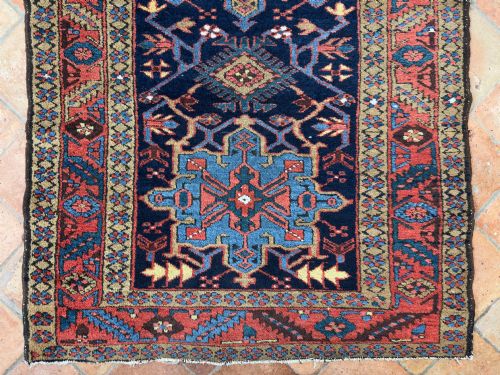
Vintage Persian Heriz Rug
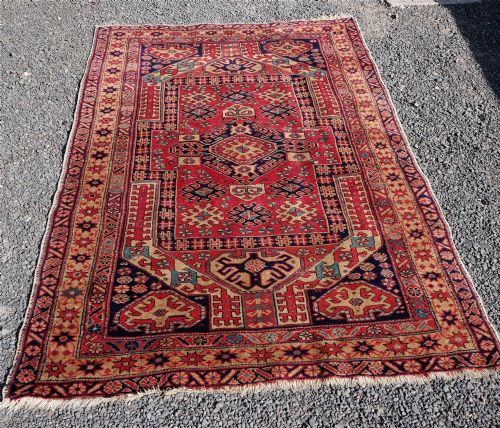
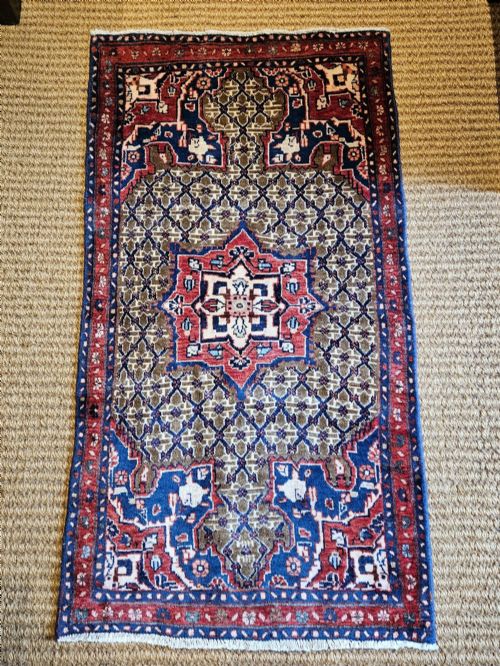
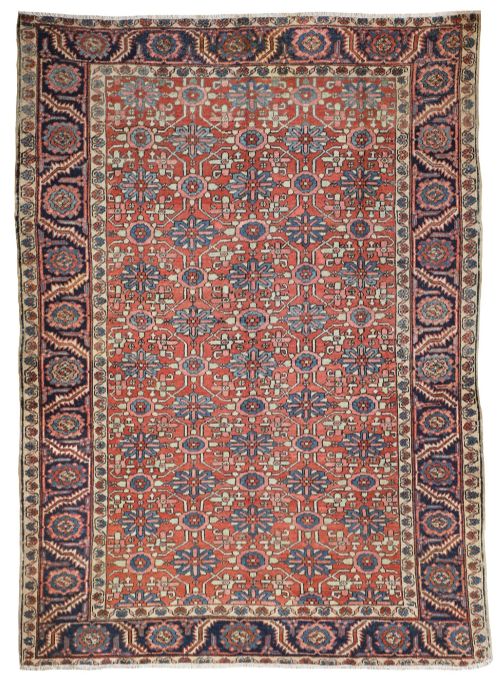
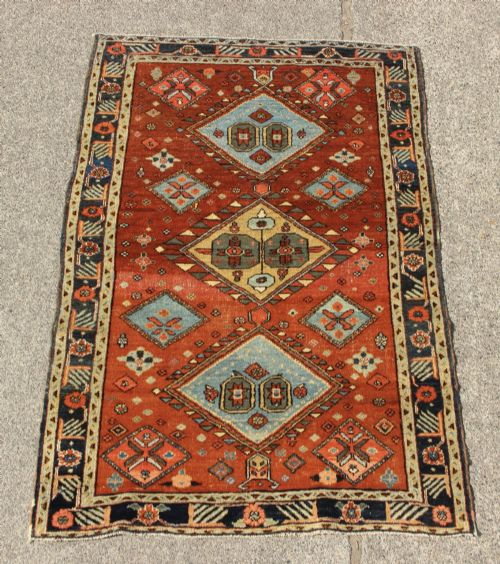
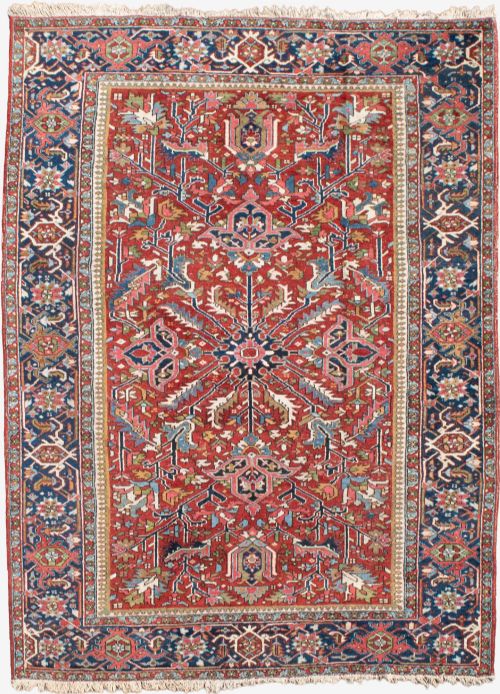
A vintage persian heriz rug brings heavy geometric medallions and rich earth tones into a room, shaped by generations of village weavers in north-west Persia.
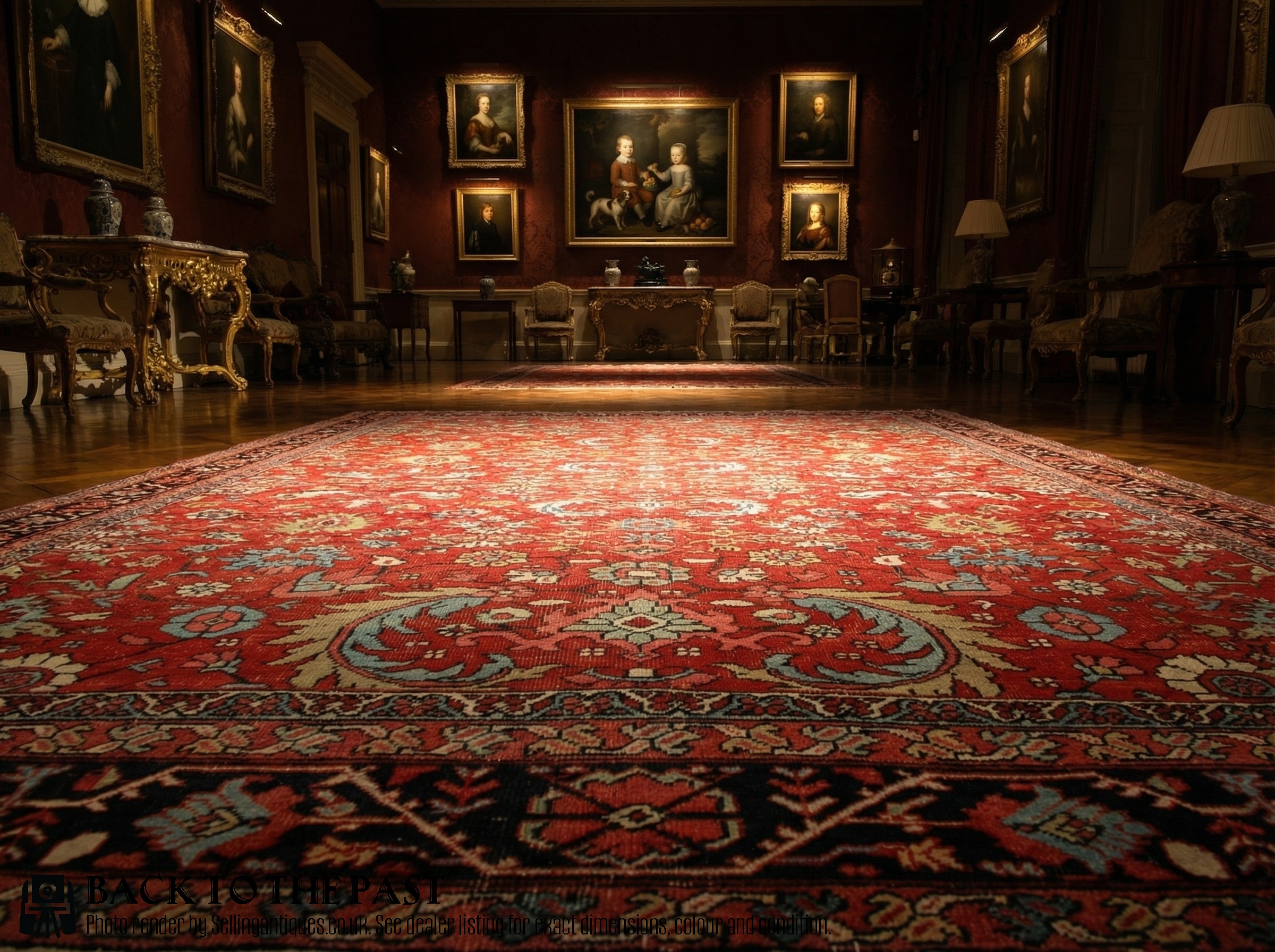
Vintage Persian Heriz Rug
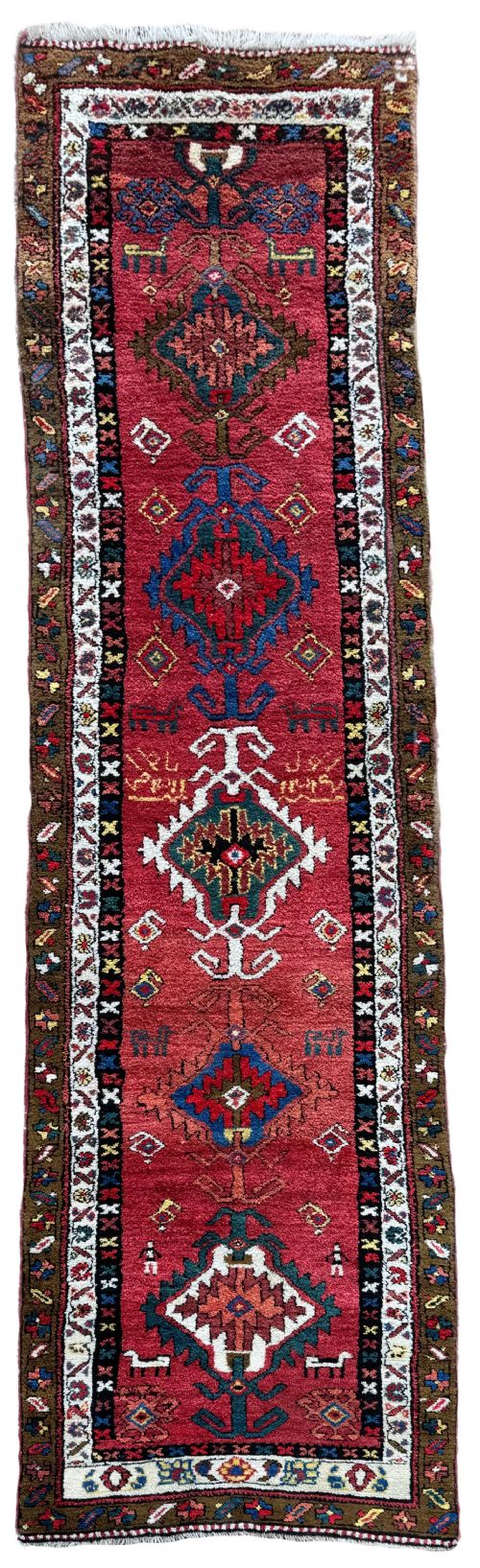
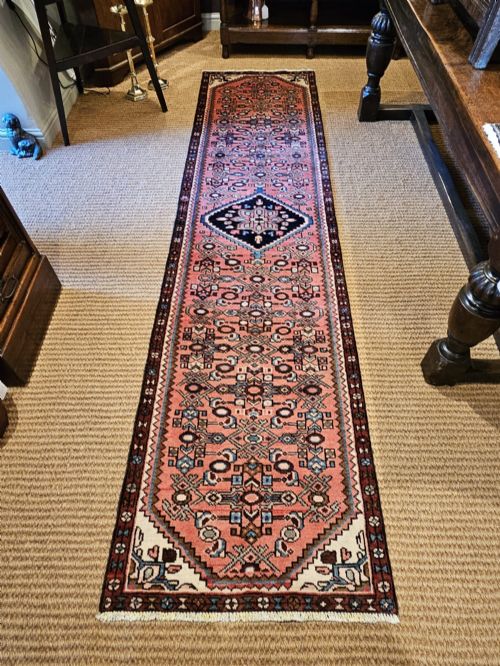
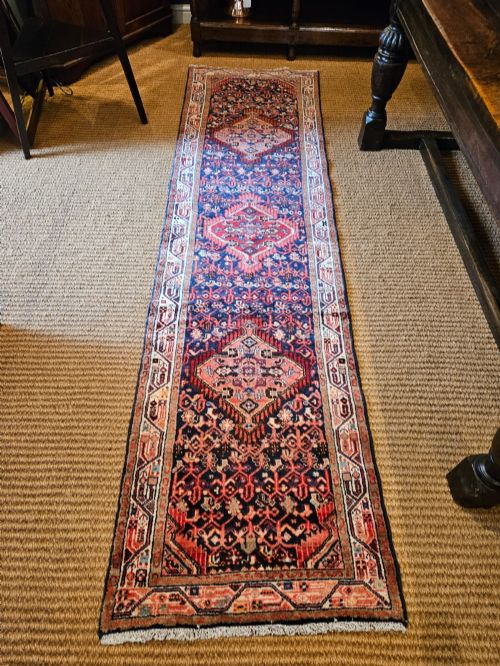
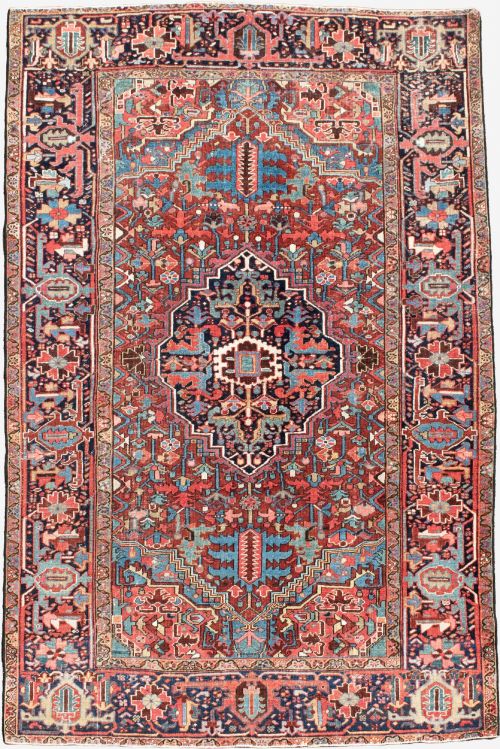
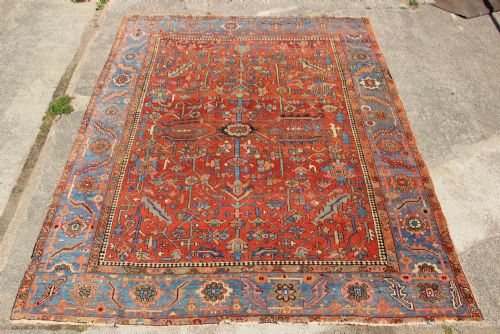
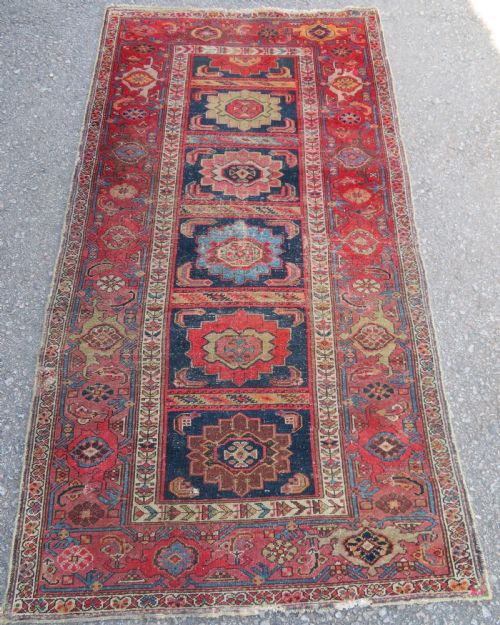
When you search for a vintage persian heriz rug, you encounter floor coverings originating from the Heris district and surrounding north-west Persian villages. These textiles span various sizes, from compact hearth-sized mats and runners to grand carpets stretching over four metres in length.
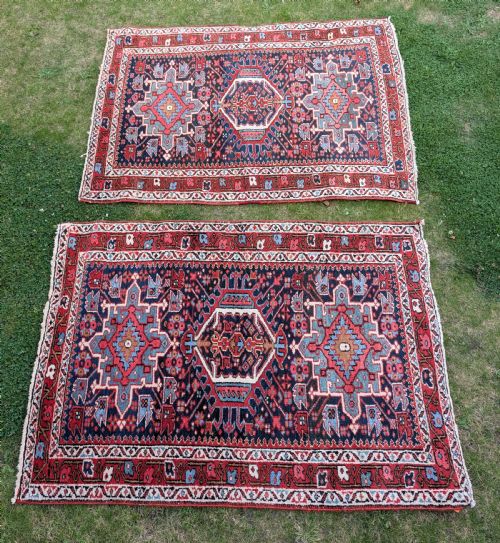
The most common examples on this page date from the late nineteenth century through to the early decades of the twentieth century. They encompass related regional styles such as Serapi, Bakshiash, Karaja, and Ahar, all sharing strong tribal and traditional Persian design roots.
Materials and Construction
Makers utilised durable wool for the pile, often hand-spun to give each thread a distinct tactile character and a varied absorption of natural dyes. This wool is knotted onto a sturdy cotton warp, providing the structural foundation necessary for heavy daily use.
The weaving process relies on traditional upright looms set up in homes and small regional workshops. Weavers built up the dense pile row by row, creating the characteristic rigid geometric lines that distinguish these rugs from curved court designs.
Village weavers frequently worked from memory rather than drawn paper patterns, occasionally resulting in charmingly lopsided medallions.
Assessing the Standard
Quality rests heavily on the crispness of the geometric drawing within the central medallion and corners. Finer pieces display deliberate symmetry and balanced proportions, whilst simpler village weaves show charming irregularities in line and motif.
The handling of the wool and the depth of the palette dictate the visual impact. Softer, more pliable foundations and well-saturated vegetable dyes elevate a carpet above standard commercial output.
The Vintage Persian Heriz Rug Glossary
- Medallion
- A large central ornamental design motif placed in the middle of the rug field. It forms the primary focal point for traditional Heriz compositions.
- Warp
- The vertical threads stretched tightly on the loom that carry the weight of the rug. Cotton warp provides stability and keeps the carpet flat.
- Pile
- The cut ends of the knotted wool yarn that form the soft upper surface of the carpet. Hand-spun wool pile wears down gracefully over decades.
- Runner
- A long, narrow format designed specifically for hallways and corridors. These pieces follow the same geometric medallion patterns as larger carpets on a reduced scale.
- Serapi
- A sub-style associated with older Heriz carpets, typically characterised by a more open design, coarser knotting, and a refined palette.
Vintage Persian Heriz Rug: Frequently Asked Questions
How do I clean a Heriz rug?
Gentle surface vacuuming without the rotating brush active prevents dust accumulation within the wool pile. Professional specialist washing remains essential for deep cleaning to protect the natural dyes and cotton foundations.
Water exposure should stay strictly limited to avoid weakening the historical fibres. Prompt blotting of spills prevents staining from setting into the hand-spun wool.
Are these rugs suitable for high traffic?
The robust construction utilising wool on a cotton warp makes these pieces remarkably durable for busy corridors and living spaces. Their dense knotting withstands regular foot traffic whilst maintaining structural integrity.
Placing a quality underlay beneath the carpet prevents slipping and reduces friction against hard floors. This simple addition significantly extends the active lifespan of older textiles.
How can I tell a Heriz from a Karaja rug?
Heriz carpets typically feature large, bold geometric medallions dominating the field with distinct angular corner pieces. They tend to appear in larger room sizes and grand runner formats.
Karaja pieces often present smaller repeating geometric motifs, multiple medallion layouts, or distinct tribal symbols. They generally manifest in compact area sizes and runner formats.
What does a Serapi designation mean?
The term describes an older, coarser style of weaving from the Heriz region featuring spacious designs. These pieces often display softer, muted colour palettes and more relaxed geometric rendering.
Collectors prize this designation for its specific aesthetic openness. The reduced density allows for large-scale motifs that breathe across the central field.