


Vintage Pen Stand
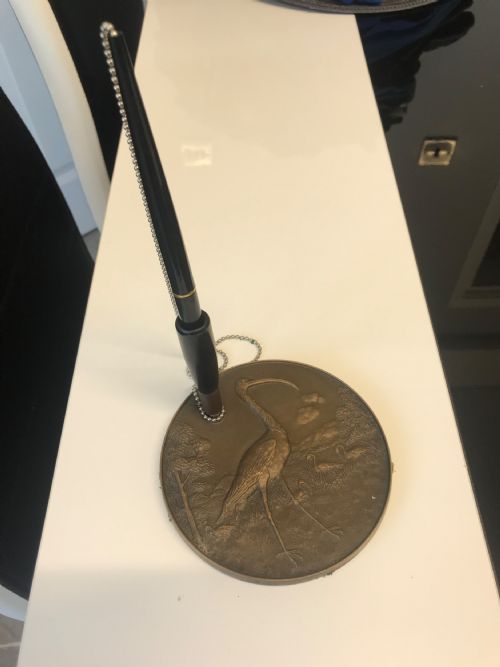
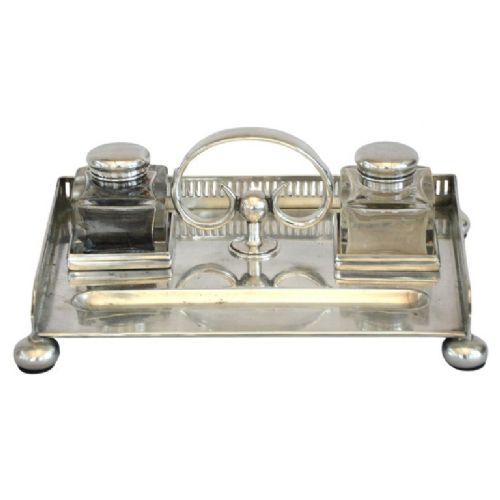
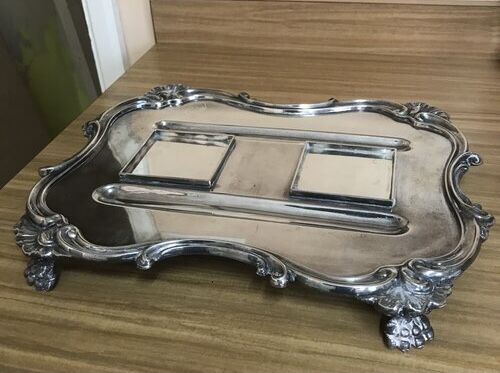
These vintage pen stand options hold the pens and inkwells of earlier writing desks.
Vintage Pen Stand
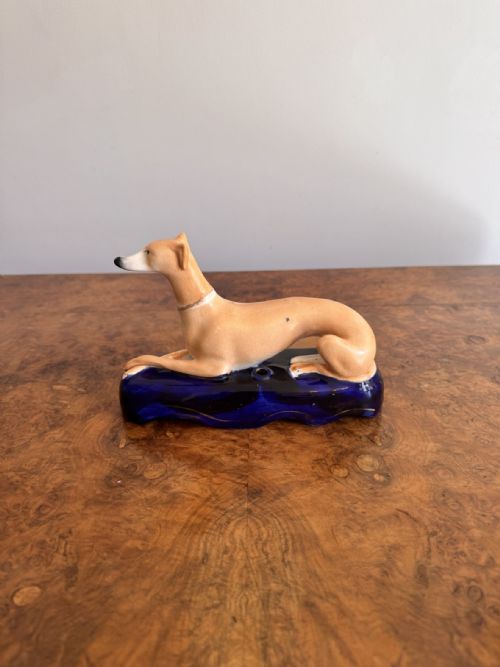
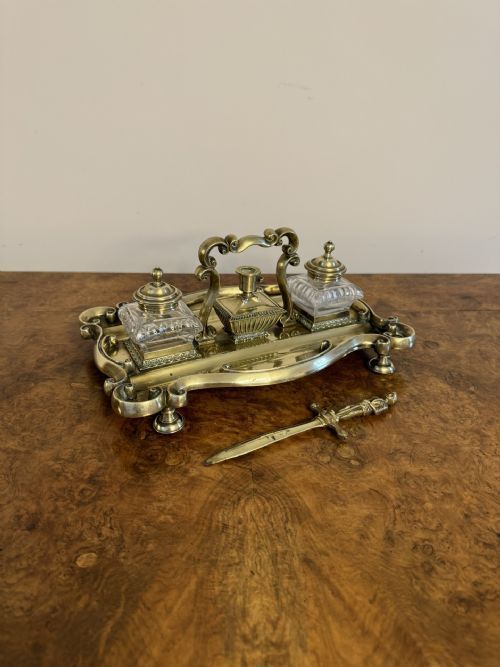
A vintage pen stand organises writing implements on a desk, often combining a pen rest with one or more inkwells. The pieces seen here range from simple ceramic quill holders to elaborate brass and silver-plated desk sets.
Most examples date from the Victorian and Edwardian periods, stretching into the Art Nouveau and Art Deco eras. Forms vary from compact single inkwells to large desk tidies in mahogany, onyx, and brass.
Materials and Construction
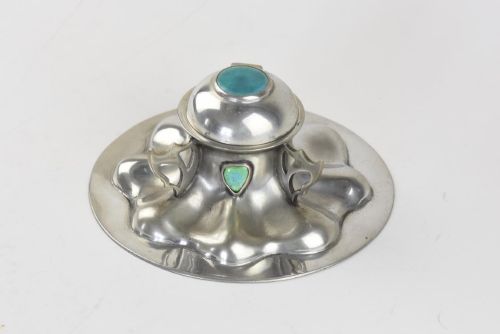
Makers utilised a diverse range of materials, combining metals such as brass, bronze, and silver plate with glass, ceramics, and carved woods like coromandel and ebony. Ornate desk accessories often feature mounted stones, enamels, and Ruskin cabochons.
Construction techniques span metal casting, hand-painted faience, papier-mâché, and intricate wood carving. Many pieces integrate fitted glass inserts for ink alongside dedicated grooves to hold pens.
One carved wooden inkwell takes the distinct form of a cat, watching over the desk.
Indicators of Quality
Superior quality in a vintage pen stand shows in the weight and purity of the materials, such as solid sterling silver, heavy cast bronze, or polished hardwoods. Fine chasing on metalwork and detailed hand-painting on porcelain or papier-mâché separate workshop pieces from mass production.
William Hutton·A Cohen And Co Ltd·Walker And Hall·Harrods·James Cartland And Sons·Albert Marionnet·Maurice Dufrene·Zimmermann
The Vintage Pen Stand Glossary
- Desk Tidy
- A multipurpose desk accessory designed to hold pens, inkwells, and other writing stationery. These pieces keep writing desks organised.
- Inkstand
- A tray or stand holding one or more inkwells, often incorporating pen rests and stamp compartments. They sit centrally on a writing table.
- Cabochon
- A gemstone shaped and polished rather than faceted. They appear inset into metalwork on Arts and Crafts pieces.
- Faience
- Tinned-glazed earthenware, particularly associated with Dutch Delft production. It offers a smooth white surface for blue painted decoration.
- Champlevé
- An enamel technique where troughs are dug into metal and filled with vitreous paste before firing. This creates colourful decorative patterns on bronze stands.
Vintage Pen Stand: Frequently Asked Questions
What is a vintage pen stand used for?
These stands hold dipping pens, quill pens, and inkwells in a central desk location. They kept working surfaces tidy and prevented ink staining on wooden desks.
Today, they serve as decorative accessories or functional desk organisers for modern writing tools.
How do I identify an Edwardian pen stand?
Edwardian examples often feature lighter construction, sterling silver mounts, and influences from classical revival styles. Look for hallmarks and clean lines typical of the early twentieth century.
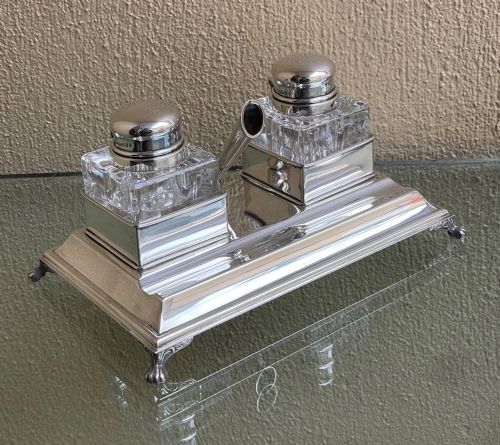
They frequently employ glass cut crystal alongside silver-plated galleries.
Are inkwells included with the stands?
Many stands retain their original fitted glass or ceramic inkwell inserts with hinged lids. Some listings provide the stand alone or paired with a matching pen.
Check individual descriptions to confirm whether the glass liner is present.
What materials are common in Art Nouveau stands?
Art Nouveau pieces showcase cast bronze, silvered metal, copper, and onyx. They utilise organic forms, flowing lines, and motifs like floral patterns or insects.
Makers often paired these metals with marble bases or green onyx trays.