


Vintage Pastoral Watercolour
A vintage pastoral watercolour captures quiet rural scenes of fields, livestock and country life on paper.
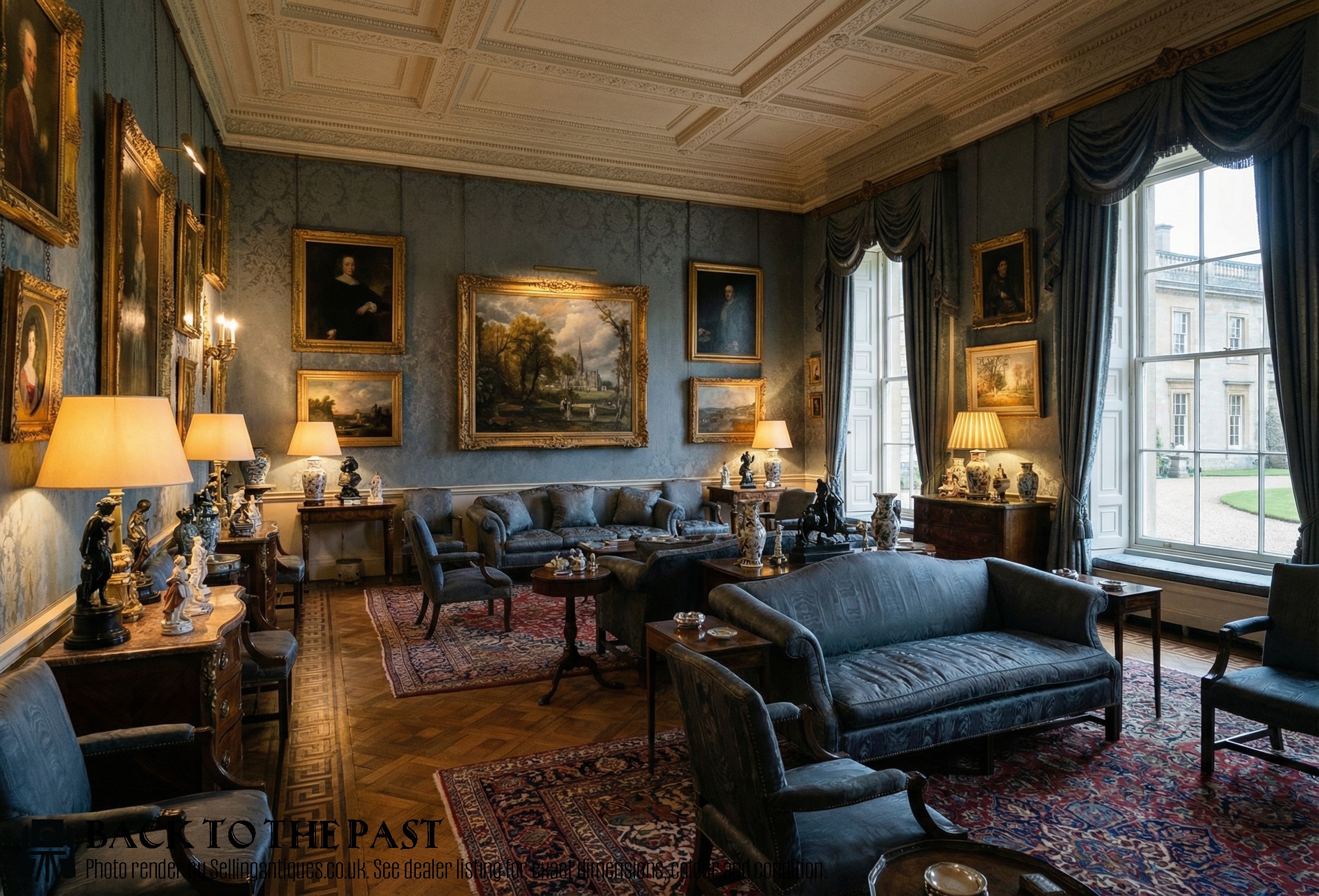
Vintage Pastoral Watercolour
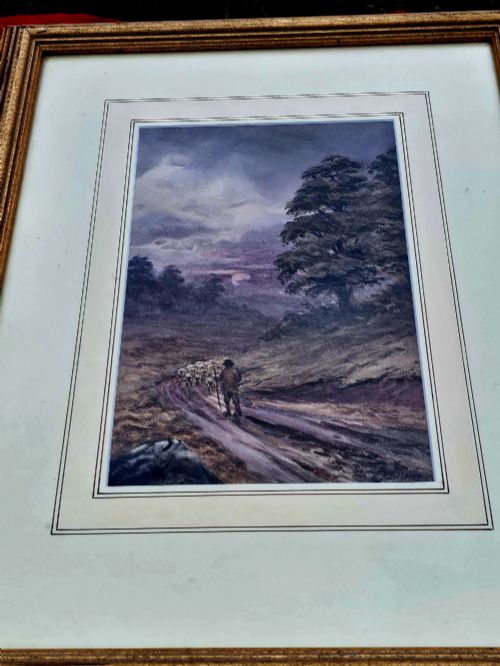
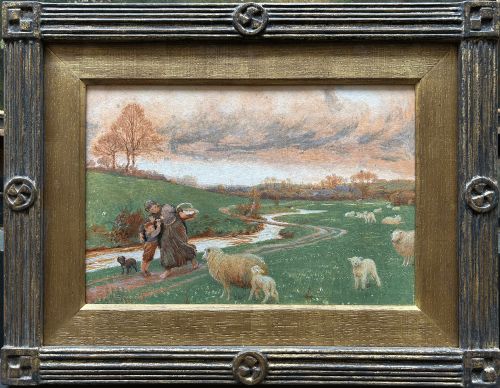
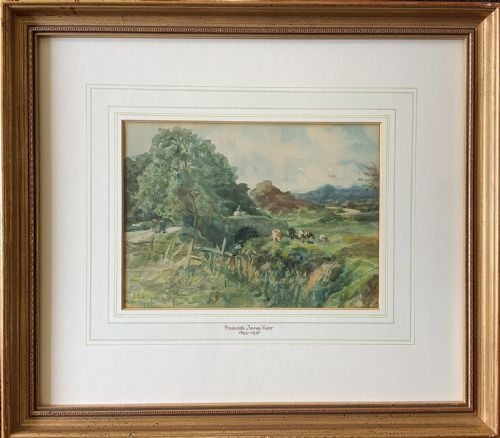
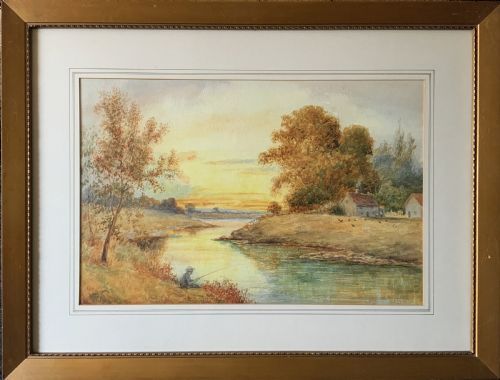
When you search for vintage pastoral watercolour, you find framed landscape paintings depicting rural scenes, farm workers, and grazing livestock across the British countryside. The pieces on this page span the Victorian period through the early twentieth century, taking in Edwardian pastoral views and British Impressionism.
You meet watercolours on paper, often presented in period wood and gilt frames behind glass. Subjects range from hay cart scenes and sheep droving lanes to thatched cottages beside streams, painted by named artists working in the English and British school traditions.
Materials and methods
Artists applied watercolour pigment onto paper support, sometimes working with gouache to build opaque highlights within the rural landscape composition. Many pieces retain their original frames constructed from wood, with some incorporating gold leaf or gilt details to finish the presentation.
The technique relies on washes of pigment to capture shifting daylight over fields, rivers, and farmyards. Protection from dust and moisture is achieved through glass glazing fitted into the period framing.
Listings feature watercolours spanning the Victorian era, Edwardian period, and the 1930s, executed on paper using pigment and gouache.
Quality factors in pastoral paintings
Skill in handling pigment and light determines the distinction between ordinary topographical records and accomplished artistic works. The articulation of livestock anatomy, atmospheric perspective, and the natural movement of figures set finer paintings apart.
The integrity of the paper support and the vibrancy of the watercolour pigment influence the visual impact of each piece. Original framing that complements the period of the artwork adds to the overall coherence of the object.
EJ Letheren·Frederick Walker·Frederick James Kerr·Henry Charles Fox·James William Booth·Frederick Septimus Lewis·Ernest Pile Bucknall·James Orrock·James Hardy Junior·John Atkinson·Alfred Grey·George Soper·Harry Sylvester Stannard·Augustus Jules Bouvier·A. Winter Shaw·John R. K. Duff·J.V.R. Parsons·Walter Duncan·Thomas Mackay·Walter Henry Sweet·Thomas Nicholson Tyndale·Frederick Tucker·Charles James Adams·Milton Drinkwater·Henry John Kinnaird
The Vintage Pastoral Watercolour Glossary
- Watercolour
- A painting method where the pigments are suspended in a water-based solution, traditionally applied to paper.
- Pastoral
- A genre of art depicting rural life, shepherds, farmland, and country landscapes in an idealized or picturesque manner.
- Gouache
- An opaque water-based paint type that produces heavier, more solid colour areas than transparent watercolour washes.
- Gilt
- A thin layer of gold leaf applied to frame surfaces for decorative effect.
- Impressionism
- A style focusing on accurate depiction of light and its shifting qualities rather than strict fine detail.
Vintage Pastoral Watercolour: Frequently Asked Questions
What subjects appear in these watercolours?
Paintings show scenes of rural life including farm hands, sheep droving, hay cart harvesting, cattle watering, and thatched cottages by streams.
Artists drew inspiration from the English and Welsh countryside, recording traditional agricultural labour and pastoral landscapes.
How should I hang a watercolour?
Keep works away from direct sunlight to prevent the pigment and paper from fading over time.
Ensure wall spaces remain stable in temperature and humidity to protect both the paper support and the original wood frame.
Are these paintings original?
The listings feature original hand-painted artworks created directly by artists rather than modern mass reproductions.
Signatures from the period often appear alongside dates and locations written on the works.
What periods do these pieces date from?
Most works span the Victorian era, the Edwardian period, and the early decades of the twentieth century.
Styles reflect nineteenth-century British school traditions alongside early modern impressionist approaches to rural views.