


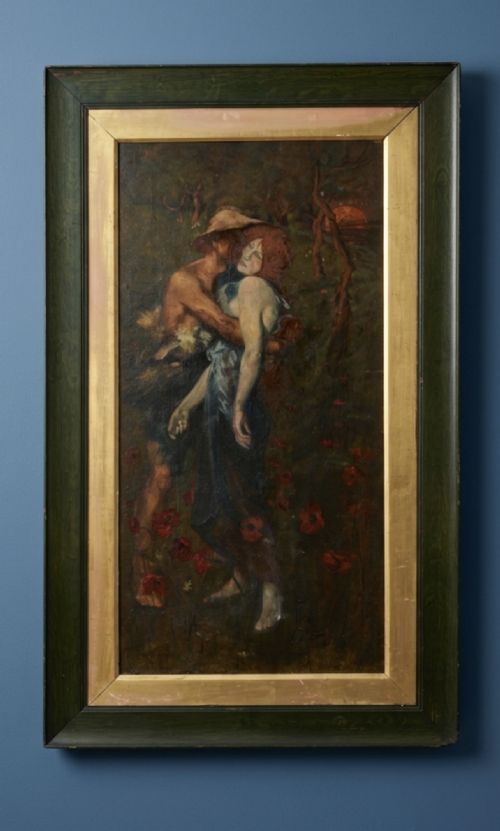
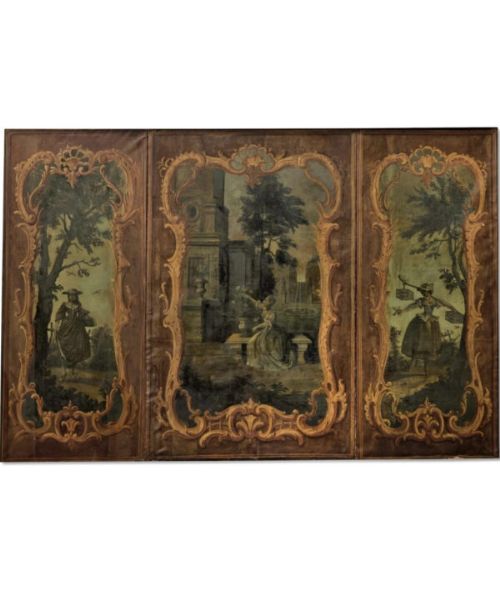
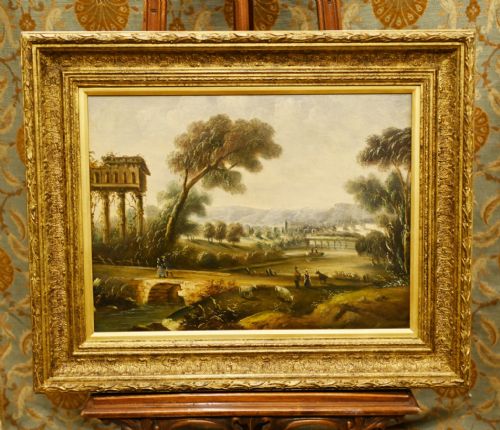


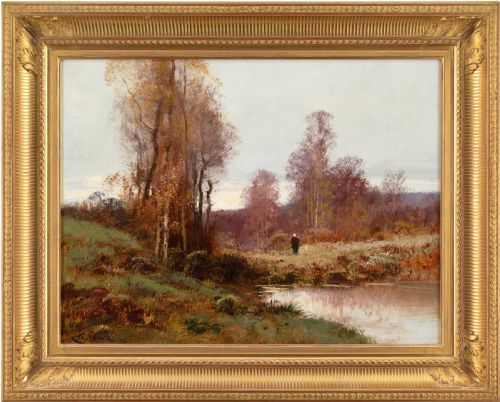


Vintage Pastoral Canvas Painting
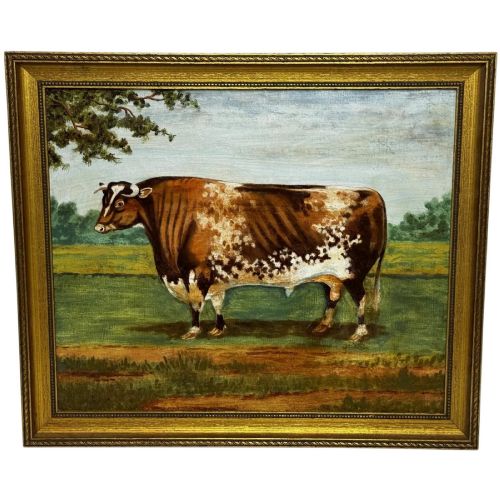
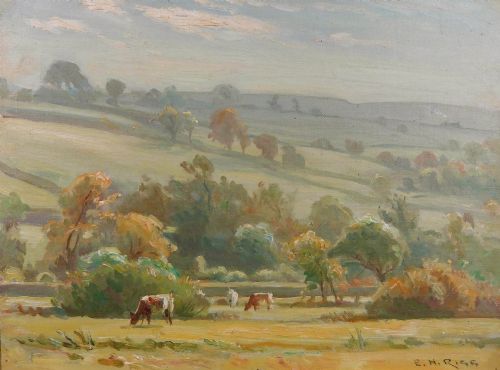
A vintage pastoral canvas painting brings quiet countryside rivers, grazing cattle and rural harvests straight into a room through traditional oil on canvas.
Vintage Pastoral Canvas Painting
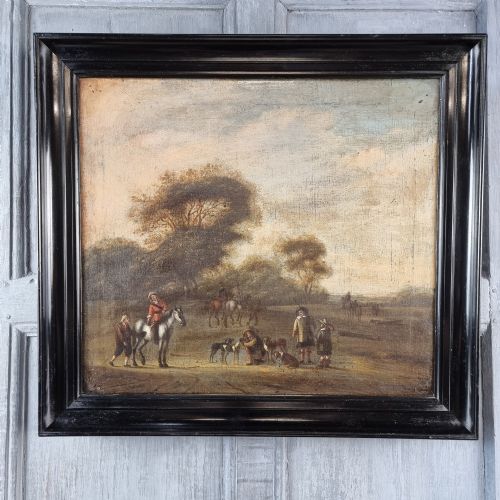
A vintage pastoral canvas painting captures rural life, agricultural scenes and tranquil countryside views from the nineteenth and early twentieth centuries. These artworks depict everything from herds of cattle and sheep near rivers to thatched cottages and figures fishing beneath willow trees.
Most examples found on this page span the Victorian era, the Edwardian period and the early twentieth century, reflecting British Impressionism, 19th Century Realism and Romanticism. The subjects focus heavily on farming landscapes, woodland paths and coastal rural views painted by regional and school artists.
Buyers look for these pieces to add historical warmth and a calm, bucolic atmosphere to domestic interiors. They serve as windows into a slower rural past, rendered with traditional brushwork on woven fabric supports.
Markers of quality
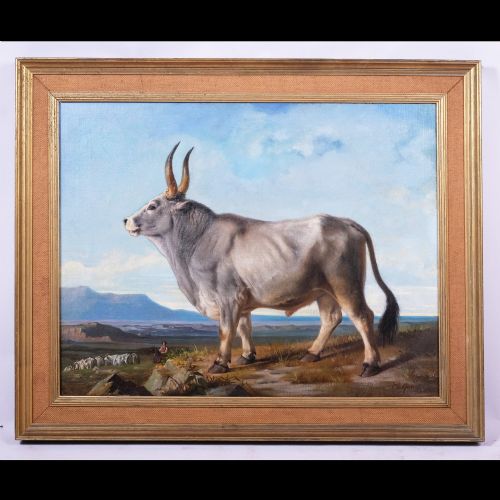
Quality in these pastoral works rests on the artist's ability to handle light, atmosphere and natural proportions, particularly when rendering animals like cattle, sheep and horses within a landscape. Stronger pieces display confident brushwork and a convincing sense of depth rather than stiff or formulaic composition.
The integration of the frame, the preservation of the original canvas surface without heavy modern relining, and clear artist signatures or attribution to established regional schools elevate certain paintings above anonymous decorative works.
Listings feature oil paintings on canvas spanning the Victorian, Edwardian and mid-century periods, focusing on British and European rural landscapes.
John Emms·Ernest Higgins Rigg·Owen Bowen·Eugene Joseph Verboeckhoven·Benjamin Williams Leader
The Vintage Pastoral Canvas Painting Glossary
- Canvas
- A heavy woven fabric, typically linen or cotton, stretched across a wooden frame to serve as the foundation for oil paintings. It provides a slightly textured surface that interacts with paint layers.
- Gesso
- A plaster-like mixture applied to wooden frames as a smooth base for gilding or painting. It allows for crisp ornamental moulding details around the edge of the artwork.
- Impasto
- A technique where oil paint is laid thickly on the canvas, standing out in relief from the surface. This adds physical texture to elements like foliage, water or clothing.
- Gilt
- A thin layer of gold leaf or gold paint applied to the surface of a wooden picture frame. It adds reflective warmth and highlights the carved details.
- Provenance
- The documented history of ownership and origin of an artwork. It helps establish authenticity and attribution to a specific painter or school.
Vintage Pastoral Canvas Painting: Frequently Asked Questions
How do I date a vintage pastoral canvas painting?
Dating relies on a combination of stretcher construction, canvas type, frame style, clothing or farming equipment depicted, and any artist signatures or dates written on the reverse. Victorian and Edwardian works often feature specific framing styles and pigment compositions typical of their decade.
Examining the back of the canvas and any handwritten inscriptions or old gallery labels provides further clues to the exact period of creation.
Where should I hang a rural landscape painting?
These works suit living rooms, dining spaces and studies where traditional or transitional decor benefits from warm earthy tones and calm natural subject matter. Placing them away from direct sunlight and damp walls protects the oil paint and canvas from degradation.
Pairing the painting with adequate directional lighting brings out the subtle brushwork and atmospheric depth of the rural scene.
What is the difference between British Impressionism and 19th Century Realism in these paintings?
British Impressionism focuses on loose brushstrokes, natural light effects and fleeting atmospheric moments in the countryside. 19th Century Realism tends towards sharper detail, precise anatomy in farm animals, and a more literal representation of agricultural labour.
Both styles capture rural life but approach the canvas with differing priorities regarding finish and optical illusion.