
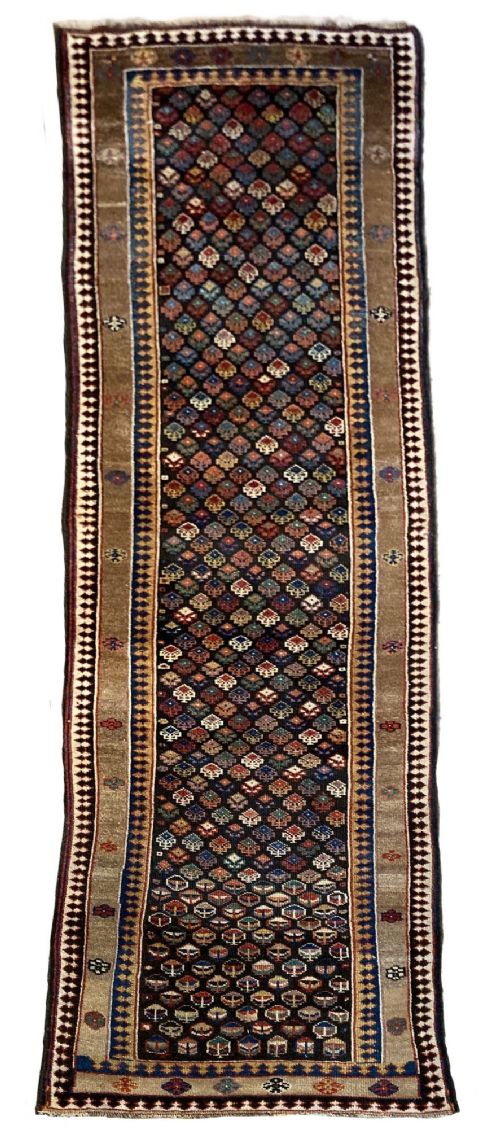


Vintage Passage Rug
A vintage passage rug brings linear pattern and warmth to corridors, drawing the eye along historic hallways.
Vintage Passage Rug
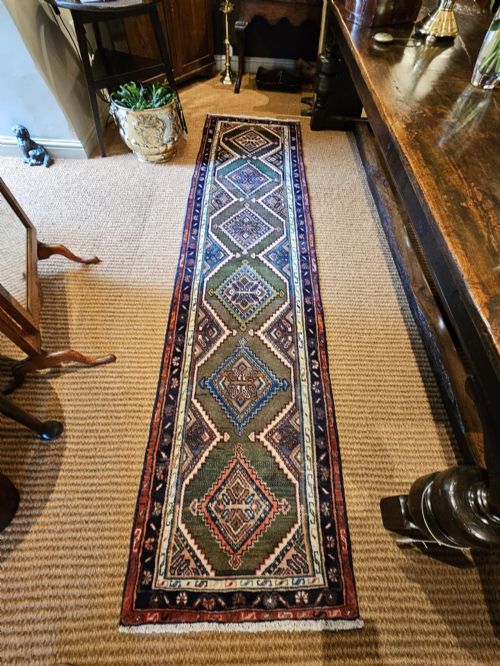
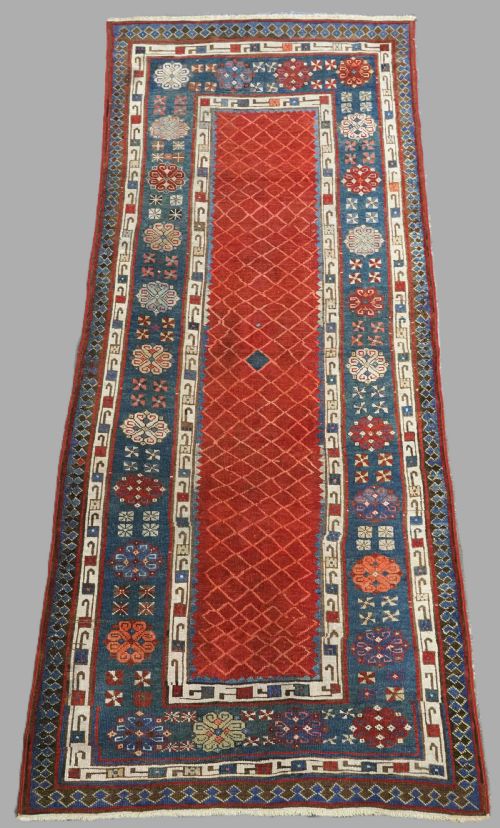
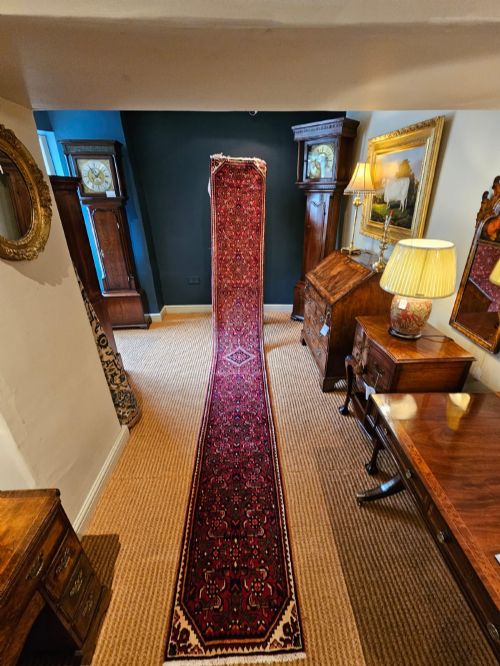
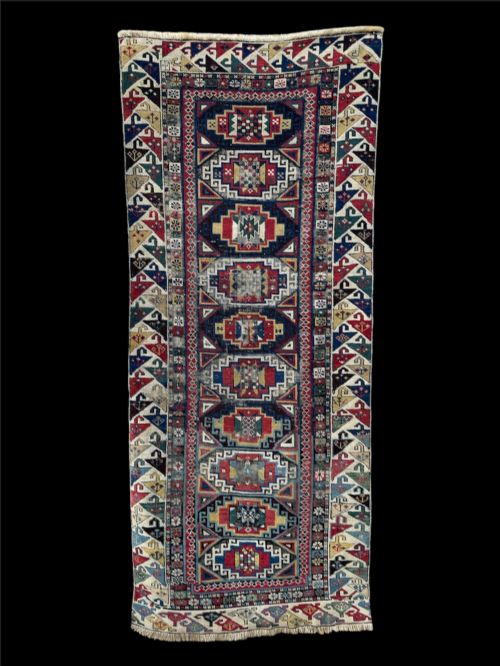
A vintage passage rug is typically encountered as a long, narrow runner designed specifically for hallways, staircases and galleries. These woven floor coverings span periods from the nineteenth century through to the early decades of the twentieth century, bringing historic character to domestic circulation spaces.
The selections on this page concentrate heavily on Persian and Caucasian origins, including named styles such as Heriz, Bidjar, Shirvan, Talish and Kurdish. Buyers meet formats that range from compact lengths to exceptionally long galleries exceeding seven metres, woven with distinctive tribal and regional motifs.
Materials and Construction
These floor coverings are constructed primarily from wool and cotton, utilising natural fibres for both the durable pile and the supporting foundation warp and weft. The reliance on wool permits saturated, enduring shades derived from traditional dyeing methods.
Weavers knotted these long formats by hand, producing dense structures capable of withstanding heavy foot traffic in narrow domestic spaces. The resulting textile architecture combines structural resilience with flexible handling along corridors.
Listings feature nineteenth-century and early twentieth-century pieces woven with wool and cotton across Caucasian and Persian styles.
Quality Variations
Quality in these textiles depends heavily on the crispness of the regional design, the depth and integrity of the wool pile, and the precision of the hand-knotting. Pieces originating from recognised workshops or specific tribal groups display superior graphic balance and tighter structural foundations.
The harmony and ageing of the palette separate standard examples from finer works, where natural dye variations impart rich visual depth. Proportion also plays a role, with exceptionally narrow or very long formats demonstrating greater technical skill in maintaining straight margins.
The Vintage Passage Rug Glossary
- Runner
- A long, narrow carpet format traditionally utilised in hallways, corridors and on staircases. This shape governs the proportions of vintage passage rugs.
- Pile
- The vertical or diagonal loop of yarn that forms the usable surface of the textile. Hand-knotted wool pile provides both cushioning and durability.
- Warp
- The stationary lengthwise threads stretched on the loom before weaving begins. These cotton or wool threads carry the tension of the piece.
- Weft
- The horizontal threads passed across the warp to hold the knots in place. Together with the warp, they form the foundation grid.
- Boteh
- A traditional almond-shaped or paisley motif representing a floral spray or cypress tree. It appears frequently across Persian and Caucasian woven designs.
- Heriz
- A prominent Persian styling known for bold geometric medallions and robust structural character. Pieces from this origin offer strong rectilinear compositions.
Vintage Passage Rug: Frequently Asked Questions
Where should I place a vintage passage rug?
These narrow formats suit hallways, corridors and landings where traditional floorboards or stone benefit from linear warmth and texture. Their elongated proportions guide movement through domestic circulation spaces.
Ensure you measure the corridor width and length carefully, leaving a uniform margin of exposed flooring around the perimeter of the rug.
How do I care for wool runners?
Regular gentle vacuuming without a rotating power brush helps remove grit from the wool pile. Professional cleaning suited to antique textiles maintains the integrity of the natural fibres.
Using an appropriate underlay prevents slipping on smooth hallway floors and reduces friction between the foundation and the ground.
What is the difference between Persian and Caucasian runners?
Caucasian examples tend to feature sharper geometric patterning, striking tribal iconography and contrasting palettes. They often originate from regions such as Shirvan, Karabagh or Talish.
Persian runners, including Heriz, Bidjar or Ferahan styles, frequently incorporate more integrated floral motifs, sophisticated medallion layouts and larger overall dimensions.
How are these runners dated?
Dating relies on stylistic analysis of regional motifs, structural characteristics, dye types and weave density. Pieces span the nineteenth century through the early twentieth century.
Historical markers within the designs and the specific handling of wool foundations help dealers place these textiles into approximate periods such as circa 1880 or 1900.