




Caucasian Corridor Carpet
A caucasian corridor carpet brings structured tribal geometry and rich wool pile into narrow spaces.
Caucasian Corridor Carpet
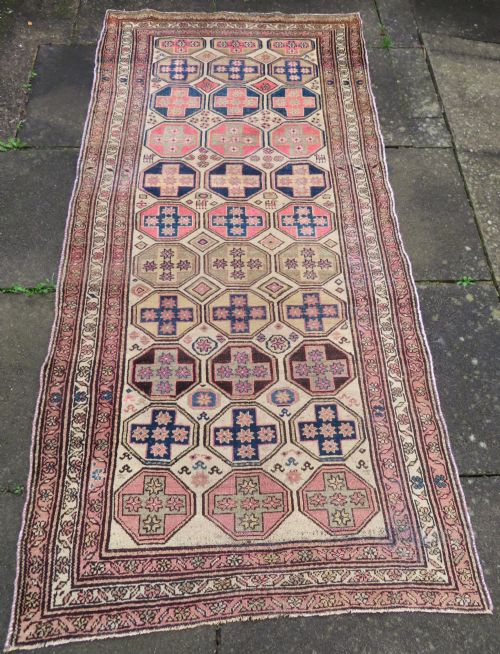
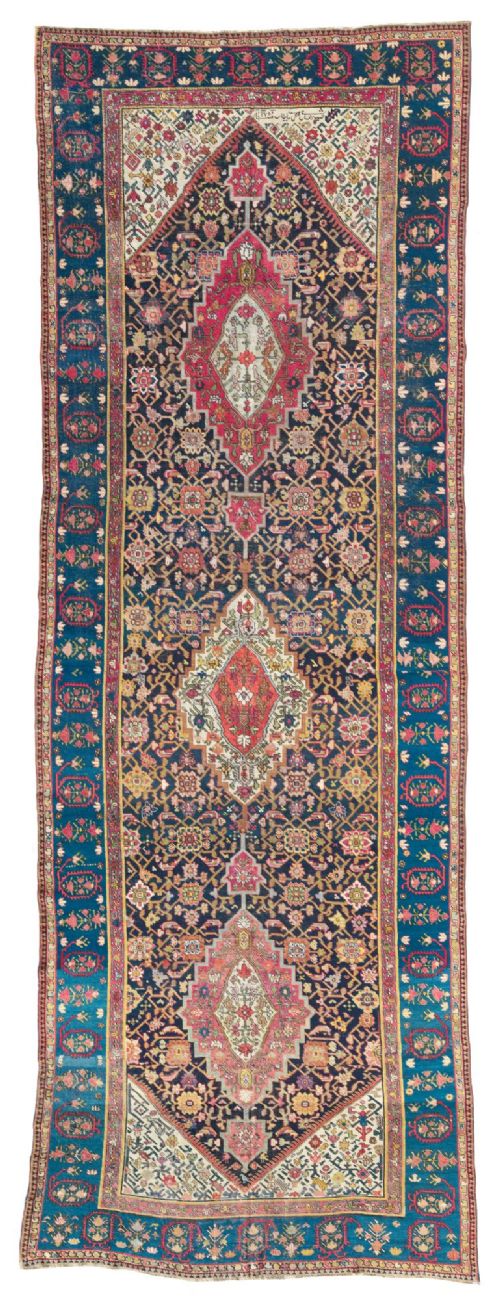
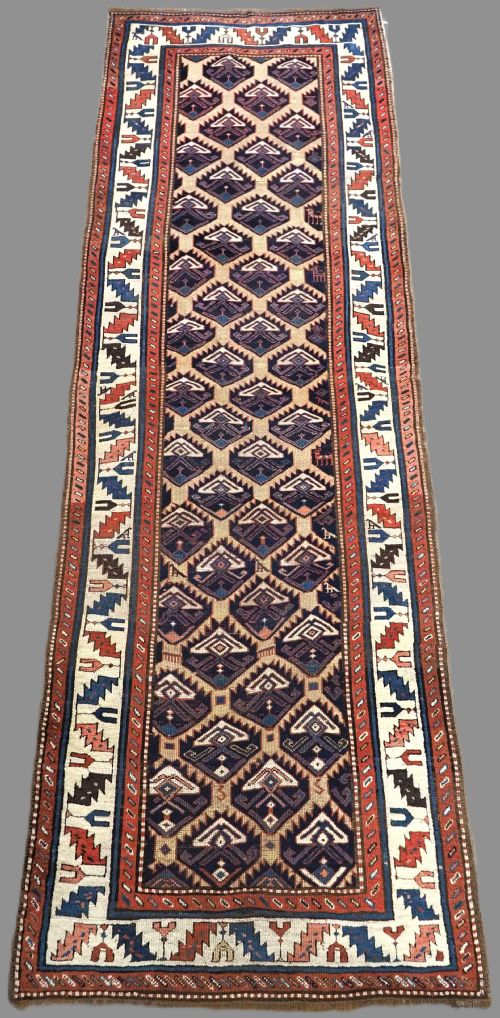
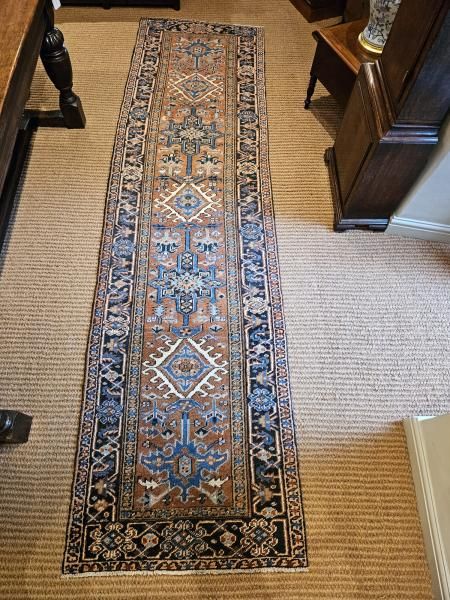
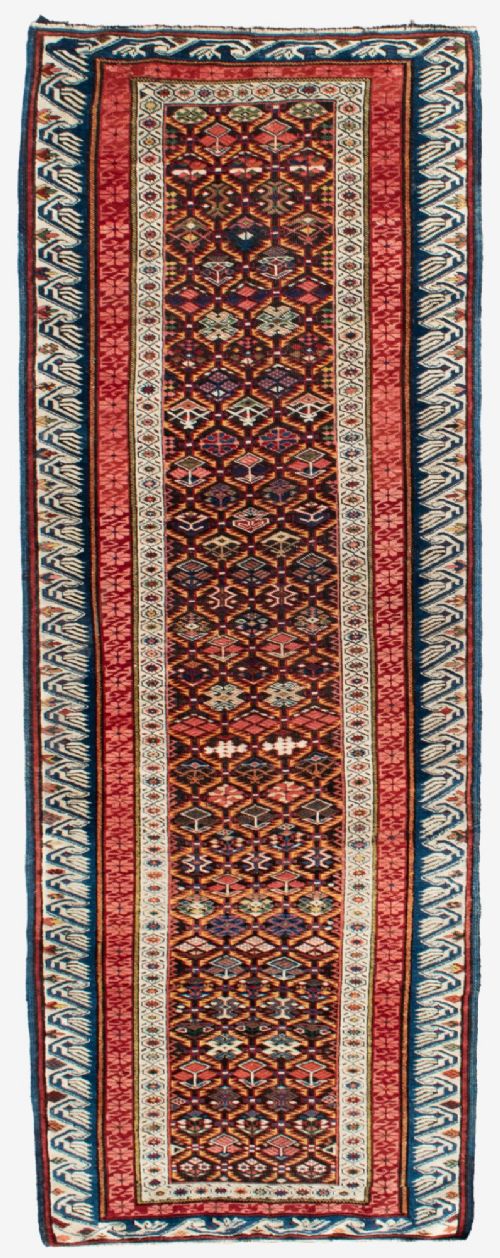
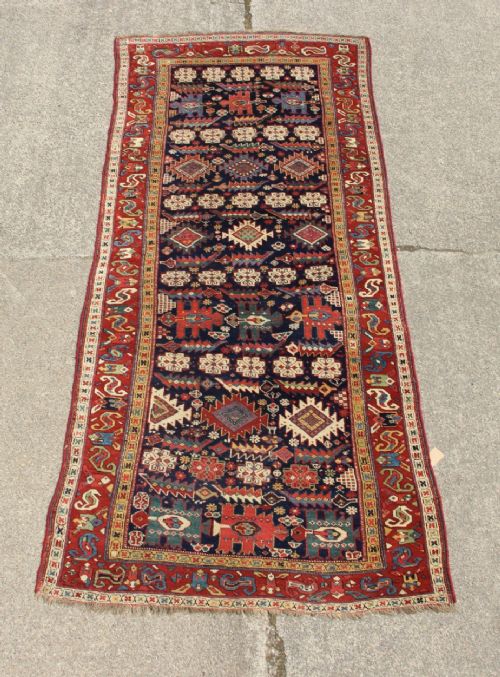
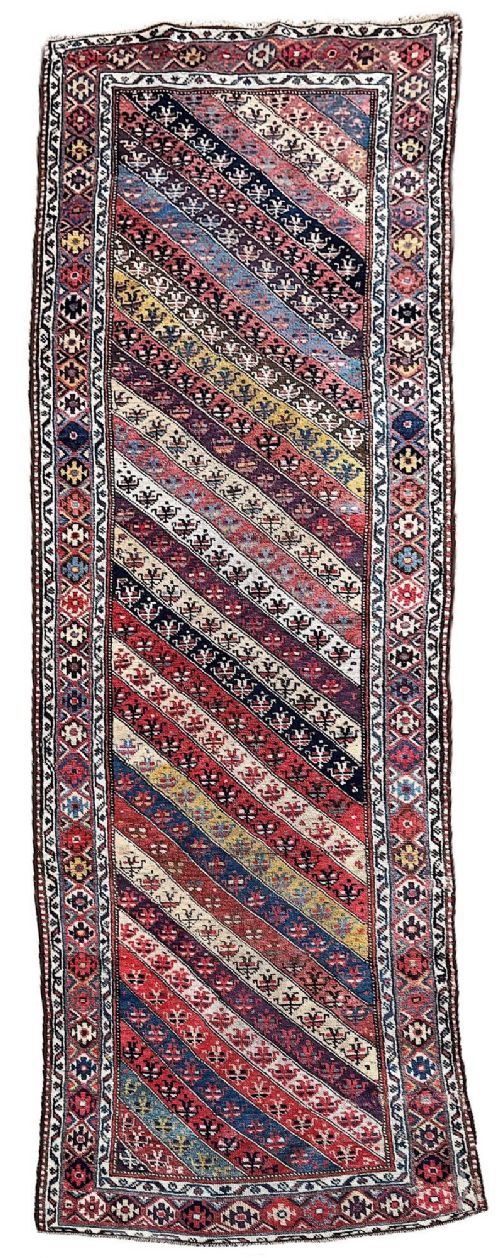
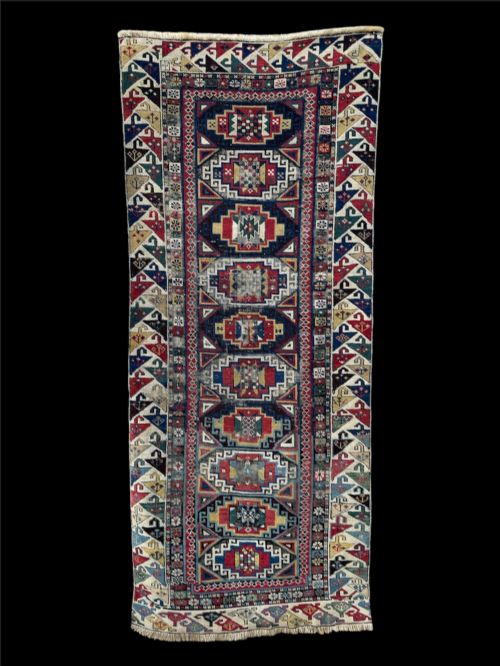
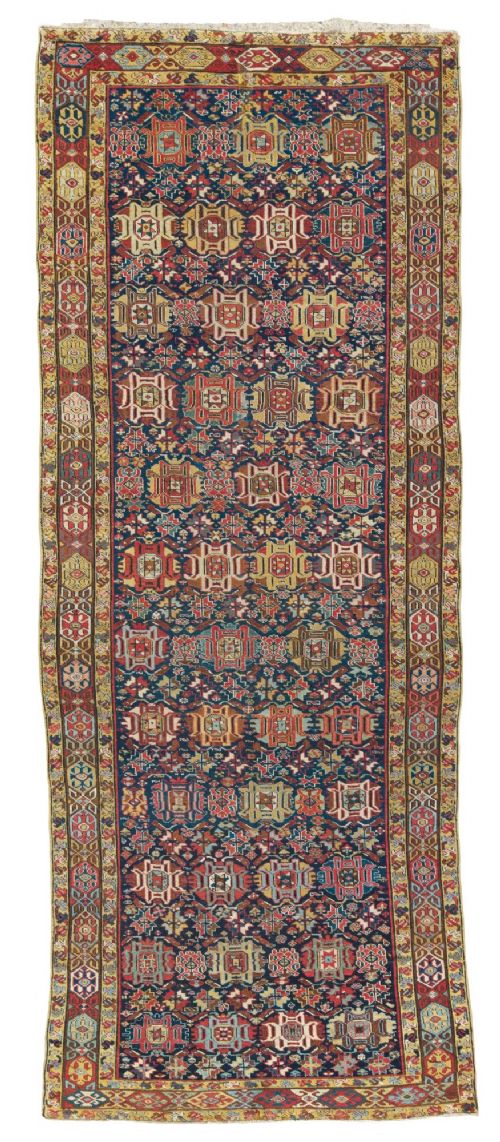
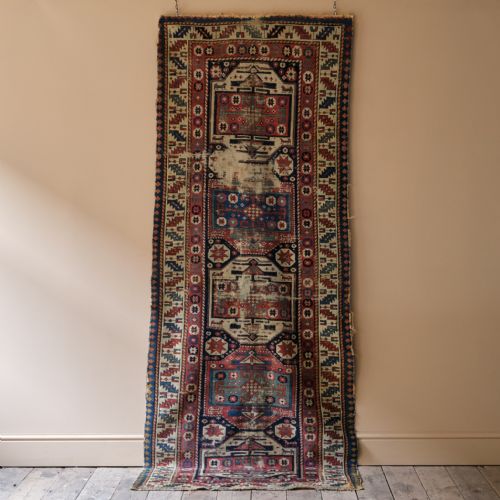
A caucasian corridor carpet is a long, narrow textile designed to line hallways, passages, and extended rooms. The examples found here span from the mid nineteenth century into the early twentieth century, originating primarily from Caucasian and Persian tribal weaving traditions. Common forms include runners, long rugs, and kellehs that utilise traditional geometric motifs.
Buyers encounter regional weaving styles such as Gendje, Shirvan, Karabagh, Kuba, and Talish alongside Kurdish and Shahsavan pieces. These formats range from compact hallway lengths to extensive runners exceeding four metres. Their narrow proportions serve the traditional architectural function of connecting larger rooms.
Materials and construction
These textiles are constructed primarily from hand-spun wool for the pile, complemented by cotton foundations in many pieces. Selected carpets incorporate camel hair within the design or border elements to provide natural tonal variation without dyeing. Weavers knotted the wool pile onto warp and weft threads by hand, creating dense surfaces designed to endure heavy foot traffic.
The dyes derive from natural organic sources, producing deep blues, reds, and ivory grounds that patinate with age. Weaving techniques reflect regional tribal methods, resulting in sturdy structures that maintain their rigidity along long axes.
The listings span production dates from eighteen-fifty through to nineteen-twenty, utilising wool, cotton, and camel hair across diverse tribal styles.
Qualities of distinction
Quality in a caucasian corridor carpet rests upon the precision of the knotting, the saturation and balance of the natural dyes, and the integrity of the foundation. Pieces with high pile density and sharply defined geometric medallions separate themselves from looser, coarser productions. Original surviving borders and symmetrical proportions also elevate the standing of a runner.
The handling of colour transitions and the clarity of motifs such as lattice designs, boteh, or memling guls indicate the skill of the weaver. Minor irregularities in symmetry often point to authentic tribal work rather than standardised factory output.
The Caucasian Corridor Carpet Glossary
- Kelleh
- A large format carpet that is longer than a standard rug but wider than a runner. It was traditionally utilised in the main reception rooms of Persian and Caucasian homes.
- Boteh
- A teardrop or almond-shaped motif with a curved upper end, frequently seen in Caucasian and Persian weaving. This ancient symbol represents fertility, vegetation, or the cypress tree.
- GUL
- A medallion or repeating octagonal stamp used extensively in tribal rug design. Each regional group employed distinct forms of these geometric emblems to denote tribal identity.
- Warp
- The vertical threads stretched tightly on the loom that form the structural foundation of the carpet. The visible ends of these threads often emerge as fringing at either end of the piece.
- Weft
- The horizontal threads passed alternately over and under the warp threads to lock the rows of knots in place. Together with the warp, they create the grid that supports the wool pile.
Caucasian Corridor Carpet: Frequently Asked Questions
Where should a caucasian corridor carpet be placed?
These long carpets suit narrow architectural spaces such as hallways, landings, and long corridors. Their linear proportions guide movement through a home while protecting timber or stone floors from heavy foot traffic.
Placing them in transitional areas also allows natural light to catch the varied tones of the wool pile. Ensure the underlying floor remains clean and dry to preserve the cotton or wool foundation over decades of use.
How do I clean an antique runner rug?
Gentle regular vacuuming without a beater bar removes surface dust from the wool pile. Professional specialist cleaning remains necessary for deeper washing to protect natural organic dyes.
Avoid soaking the foundation or using harsh chemical detergents, as these can destabilise nineteenth-century wool and cotton. Promptly blot liquid spills rather than rubbing them into the fibres.
How can I tell the origin of these carpets?
Origin is determined by analysing the specific palette, border arrangements, and structural motifs unique to regions like Shirvan, Kuba, or Gendje. Tribal weavers incorporated distinct geometric vocabularies, such as specific star tokens or latch-hook borders, that link pieces to particular geographical areas.
Examining the weave density and foundation materials also provides clues regarding whether a runner stems from Caucasian or North-West Persian traditions.
What does a camel hair accent indicate?
The presence of un-dyed camel hair introduces natural golden-brown tones that do not fade or bleed like dyed wool. Weavers utilised this fibre to outline motifs or create neutral background fields within tribal rugs.
Over long periods, camel hair develops a characteristic soft texture and distinct handle that distinguishes it from standard sheep wool pile.