




Vintage Parlour Armchair
A vintage parlour armchair brings comfortable seating and period character to a room, offering classic upholstery and timber frames from the nineteenth and early twentieth centuries.
Vintage Parlour Armchair
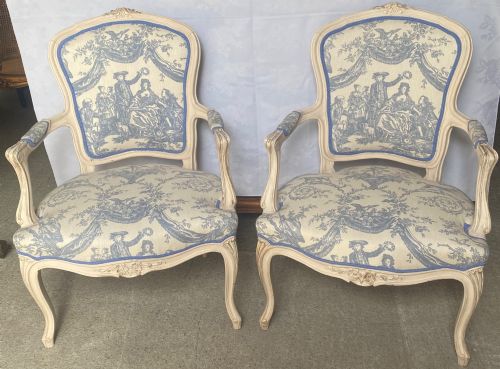
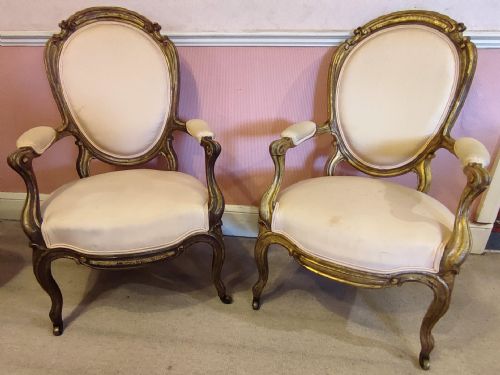
A vintage parlour armchair provides the traditional seating characteristic of formal sitting rooms from the Victorian, Edwardian, and early twentieth-century periods. These chairs appear in various forms, including low salon armchairs, spoonback designs, button-backed seating, and open-armed French revival styles.
Buyers seeking a vintage parlour armchair most frequently encounter Edwardian mahogany examples featuring inlaid wood details, alongside Victorian walnut pieces and French-inspired giltwood designs. The selection also includes larger suites and paired seating alongside standalone accent chairs.
Originating across different decades from the mid-nineteenth century through to the 1930s, these chairs reflect the shifting domestic tastes for reception room furniture. They range from simple carved wood frames to elaborate gilt decorative chairs and bentwood salon suites.
Materials and construction methods
Makers constructed the frames of these chairs using solid timbers such as mahogany, walnut, satinwood, rosewood, and bentwood, frequently incorporating decorative wood inlay or carved details. Giltwood and carved walnut appear particularly in pieces adopting French revival styles.
Upholstery techniques utilise traditional fabric and textile coverings, including plush velvet, supported by sprung or padded interior construction. Decorative elements like brass fittings and exposed polished wood frames complete the fabrication of these period seats.
Materials recorded in current stock include mahogany, walnut, satinwood, rosewood, brass, giltwood, and diverse upholstered textiles.
Assessing quality in period seating
The standard of a parlour armchair depends heavily on the precision of the timber framing, the crispness of any carved ornamentation or inlay, and the structural integrity of the joints. Higher quality examples display careful selection of cabinet woods and balanced proportions.
Upholstery finish and the preservation of original or sympathetic textile coverings also distinguish different grades of chairs. Well-executed revival styles demonstrate skilled craftsmanship that echoes earlier French and English cabinet-making traditions.
The Vintage Parlour Armchair Glossary
- Edwardian
- Pertaining to the reign of King Edward VII, spanning the early years of the twentieth century. Furniture from this era often lighter in scale with delicate inlaid mahogany decoration.
- Parlour suite
- A coordinated set of seating furniture designed for a formal reception room, typically comprising a settee and matching armchairs.
- Bergere
- An enclosed upholstered armchair with wooden framing, originating in France and frequently featuring cane or upholstered sides.
- Giltwood
- Timber that has been coated with gold leaf or a gold-coloured finish for decorative effect. This treatment is common on pieces influenced by French court styles.
- Spoonback
- A type of chair back shaped in the contour of a spoon, popular during the Victorian period to support the sitter's spine comfortably.
Vintage Parlour Armchair: Frequently Asked Questions
What rooms suit a parlour armchair?
These armchairs fit well in living rooms, bedrooms, and studies where a touch of traditional character is desired. Their modest scale often allows them to act as comfortable accent seating without overwhelming smaller spaces.
They also pair effectively with existing period furnishings or contrast against minimalist modern interiors.
How do I identify an Edwardian armchair?
Edwardian armchairs typically feature lighter timbers such as mahogany or satinwood, frequently enhanced with contrasting wood inlay. They date from around the turn of the twentieth century and often exhibit refined, slender proportions.
By contrast, earlier Victorian pieces tend to use heavier walnut or mahogany with more robust carving and button-backed upholstery.
Were these chairs meant for daily use?
Parlour armchairs were originally designed for formal reception rooms where guests were received and entertained. While comfortable, their lighter frames mean they served more for relaxed sitting rather than heavy family lounging.
Today, they remain suitable for regular domestic use provided the underlying frame and upholstery are well maintained.
What is a French revival parlour chair?
French revival chairs are British or continental interpretations of earlier French court designs, particularly from the reigns of Louis XV and Louis XVI. They often feature giltwood finishes, carved walnut frames, and open armrests.
Cabinet makers produced these pieces in large numbers during the nineteenth and early twentieth centuries to satisfy a demand for continental elegance.