
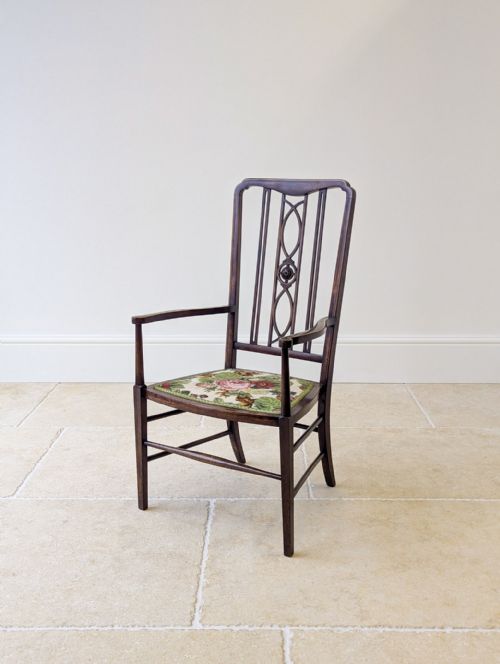
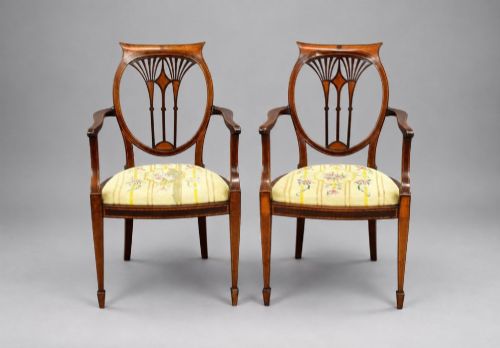
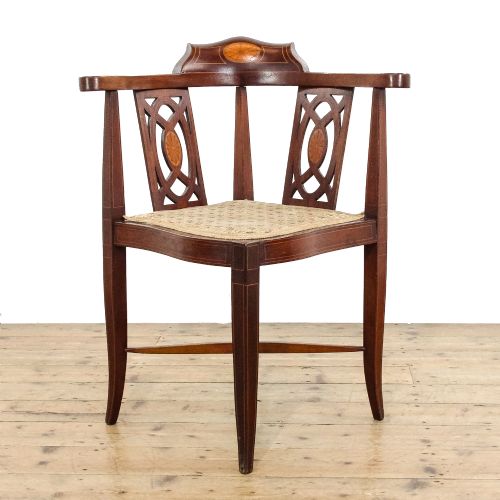
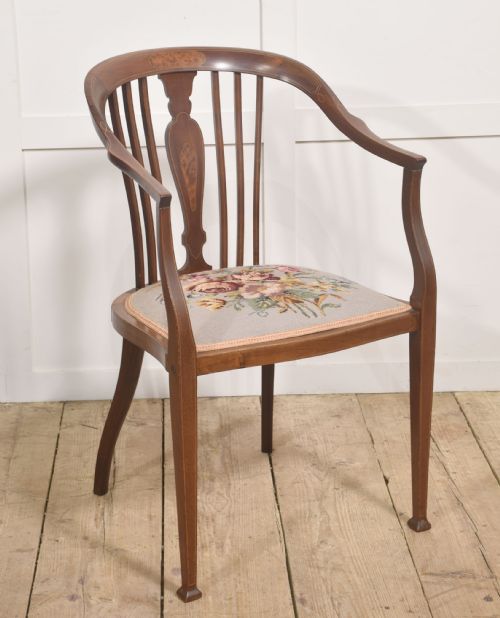


Inlaid Mahogany Elbow Chair
An inlaid mahogany elbow chair brings refined timber and delicate banding together for seating that sits as comfortably at a desk as it does in a drawing room.
Inlaid Mahogany Elbow Chair
An inlaid mahogany elbow chair is a seating form designed with armrests, constructed primarily from mahogany and embellished with contrasting wood details. When exploring this selection, buyers frequently encounter pieces originating from the Edwardian era and the nineteenth century, including Regency examples.
The assortment spans several distinct silhouettes, from traditional salon and library seating to corner chairs, occasional chairs, and desk chairs. Makers across these periods adapted the form for various rooms, yielding pieces with solid timber frames and upholstered seats designed for daily use.
How They Were Made
Cabinetmakers built the structural frames of these chairs using solid mahogany, often combining the timber with secondary woods for internal components. Surface ornamentation relied on precision woodworking techniques, incorporating contrasting light veneers and timber strips into carved recesses.
Makers integrated satinwood, boxwood, and marquetry details to form linear banding or floral motifs along the crest rails and splats. Metal elements such as brass inlay appear on select Regency pieces, adding metallic contrast to the dark timber grain.
Listings feature mahogany frames paired with satinwood and boxwood inlay across Edwardian, Regency, and Victorian periods.
What Varies in Quality
The standard of an inlaid mahogany elbow chair rests on the precision of the timber joinery and the execution of the decorative banding. Superior examples display tightly fitted joints and hand-cut wood inlay that remains flush with the surrounding mahogany surface.
Design complexity also separates standard utility seating from finer salon and library chairs. Pieces featuring pierced splats, sculpted arm supports, or balanced proportions by recognised makers command greater attention than plainer workshop output.
Shoolbred·Jenks and Wood·Henry Maxwell
The Inlaid Mahogany Elbow Chair Glossary
- Elbow chair
- An armchair featuring lower armrests, designed for versatility in spaces such as bedrooms, libraries, and desks. These chairs provide side support without the full enclosure of a wingback.
- Inlay
- A decorative technique where small pieces of contrasting wood, such as satinwood or boxwood, are set into shallow recesses carved into the primary mahogany surface. This method creates flat, patterned borders and motifs.
- Marquetry
- An elaborate form of inlay that assembles various wood veneers into pictorial or geometric designs across larger surface areas. It differs from simple linear banding through its use of multiple pictorial shapes.
- Carver chair
- An alternative term for an armchair, often denoting a dining or desk chair with structural elbow supports. These pieces match simpler side chairs intended to flank them.
- Sheraton style
- A neoclassical design vocabulary originating in the late eighteenth century and revived during the Victorian and Edwardian periods. It is characterised by straight tapered legs, geometric banding, and light mahogany construction.
Inlaid Mahogany Elbow Chair: Frequently Asked Questions
What is an elbow chair?
An elbow chair is an armchair featuring shorter armrests that fit neatly beneath a desk or table edge. This design allowed sitters to use the chair for writing, dining, or reading without the arms striking the furniture front.
The term frequently overlaps with carver chairs and library chairs in nineteenth and twentieth-century records. They served dual purposes as both occasional seating and functional desk chairs across various rooms.
How do I date these chairs?
Dating relies on examining the timber species, the style of the inlay work, and the structural framing methods. Regency pieces typically show bolder brass or dark wood banding on heavier mahogany frames, while Edwardian versions favour lighter satinwood stringing and delicate proportions.
Secondary woods and upholstery methods also offer clues to the period of manufacture. Comparing the decorative motifs against documented revival styles helps distinguish nineteenth-century production from twentieth-century interpretations.
Where were they used?
These chairs were versatile items placed in libraries, drawing rooms, morning rooms, and bedrooms. Their relatively compact size allowed them to function as salon seating, dressing table chairs, or primary desk seats.
Because they combined decorative inlay with practical arm supports, owners could move them between public reception spaces and private chambers as needed.
How do I care for mahogany?
Mahogany furniture benefits from consistent indoor humidity and protection from direct sunlight to prevent the timber and veneers from drying out. Routine maintenance involves dusting with a soft, dry cloth rather than applying heavy silicone polishes.
Waxing occasionally helps preserve the natural sheen of the wood and protects the delicate boxwood or satinwood inlay from moisture damage.