
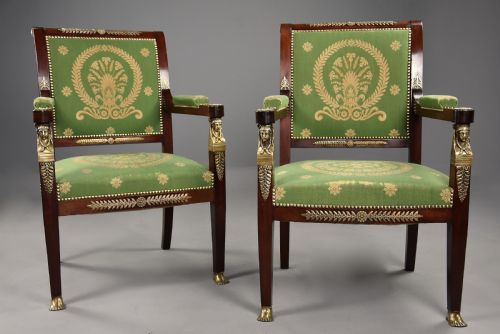


Classical Revival Chair
A classical revival chair draws on ancient Roman and Greek vocabulary, offering serious proportion and timeless lines for a traditional interior.
Classical Revival Chair
A classical revival chair draws inspiration from ancient Roman and Greek forms, spanning periods from the nineteenth century into the twentieth. When looking for a classical revival chair, buyers encounter various seating forms including armchairs, dining chairs, side chairs, and settees.
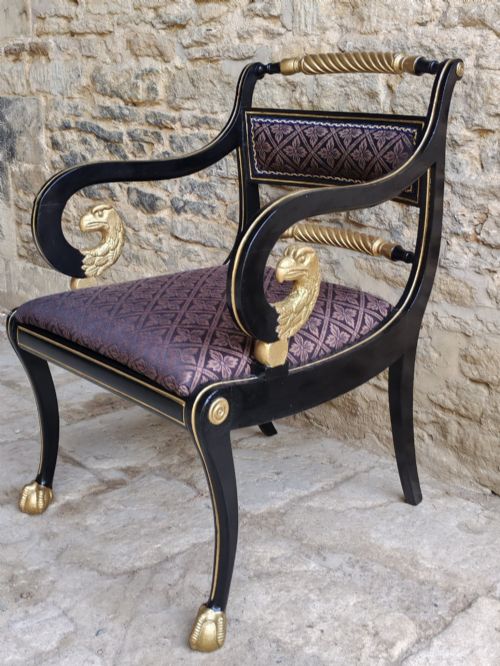
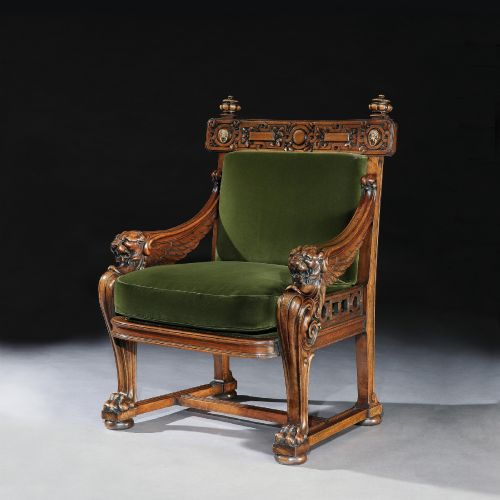
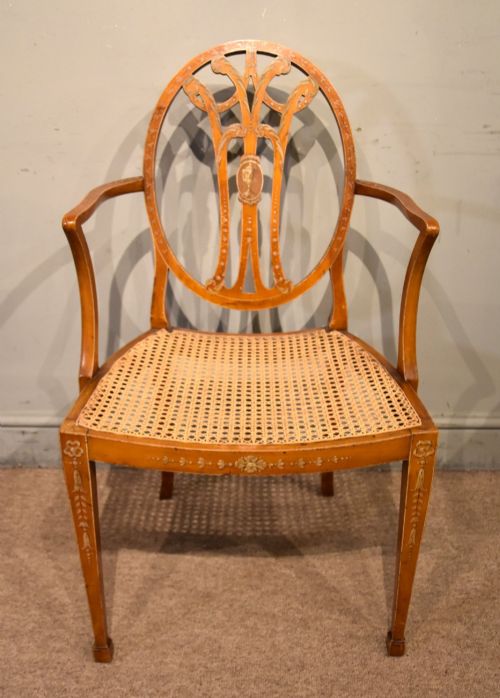
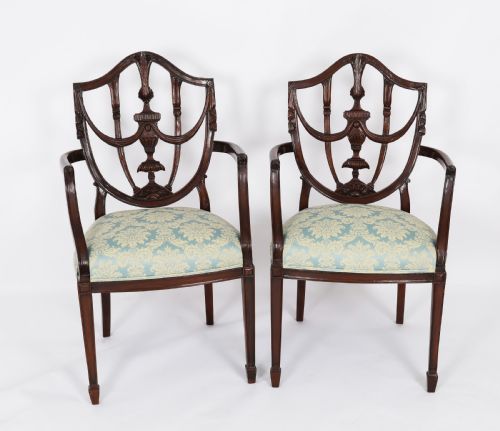
The selection ranges from Edwardian inlaid mahogany models and Regency revival armchairs to French Empire style fauteuils and Federal revival shield back examples. Makers adopted distinct historic styles, incorporating motifs such as lion monopodia, satinwood inlay, and giltwood decoration.
Dated examples stretch from nineteenth-century pieces to twentieth-century revivals, showing how cabinetmakers reinterpreted classical antiquity across different decades. Each piece reflects specific stylistic revivals, whether Louis XVI, Chippendale, or general neo-classical inspiration.
Construction and materials
Cabinetmakers utilised primary timbers such as mahogany, beech, oak, and ebonised wood to build these substantial frames. Timber selection dictated the structural integrity and surface character of each chair.
Surface enrichment often involved contrasting satinwood inlay, brass details, and giltwood finishes to accentuate the classical vocabulary. Workshops applied paint and fabric upholstery to complete the decorative scheme of fauteuils and armchairs.
Assessing craftsmanship
The distinction between standard production and finer work lies in the crispness of carved details and the precision of inlaid veneers. Superior execution appears in the balanced proportions of X frames, shield backs, and monopodia supports.
The choice of dense timbers like mahogany or oak, combined with expert joinery, separates enduring seating from lighter decorative alternatives. Surface finishes, whether gilded, painted, or polished, demonstrate the maker's dedication to period accuracy.
Thomas Hope
The Classical Revival Chair Glossary
- Monopodia
- A carved furniture support taking the form of a single animal leg, often terminating in a lion's paw. This ancient motif featured prominently in Regency and classical revival designs.
- Fauteuil
- An open-framed upholstered armchair with exposed wooden arms originating in France. These seats typically showcase carved or painted woodwork.
- Satinwood
- A durable hardwood with a lustrous yellowish grain used extensively for decorative inlay and banding on Edwardian and later furniture. It provides strong visual contrast against darker primary timbers.
- Giltwood
- Timber that has been coated with gold leaf or gold paint to create a rich decorative surface. This finish frequently highlights the carved details of revival armchairs.
- Shield back
- A chair back shaped in the outline of a heraldic shield, popularised during the eighteenth century and revisited during later revival periods. The frame often encloses pierced splats and delicate carving.
Classical Revival Chair: Frequently Asked Questions
What defines a classical revival chair?
A classical revival chair incorporates ancient Greek and Roman motifs, such as columns, scrolls, and monopodia supports, executed during later periods like the nineteenth and twentieth centuries.
These pieces bridge historical design and later craftsmanship, using traditional timbers and decorative techniques to echo antiquity.
How do I date a revival chair?
Dating relies on examining the secondary timbers, construction methods, and the specific characteristics of the revival style, such as Edwardian satinwood inlay or nineteenth-century French Empire influences.
Comparison with documented pieces from periods like the Regency or Edwardian era helps narrow the timeframe of manufacture.
Where were these chairs used?
Historically, these seating forms populated libraries, formal drawing rooms, and dining spaces where classical interior schemes dominated.
Their substantial presence made them suitable focal points for reception rooms and studies in grand houses.
How should I care for antique wood?
Maintain timber frames by keeping them away from direct heat sources and sudden humidity changes to prevent wood splitting or veneer lifting.
Apply microcrystalline wax sparingly to nourish polished mahogany, oak, and satinwood surfaces without building up heavy residues.