




Vintage Painted Screen
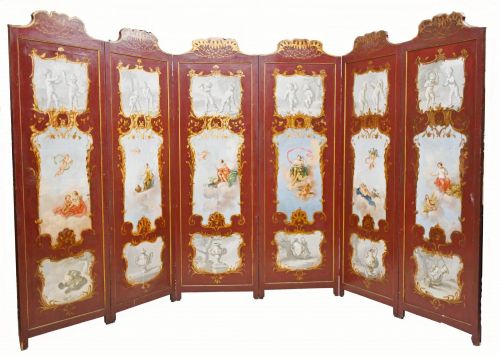
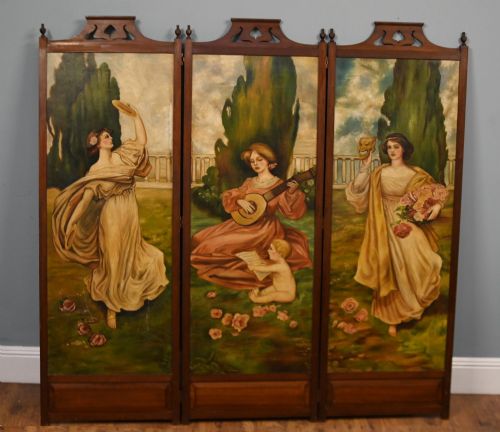
A vintage painted screen brings narrative and colour into a room, dividing space with folded panels of wood, canvas or leather.
Vintage Painted Screen
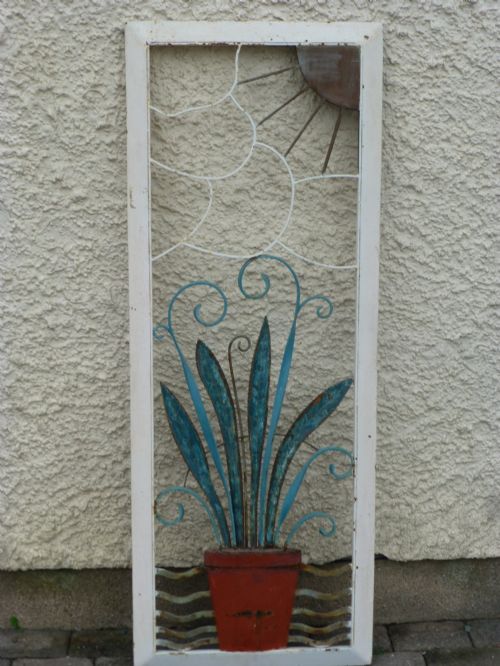
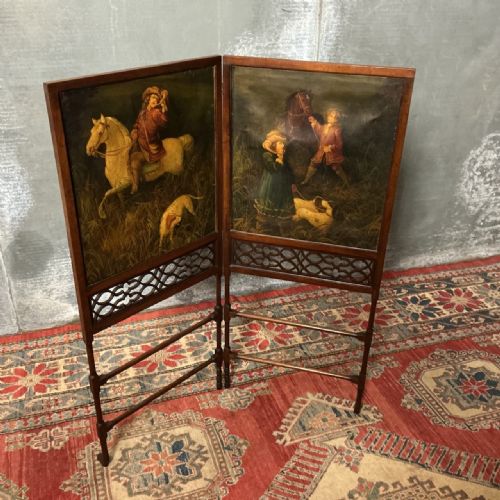
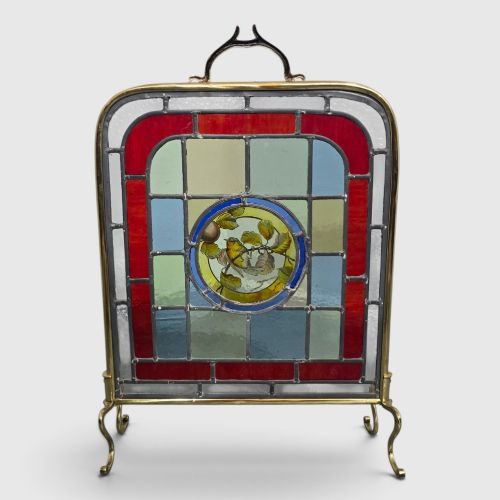
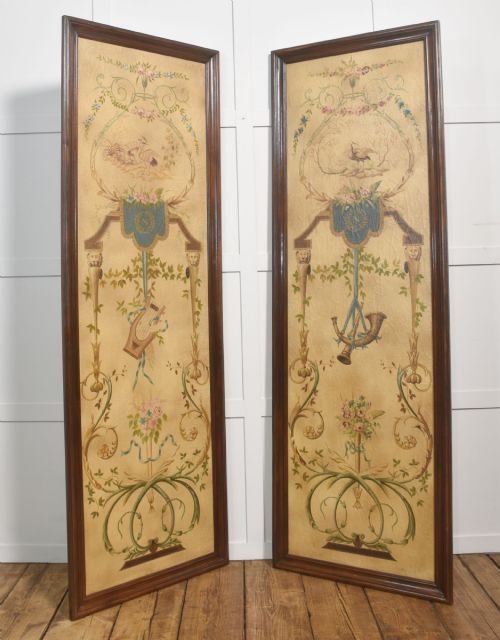
A vintage painted screen functions primarily as a folding room divider, a fire screen or a decorative wall panel, shaping the interior architecture of a space. The pieces found here span the nineteenth and twentieth centuries, encompassing Edwardian, Victorian, Art Deco and earlier periods.
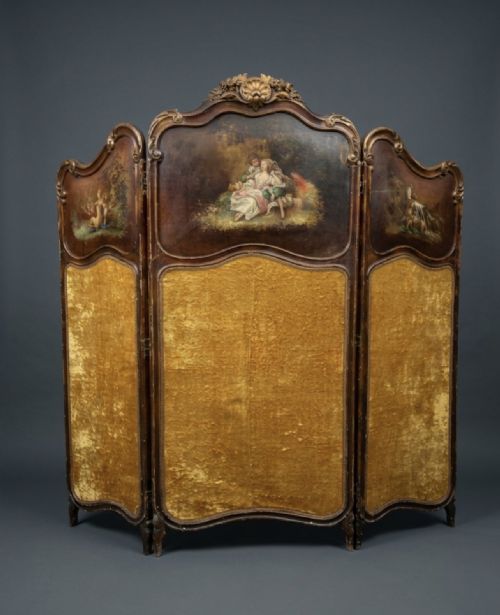
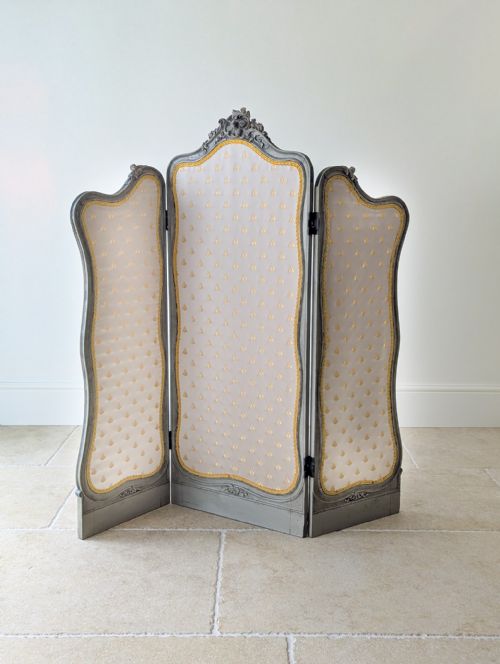
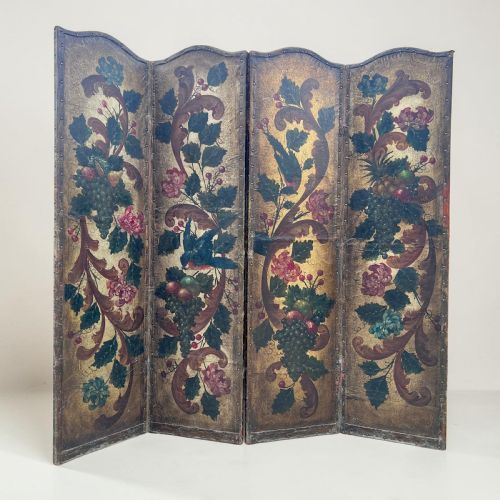
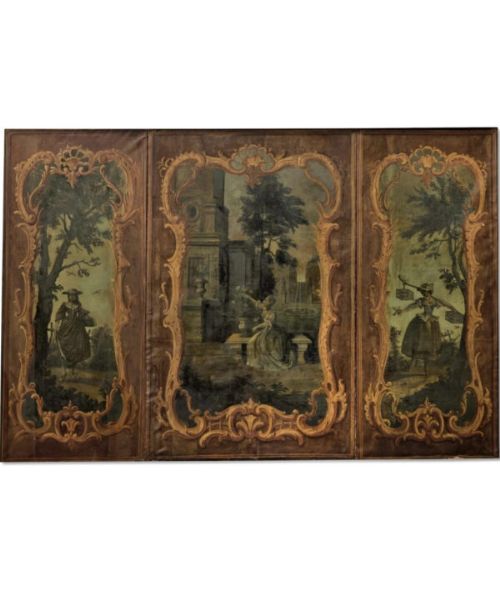
The most common formats met on this page are multi-fold folding screens featuring painted pastoral scenes, floral motifs or oriental lacquer work. Alongside standard room dividers, buyers encounter architectural salvage, pole screens and painted leather panels.
Origins stretch from English and French workshops to Chinese, Japanese and Burmese makers, reflecting diverse cultural traditions in decorative painting. These items combine practical partition with pictorial art, utilising canvases, boards and panels hinged together.
Materials and construction methods
Makers constructed the foundational frames from timber such as mahogany, walnut, pine or brass, supporting panels of canvas, leather, paper mache or wood. Structural integrity depended on sturdy hinges connecting multiple leaves or folds for freestanding stability.
Surface decoration involved oil paint, lacquer, gilt and hand-painted artistry applied directly to the substrate or onto applied fabrics. Artisans utilised techniques like Chinoiserie detailing, grisaille work and hardstone mounting to enrich the visual depth of each panel.
Vintage Painted Screen Retail Price Guide 2026
Typical asking prices for vintage painted screen among the pieces listed under this phrase on Sellingantiques today, from the lower quarter to the upper quarter. They describe what is for sale here now, not the wider market.
The documented forms range from multi-fold room dividers and fire screens to theatre scenery boards, modesty screens and architectural window shutters.
Assessing quality in painted screens
Quality rests heavily on the execution of the hand-painted artwork, where fine brushwork, detailed figures and harmonious colour palettes elevate a piece above standard decorative items. The sophistication of the underlying frame construction and the durability of the original hinges also signal superior craftsmanship.
Age and material provenance dictate distinct tiers of execution, from intricate eighteenth-century Dutch leather and gilt work to early twentieth-century black lacquered folding screens. Pieces that retain their original pigments, gilding and structural cohesion demonstrate greater artistic integrity and historical value.
Raymond Subes
The Vintage Painted Screen Glossary
- Chinoiserie
- European theatrical interpretations of Chinese and East Asian artistic traditions, frequently seen in lacquered furniture and screens. This style relies on motifs of figures, pavilions and landscapes.
- Grisaille
- A method of painting executed entirely in shades of grey or neutral greyish monochrome, often intended to imitate sculpture. It appears on decorative panels and architectural canvases.
- Pole screen
- A freestanding fireplace screen featuring an adjustable vertical panel mounted on a slender pole and tripod base. It protected gentle complexions from the heat of the hearth.
- Dummy board
- A life-sized painted figure cut from wood or canvas, designed to create a trompe-l'œil presence in a room. These figures often depict domestic servants, soldiers or animals.
- Lacquer
- A durable finish applied to wood surfaces using natural resins, drying to a hard and lustrous coating. Asian and European makers built up multiple layers before painting or gilding.
Vintage Painted Screen: Frequently Asked Questions
How were folding screens used historically?
Historical interiors utilised folding screens to block draughts, create private changing areas in bedrooms and compartmentalise large reception rooms. Their portability allowed occupants to alter the layout and visual dynamics of a space quickly.
Beyond practical partitions, screens served as grand backdrops for social gatherings, framing specific seating areas and displaying elaborate narrative artwork to visiting guests.
What is a fire screen?
A fire screen is a smaller decorative panel placed in front of an unused fireplace during the warmer months to hide the grate. They often feature delicate needlework, painted canvas or brass framing.
Unlike tall room dividers, these pieces were designed for hearthside placement, sometimes taking the form of adjustable pole screens that shielded the face from excessive fire heat.
How do I distinguish Chinoiserie from Japanese lacquer?
Chinoiserie generally represents European imaginative interpretations of Chinese design, characterised by gilded figures and pagodas on dark lacquered wood. Japanese lacquer work tends to incorporate native flora, fauna and distinct hiramaki-e metal powder techniques.
Examining the underlying wood species and the specific style of the painted motifs helps clarify whether a piece originates from European imitation workshops or Asian export traditions.
Can I use a room divider as wall art?
Many multi-fold screens and decorative panels adapt well to being hung flat on a wall, transforming a room divider into a large-scale painting. Individual panels from broken sets frequently find new life as vertical wall hangings.
Securing a heavy wooden or leather screen to a wall requires robust mounting hardware to support the combined weight of the timber frame and painted canvas.